Skip to content
CityAM
Main navigation
  • News
    • News
      • Latest Business News
      • Economics
      • Politics
      • Tech
      • Banking
      • FTSE 100 Live
      • Retail
      • Insurance
      • Legal
      • Property
      • Transport
      • Markets
    • From our partners
      • AON
      • Bayes Business School
      • Canada BIDs
      • Central London Alliance CIC
      • Destination City
      • Halkin
      • Olympia
      • Inside Saudi
      • Tottenham Hotspur Stadium
      • Santander X
      • YEAR SIX Dividend
    • Featured

      Ministers open door to phased Heathrow third runway plan

      Heathrow Airport terminal bustling with travelers and staff, showcasing modern architecture and international flight activity

      Submit a story

      Tell us your story.

      Submit
  • Opinion
  • Sport
    • Latest Sports News
      • Sport
      • Sport Business
    • From our partners
      • The Morning Briefing: SBS x CityAM
      • Aramco Team Series
      • LIV Golf
    • Featured

      Concern as gambling black market set for £40m Royal Ascot boost

      GettyImages 2282074836 showing a significant event with key figures in a professional setting, highlighting a major develo...

      Submit a story

      Tell us your story.

      Submit
  • Life&Style
    • Life&Style
      • Life&Style
      • Toast the City Awards
      • The Magazine
      • Travel
      • Culture
      • Motoring
      • Wellness
      • The RED BULLETiN
      • Do it with Shared Ownership
      • Media Speak Hub
    • Featured

      New Mk1 Ford Escort RS makes world debut at London Concours

      Boreham Ford Escort RS car showcasing classic design and performance features at an automotive event.

      Submit a story

      Tell us your story.

      Submit
  • Investec
  • Events
  • Latest Paper
Friday 26 June 2015 11:26 am

How Argentina’s struggle in the late 1990s could provide lessons to Greek leaders

By: James Nickerson

Add as a preferred source on Google

As Greece teeters on the brink of default, its leaders could do worse than to look to Argentina's own tussle with default back in the late 1990s. 

Why they're similar

Like Greece, the economic crisis in Argentina began against a backdrop of deregulation and financial liberalisation – although in Argentina's case, its convertibilidad policy pegged the Argentine peso to the dollar, while Greece adopted the euro.

Both established a fixed exchange rate, helping to control inflation, but both but deteriorated productive capacity. There were vast amounts of borrowing, and an increase in government debt. Both countries lived beyond their means, while tax avoidance was endemic.

What happened

In 1998, the Asian financial crisis hit, causing unemployment and the deficit to jump. The same was true of  the global financial meltdown of 2008: in Greece, unemployment leaped, sparking massive anti-government demonstrations.
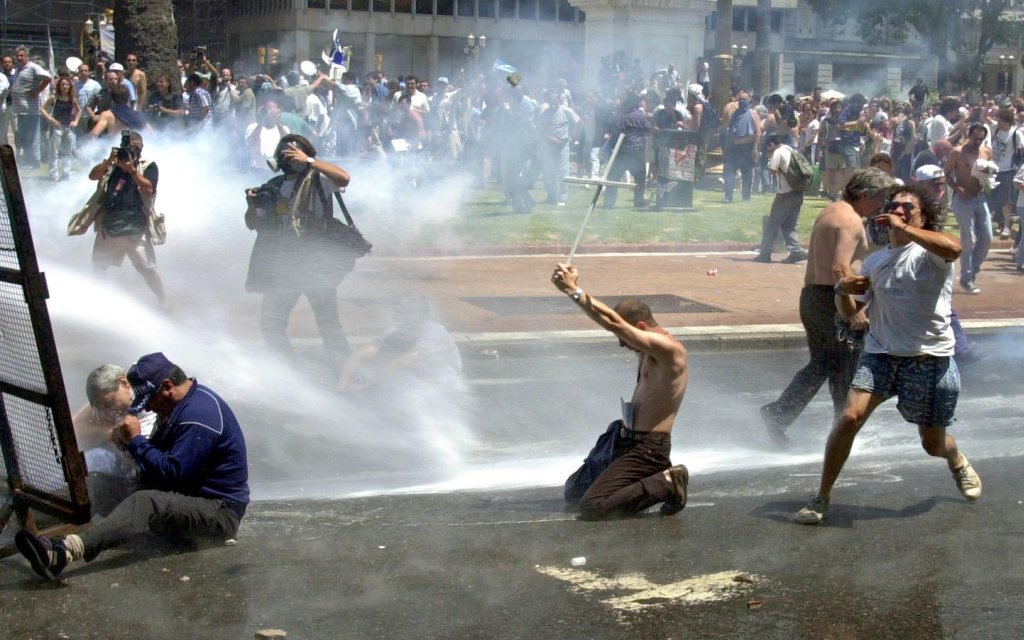

Street protests in Argentina in 2001 resemble those seen recently in Greece (Source: Getty)

Both countries borrowed heavily from the International Monetary Fund (IMF), which withheld payments when they failed to meet its deficit targets, which included deep fiscal austerity and wage contraction.

In Argentina, despite the recession, the IMF pushed for the reduction in social spending and easing of labour protections.

In Greece, the "troika" of lenders – the IMF, European Central Bank and EU – imposed unpopular adjustments like the ones in Argentina to ensure the monetary regime continued and financial sector profits were protected.

The IMF was firm with Argentina in negotiations as it has been with Greece (Source: Getty)

How they responded

The economic and social crisis in Argentina in 2001 led the country to devalue its currency and default on over 65 per cent of its debt in 2002. Inflation soared temporarily and battered standards of living as Argentina fell into a severe recession.

But, despite the distress this caused, by devaluing its currency, real wages fell and the economy began to stabilise. Combined with a boom in natural resources, the country fell into a period of unprecedented growth.

Of course there is unlikely to be a commodity boom in Greece (feta cheese futures, anyone?), but at the moment, rather than undergoing a currency devaluation, unemployment remains high , despite wage cuts. It is this that fuelled public anger, and the subsequent electoral success of Tsipras’s Syriza party.

Why Greece has to make difficult decisions

While a devaluation could help Greece, it would have to leave the euro. For Argentina, it was relatively easy to devalue the peso by severing its link to the dollar.

Convertibility would be difficult: while Argentina converted dollar-denominated savings accounts into pesos, but Greek savings are denominated in euros. Then there's the challenge of printing a new currency.
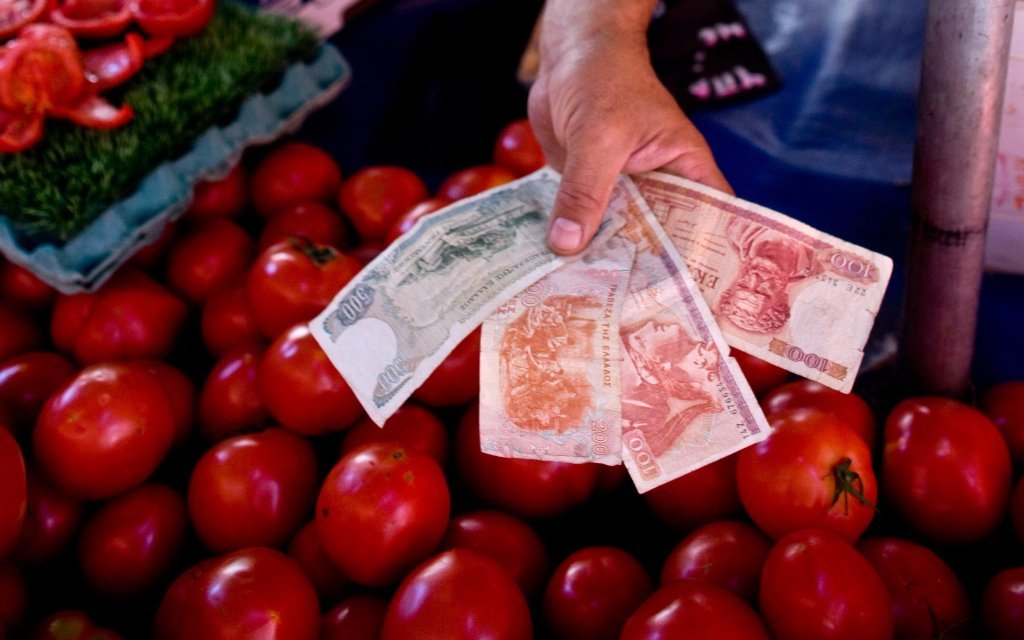

There would be difficulties while Greece reintroduced the drachma (Source: Getty)

Given all the uncertainty, there's a risk there could be even more capital flight from Greece (although withdrawals have "calmed down" in recent days, withdrawals hit nearly €4bn in May, official statistics show) – default could leave Greek banks insolvent.

And if Greece decides it wants to return to the drachma, they will face opposition from other Eurozone members: there's also a fear Greece leaving could lead to other nations, such as Spain, having similar ideas.

So what's next?

Greece leaving the euro would almost certainly be a disaster in the short term, despite the fact it may be beneficial further down the line.

But Argentina's example suggests it's not an entirely bad idea. There would be a lot of distress – but the outcome would be determined as much by politics as by economic considerations. 

Share this article

  • Facebook
  • X
  • LinkedIn
  • WhatsApp
  • Email

Similarly tagged content:

Sections

  • Markets & Economics
  • News

Categories

  • Business
  • Economics

Related Topics

  • Greek debt crisis

Trending Articles

  • As it happened: Stocks sink after Fed and Bank of England opt for hawkish hold; Oil price tumbles

  • More Big Four blues as Deloitte plans to slash UK audit roles

  • Baillie Gifford in line for Anthropic windfall just months after £3.6bn SpaceX bonanza

  • Revolut pays compensation for waking customer up with push notifications

  • City investors raise alarm on Burnham’s Chancellor pick

More from CityAM

  • National Bank of Greece in Cyprus Goes Live With Smartstream’s Air to Consolidate Reconciliations

    Business Wire
  • Happy Holidays S.A. and JTA Investment Holding Announce €65 Million Investment for SARTIMARE Tourism Development in Greece

    Business Wire
  • ‘Manchesterism’ is a myth and you can’t trust Andy Burnham

    Opinion
    Andy Burnham speaking at a conference, addressing key issues and engaging with an attentive audience in a business setting.
  • Top Summer Destinations 2026 Revealed by Leading Travel Agent Opodo

    Business Wire
  • Conservatives will slash the regulations holding the City back

    Opinion
    Kemi Badenoch discussing strategies for a stronger economy at a business conference podium, emphasizing economic growth
  • Crispin Odey settles sexual assault claims ahead of trial

    Lawsuit
    COdey mascot in a tech-themed environment, showcasing coding and innovation at a business event
  • Co-Op and Next among firms launching workplace savings scheme

    Personal Finance
    Profit at Next rise 13.8 per cent in the first six months of the year
  • Inflation, not Andy Burnham, is the culprit behind high Gilt yields

    Opinion
    Burnham smiling broadly at a community event, surrounded by enthusiastic supporters, conveying a sense of positivity and u...

CityAM Canada — business, markets and opinion for Canadian readers.

Sections

  • Business
  • Markets
  • Tech
  • AI
  • Economics
  • Opinion
  • Cities

Company

  • About
  • Contact

Legal

  • Terms of Use
  • Privacy Policy
  • Cookie Policy
© 2026 CityAM Canada. All rights reserved.
Terms · Privacy · Cookies