
Build, baby, build: Why overhauling the planning regime is crucial to kickstarting the UK economy

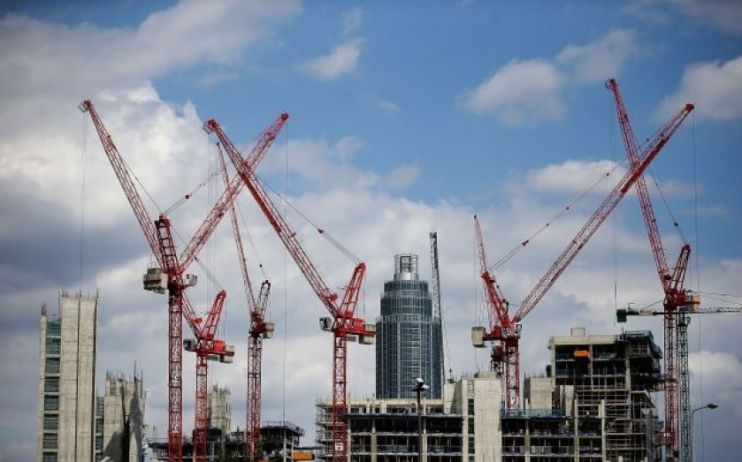
The UK’s economic problems are deep and complex, but if there is one thing that could boost the economy without putting further pressure on the government’s finances, it is reforming the planning system.
Britain’s overly restrictive planning regime is one of the key factors behind the UK’s single largest economic issue: stagnant productivity growth.
While the failures of this cumbersome regime are holding back many sectors in the economy, housing is the most obvious victim.
New figures out yesterday showed that the average UK home is now worth 8.3 times the average annual salary, up from 4.5 in 2002. In London it’s even worse.
The clearest culprit is the failure to build more houses. As house prices have increased in real terms by over 420 per cent between 1970 and 2023, construction of new houses has fallen by 46 per cent, according to Britain in a Changing Europe.
But things are actually getting worse as the number of sites being granted planning permission fell to a record low in the third quarter of last year. A total of 61,221 units were approved, according to a report from the Home Builders Federation, 21 per cent lower than a year earlier.
While making housing more affordable is clearly a good in its own right, the knock-on economic impacts are potentially even more important, particularly with regards to productivity.
Unaffordable housing makes it more difficult for workers with the appropriate skills to find work in cities, since the cost of living in those areas is too high. As a result businesses find it more difficult to find the right workers and workers find it more difficult to find the right jobs.
This is part of the reason why the UK’s cities outside London are significantly less productive than their European peers.
This brings us to investment. The planning regime is also preventing necessary investment in national infrastructure, making the UK less productive and choking off growth.
Put simply, the UK does not invest as much as it needs to. This is true of both the private sector and the public sector.
Planning applications are now five times more expensive in 2023 than in 1990, according to Land Promoters and Developers Federation, and often lead to ludicrous outcomes.
The planning application for the Lower Thames Crossing, for example, now runs to over 359,000 pages – 249 times the length of War and Peace – and has cost around £300m.
There is clearly a trade-off between a planning regime that allows for development and protects the environment at the same time. One would hope that given the difficulty developers face in securing approval for new projects, the UK’s natural landscapes would be more protected.
But this is not actually the case. According to OECD statistics, 35 per cent of the UK’s land is protected, compared with 48 per cent in Germany and 45 per cent in the Netherlands.
An overhaul of the UK’s onerous planning regime is long overdue, but the government has failed to act on this and appears more keen on listening to Nimbys.
Labour, on the other hand, have promised to put planning front and centre of their economic programme. In her Mais lecture last week, Rachel Reeves, the shadow Chancellor, described the planning regime as “the single greatest obstacle to our economic success”.
She added that a future Labour government would put planning at “the very centre of our economic and political argument”.
From building wind farms for net zero to propping up shiny new 5G masts to capitalise on the latest technological changes, the party has committed to fast-tracking major infrastructure projects. And at the party conference last Autumn, Labour pledged to build 1.5m homes over the course of the next parliament.
These are welcome goals but, as Reeves herself noted, it won’t be easy.
“Planning reform has become a byword for political timidity in the face of vested interests and a graveyard of economic ambition,” she said.
Let’s hope, if Labour win the next election, her own proposals do not end up in the graveyard too.