Can AI help employers work out what makes us human?

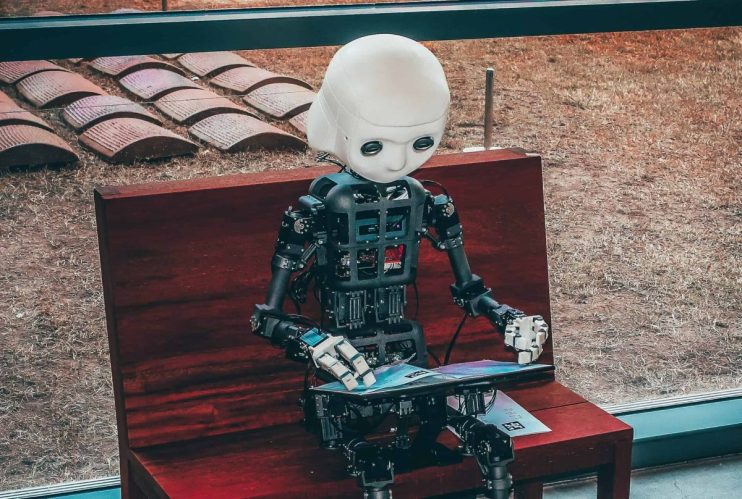
Advances in generative AI will only make soft skills more desirable in the workplace, but could it also help recruiters find the empathy, adaptability and leadership they’re looking for in unusual places? Asks Henry Oliver
From the CEO of IBM predicting that humanities graduates will be increasingly sought after in the new AI economy, to Linkedin data showing that the most in-demand skills today are communication, customer service, and leadership, to the increased demand for communication skills in marketing workers, soft skills are in demand. Ton Ham, director at Calton Wealth Management, recently told the FT that if he could have his time again he would have invested more in his soft skills early on. Empathy, time management, flexibility, and communication are so in vogue that, according to Linkedin, 72% of US Executives say soft skills are more valuable to their organisation than AI skills.
But assessing these skills isn’t easy. Whether someone can perform data analysis tasks or code in particular languages is straightforwardly ascertainable through qualifications and tests. Knowing who is truly good at managing a team, adapting or being able to empathise with clients is harder to discover. There are fewer tests for collaboration, flexibility, empathy, and emotional intelligence. Knowing what makes us most human is hard.
With unemployment low in the UK and US, competition for the best worker remains tight. Vacancies may have declined in the UK, but there are still more open jobs than before the pandemic. The same is true in the US. Finding the people with the right soft skills is a challenge.
As we undergo the disruption of AI, which will change the skills employers are looking for, and the roles they hire into, we should be open minded about who we hire, fire, and promote. Everyone is going to be working in different conditions and multiple studies have shown that when you change your circumstances, you bring out new aspects of yourself. Disruption, therefore, should enable us to find talent in unexpected places.
It’s happened before. After the Second World War, many young men who were headed for jail or unskilled jobs in the bottom earnings bracket got their life onto a different trajectory. Sociologist Glen Elder’s research into those men found that military service was likely to provide those from disadvantaged backgrounds with the discipline, leadership, structure, teamwork, cooperation, responsibility, and purpose they otherwise lacked. Being in an egalitarian setting helped them thrive. Many of them ended up on different life trajectories, and not just because of the G.I. Bill.
More recently, Raj Chetty’s research has shown the importance of role models and environment on children’s aspirations. Other studies have found that working with an academic superstar improves researcher productivity, that hiring toxic workers increases turnover costs and makes other employees’ behaviour worse, and that micromanagement stifles innovation by quashing inner motivation. Putting the same person into different environments often yields quite distinct results.
Skills are not just something a worker has or doesn’t: they get expressed differently in different circumstances. One way to think about soft skills is not whether someone is able to run a meeting or manage a team, but how adept they are at picking up on the mood and responding to it. Communication and collaboration are teachable, but they have intangible elements.
One lesson we can take from Elon Musk’s ownership of Twitter, for example, is that someone who looks like they’ lack the ability to lead an organisation’ll be a disaster may in fact do a remarkably good job. Twitter was widely predicted to collapse in the weeks after Musk took over, and his public communication and leadership skills were mocked. Yet Twitter remains at the centre of important events from the Israel-Gaza conflict to the debacle surrounding the leadership of American universities to the dramatic events at Open AI last year. The site hasn’t collapsed and usage remains high. There’s something tacit and ineluctable about good leadership. We don’t quite know what makes him a good leader; it almost defies common sense; but judging by his results, he is.
Many new roles in the modern economy are unpredictable and strange. Jen Glantz, for example, runs a $100,000 business as a bridesmaid for hire. But she struggles to expand because it isn’t easy to define what combination of soft skills makes someone good at that role, let alone assess for it. The more soft skills are truly what employers want to see, the more open they can be to hiring people whose track record might not be everything you expect.
Most intriguing is whether humans or AI will be the best judge of soft skills in the future. A study that used ChatGPT to provide medical advice found that the AI not only outperformed GPs in diagnosis, but also in empathy. Many users supplement their therapy with ChatGPT instead of extra sessions with their analyst. It’s not clear that AI will take over from therapists entirely, but McKinsey has estimated AI will match the top quartile of human ability in social and emotional output and reasoning by 2040 or sooner.
As we begin the search for soft skills in unexpected people, it might be the AI that does best at knowing what makes us most human.