Skip to content
CityAM
Main navigation
  • News
    • News
      • Latest Business News
      • Economics
      • Politics
      • Tech
      • Banking
      • FTSE 100 Live
      • Retail
      • Insurance
      • Legal
      • Property
      • Transport
      • Markets
    • From our partners
      • AON
      • Bayes Business School
      • Canada BIDs
      • Central London Alliance CIC
      • Destination City
      • Halkin
      • Olympia
      • Inside Saudi
      • Tottenham Hotspur Stadium
      • Santander X
      • YEAR SIX Dividend
    • Featured

      ‘Very concerned’: City watchdog scolds motor finance lenders over £9bn redress scheme

      FCA sign

      Submit a story

      Tell us your story.

      Submit
  • Opinion
  • Sport
    • Latest Sports News
      • Sport
      • Sport Business
    • From our partners
      • The Morning Briefing: SBS x CityAM
      • Aramco Team Series
      • LIV Golf
    • Featured

      Dallas, Boston, New York New Jersey: Inside England’s Fifa World Cup stadiums

      Getty Images logo against a sleek, modern background, representing the influence of media in the business world

      Submit a story

      Tell us your story.

      Submit
  • Life&Style
    • Life&Style
      • Life&Style
      • Toast the City Awards
      • The Magazine
      • Travel
      • Culture
      • Motoring
      • Wellness
      • The RED BULLETiN
      • Do it with Shared Ownership
      • Media Speak Hub
    • Featured

      Glengarry Glen Ross at the Old Vic fails to close

      Glengarry Glen Ross production at Old Vic Theatre showcasing intense business negotiations and dramatic performances

      Submit a story

      Tell us your story.

      Submit
  • Investec
  • Events
  • Latest Paper
Thursday 26 November 2020 5:35 am  |  Updated:  Wednesday 25 November 2020 10:20 pm

Charity begins at home — which makes foreign aid more important than ever

By: Eliot Wilson

Add as a preferred source on Google
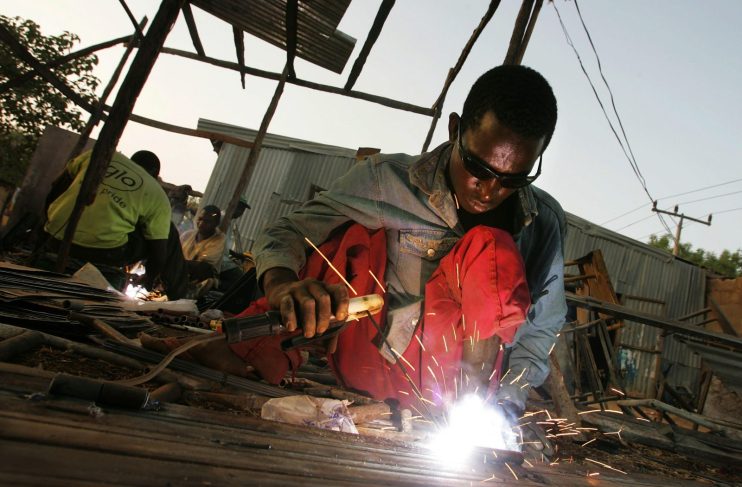
Polio Victims In Nigeria Work To Escape Poverty
Britain could help resilient populations grow their way out of that poverty

No one can have envied Rishi Sunak yesterday, for it was the chancellor’s task to unveil the Spending Review to the House of Commons, facing (we were told by the Treasury) the worst economic landscape since the Great Frost of 1709. 

Sunak strove for sombre and minatory, but he has not yet gained enough political weight for that. Nevertheless, the message was clear. A hard rain’s a-gonna fall.

One of his announcements which caused consternation in the governing classes was the abandonment of the commitment to spend 0.7 per cent of GDP on international aid. 

This was a trophy promise of the Cameron government. It was enshrined in the International Development (Official Development Assistance Target) Act 2015, but that particular piece of legislation has not aged well. Expect an amending bill to hit parliament soon, reducing the figure to 0.5 per cent and saving £4bn in the process.

The outcry has come from the development community, of course, and also the political establishment. Liz Sugg, an unobjectionable and worthy Cameroon who found herself a baroness and a minister, has quit her role at the Foreign, Commonwealth & Development Office in protest. 

The Archbishop of Canterbury described the decision as “shameful and wrong” (as a former oil executive he perhaps has some experience of this), while Sir John Major and Tony Blair (their combined tenure as Prime Minister totalling 17 years, during none of which was a statutory target set) have also weighed in.

Perhaps it is time for a gust of the fresh air of reality. In 2021, the UK will spend £10bn instead of £14bn on overseas aid, and will fall from the highest to the second highest spender in the G7, slipping behind Germany. 

This is not an abandonment of the “global Britain” tag, and it is hardly a cause for us to hang our heads and rend our clothing. If we are “reduced” to this in the worst economic conditions for 300 years, then perhaps we are doing rather well.

But more important than the exact numbers is a rethink of how we give aid. The entire question has become needlessly political, with those on the left guilt-tripping us for not spending more, and voices on the populist right insisting that “charity begins at home” and “India has a space programme, you know”.

Read more

Government to invest £3m in five new cricket domes

General news image depicting an unnamed event, highlighting key aspects of the latest developments in the article.

The reality — which may be unpalatable for both camps to acknowledge — is that Britain stands to gain an awful lot from foreign aid, if it is targeted properly.

We talk about the influence of soft power and the reputation of the UK abroad resting as an “international development superpower”, but what does it mean in practice? What is the purpose? 

It must surely be more than pure altruism — important and admirable though that is. If we as a nation are spending tens of billions on something, one does not have to be blinded by realpolitik to expect some return.

We should be realistic: aid will always be finite, so let us spend it where it benefits the recipients and the donors alike. Strengthening failed or failing states makes the world safer for us. There is no shame in admitting that, and pursuing it. Aid is in part conflict prevention: let us sing it from the rooftops.

We also need to change the kind of aid we give. The story of the fish versus the teaching-to-fish is a chestnut so hoary it requires carbon dating, but it has a kernel of enduring truth. Some 64 per cent of our aid budget goes on bilateral projects (of which, somewhat troublingly given its global stance, Pakistan is by far the largest recipient), and these are often “fish” rather than “fishing lessons”. Many of the countries we help are not short of human capital or entrepreneurial spirit.

Look at the extraordinary explosion of enterprise in east Africa over the last 10 years, with new businesses springing up in Uganda, Kenya, Botswana and others. What these economies need is access to capital, the wherewithal to fund new technology and infrastructure, and better banking systems. Investment here is potentially transformative: rather than alleviating poverty by giving out aid, we could help resilient populations grow their way out of that poverty, and achieve sustainable growth on their own terms.

The British have a genius for capital. We were among the pioneers of promissory notes, we created the model for central banking, and we gave birth to some of the greatest joint-stock companies of the mercantile age. Now, with our backs to the economic wall, we need to channel that spirit to the rest of the world. 

The government talks a great deal of its “levelling-up agenda” between different parts of the United Kingdom: why can’t we set our sights higher, and try to level up the world?

Main image credit: Getty

Read more

Starmer ally defends minimum wage quango after Sunak calls for it to be axed

Labour's Pat McFadden could oversee small welfare reforms that could make reasonable savings for public finances.

Share this article

  • Facebook
  • X
  • LinkedIn
  • WhatsApp
  • Email

Similarly tagged content:

Sections

  • News
  • Opinion

Categories

  • Opinion
  • Politics

Trending Articles

  • Who could be Andy Burnham’s Chancellor? 

  • As it happened: FTSE 100 finishes higher as US-Iran talks progress and Starmer resigns; Space X shares fall after bond sale

  • Starmer will resign, Trump says

  • Coca-Cola brings in restructuring lineup over failed Costa sale

  • Ocado to replace founder Steiner as shares plunge 

More from CityAM

  • Government to invest £3m in five new cricket domes

    Sport Business
    General news image depicting an unnamed event, highlighting key aspects of the latest developments in the article.
  • Starmer ally defends minimum wage quango after Sunak calls for it to be axed

    Economics
    Labour's Pat McFadden could oversee small welfare reforms that could make reasonable savings for public finances.
  • Beware a desperate Prime Minister in search of a legacy

    Opinion
    Keir Starmer speaking at London Tech Week conference, discussing innovation and technology advancements in the UK.
  • Government aid ‘worth £28bn’ handed to terrorists, criminals and hostile states

    Politics
    Whitehall and Westminster
  • Streeting backs Burnham as ‘King of the North’ calls for ‘orderly’ transfer of power

    Politics
    Andy Burnham Westminster
  • ‘Poorly designed’ policies threatening London’s grip on global tourism

    Hospitality
    Bustling Regent Street showcasing vibrant storefronts and diverse pedestrians, capturing the essence of urban life.
  • Starmer overrules Miliband on electric car sales targets as he looks to appease automotive industry

    Energy
    Ed Miliband and Keir Starmer discussing wind energy policy at a press conference, highlighting renewable energy initiatives.
  • More than 80 retail bosses urge Starmer to tackle youth unemployment crisis

    Retail
    Labour MPs are being warned a “perfect storm” of costs facing the retail sector could see seats lost to Reform UK.

CityAM Canada — business, markets and opinion for Canadian readers.

Sections

  • Business
  • Markets
  • Tech
  • AI
  • Economics
  • Opinion
  • Cities

Company

  • About
  • Contact

Legal

  • Terms of Use
  • Privacy Policy
  • Cookie Policy
© 2026 CityAM Canada. All rights reserved.
Terms · Privacy · Cookies