Cut interest rates by 25 basis points, Shadow MPC says

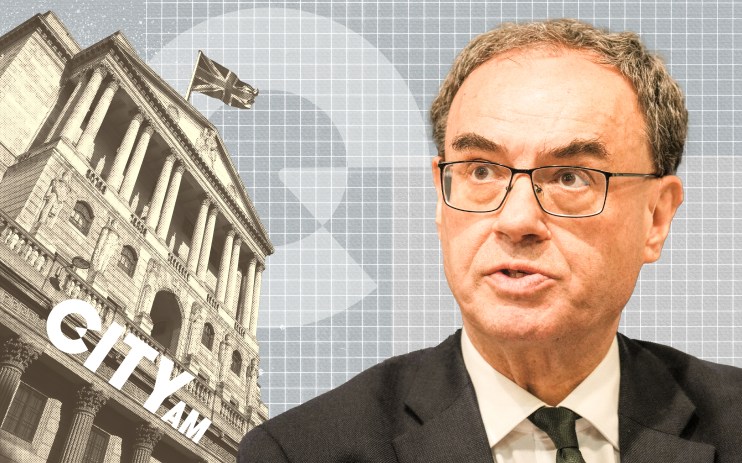
Top economists on CityAM’s Shadow Monetary Policy Committee (MPC) have called for interest rates to be cut to 3.75 per cent in a narrow 5-4 vote.
Economists from academia, business and City giants have said that the UK’s weakening demand and easing price pressures suggested the Bank of England should look to cut interest rates this Thursday.
The knife-edge vote reflects the growing sense of anticipation ahead of this week’s crucial meeting, with markets expecting interest rates to be held at four per cent.
A 25 basis point cut would take interest rates to their lowest level since January 2023, which could help to ease the cost of living for Brits with high mortgages.
It could also signal that lower borrowing costs are set to come for the Chancellor, helping to prevent debt interest payments from surging beyond £110bn in the coming years.
Bank policymakers are weighing up how difficult the UK’s inflation prospects will be as wage growth, jobs market and growth forecasts are adjusted.
Interest rates clash
Economists on CityAM’s Shadow MPC, who expressed views independently of their organisations, pointed to fresh data suggesting inflation was on track to fall from its current rate of 3.8 per cent, nearly double the Bank’s two per cent target rate.
Peel Hunt economist Kallum Pickering, who voted for a 25 basis point cut, said inflation expectations had cooled while further declines in the jobs market suggested a cut was needed to prevent inflation from falling below the target rate in the next two years.
Barclays economist Jack Meaning said some of the pressures keeping inflation higher were “temporary”.
But those calling for interest rates to be held pointed to the uncertainty around the Chancellor’s decisions at the Budget as being likely to stop Bank officials from backing a cut.
The Institute of Directors’ Anna Leach and Capital Economics’ Ruth Gregory said rate-setters would likely want to hear more news on the government’s plans for fiscal policy before making a decision to cut interest rates again.
Anna Leach – Institute of Directors, chief economist
Vote: Hold interest rates at four per cent
What has influenced your decision?
“The proximity of the Budget has a big influence on this decision. It doesn’t make sense to me to make an interest rate call a matter of days before a Budget lands of sizeable fiscal magnitude.
“The Bank of course is not allowed to make any assumptions about the Budget and can only act on confirmed government policy. But that doesn’t prevent them from choosing to wait until they have the facts before making their next move. That move will then be downwards, and likely in December.
“A substantial fiscal tightening and depressed spending among businesses and consumers, alongside a weak labour market, should support further disinflation and rate cuts.”
Assuming that the Chancellor will stick to fiscal rules, what is the worst thing that could happen at the Budget for price stability in the UK?
“The worst would be if the Budget further damages economic confidence, particularly amongst businesses. The risk is that this drives investment spend down further, weakening the UK’s fragile capital stock still further, and undermining future economic capacity to grow without generating inflation.
“A poorly timed VAT increase would be a close second – if there’s a need to raise VAT revenues, waiting until inflation is a bit lower would be sensible.”
Ben Ramanauskas – Senior research fellow in economics at Policy Exchange
Vote: Cut interest rates by 25 basis points
What has influenced your decision?
“Inflation is still above target but the most recent data revealed that it was lower than what had been forecast by the Bank.
“The additional costs imposed on businesses in the last Budget have largely now been passed through to consumers. This – coupled with broad money supply growth being at its current level – means that inflation has likely peaked and will start to decrease and return to target next year.
“The state of the labour market should concern policymakers. It has slackened every month since the last Budget and is likely to continue to cool given the proposed changes to employment regulations, increases to the minimum wage, and tax increases in the upcoming Budget, further depressing business confidence.
“It will be young people who will be most adversely affected.”
Assuming that the Chancellor will stick to fiscal rules, what is the worst thing that could happen at the Budget for price stability in the UK?
“As with the Budget last year, additional costs for firms could be passed onto consumers in the form of higher prices meaning that inflation remains above target for longer.
“However, it is more likely that we will see an increase in taxes not only on businesses, but also on households and investment.
“The labour market will continue to cool, thereby impacting demand with the very real possibility that inflation will fall below target by December 2026.”
Jack Meaning – Barclays chief UK economist
Vote: Cut interest rates by 25 basis points
What has influenced your decision?
“Data making a compelling case for softening demand, and for disinflation to come. Wage growth is slowing, activity is muted and inflation, although high, is lower than expected even a few weeks ago. What is more, we know the current hump has been largely driven by temporary factors that should ease off sharply in coming months.
“While the current rate of inflation is too high, policy today cannot change this – it is a consequence of the shocks of the past. Policy should be forward-looking, and the view on that basis is one where, without easing, there is a risk of inflation falling below the Bank of England’s target.”
Assuming that the Chancellor will stick to fiscal rules, what is the worst thing that could happen at the Budget for price stability in the UK?
“Barclays analysis, in partnership with the Institute for Fiscal Studies, shows an inflationary Budget that used levers like VAT, duties on specific products or increases to the costs of firms to fill the fiscal hole, could double the size of the negative impact on growth, while also stoking inflation.
“This would put the Bank of England in the difficult position of having to manage a stagflationary trade-off, worsening already weak growth if it wants to bring inflation down more quickly.”
Jonathan Haskel – Professor of Economics at Imperial College Business School and former MPC member
Vote: Hold interest rates at four per cent
What has influenced your decision?
“Whilst headline CPI surprised to the downside, services inflation and private sector regular wage growth are still uncomfortably high.
“I am concerned about inflationary inertia and so would prefer to hold at this meeting.”
Assuming that the Chancellor will stick to fiscal rules, what is the worst thing that could happen at the Budget for price stability in the UK?
“The worst outcome would be another set of plans with low fiscal headroom as the Chancellor chose at the last Budget. That would run a significant risk of further breaches of the fiscal rules.
“The attendant uncertainty would weigh heavily on the economy and it would be yet another self-induced stress that we don’t need.”
Julian Jessop – Independent economist
Vote: Cut interest rates by 25 basis points
What has influenced your decision?
“This is a close call. With inflation still well above target and a potentially game-changing Budget just around the corner, there is a strong case for waiting.
“Nonetheless, price pressures appear to be easing and the new set of economic forecasts should give the green light for another cut. Sticking to the existing pattern of cutting once a quarter could also send a positive signal in uncertain times.”
Assuming that the Chancellor will stick to fiscal rules, what is the worst thing that could happen at the Budget for price stability in the UK?
“Failing to control public spending, so that the Budget has to be balanced by tax increases that undermine the productive potential of the economy.”
Kallum Pickering – Peel Hunt, chief economist
Vote: Cut 25 basis points
What has influenced your decision?
“Since the previous rate cut in August, we have seen more evidence that the disinflationary process has continued apace.
“Labour markets have loosened, further depressing wage momentum, while market-based measures of inflation expectations have moderated.
“Looking ahead, modest growth in money and credit, plus a further softening of wage pressures, suggest that inflation is squarely on track to fall back towards the two per cent target next year.
“To support subdued demand growth and prevent an undershoot versus target in 2027, a further removal of monetary tightening is merited again at this meeting.”
Assuming that the Chancellor will stick to fiscal rules, what is the worst thing that could happen at the Budget for price stability in the UK?
“Instead of allowing a couple of big policy changes – such as welfare or departmental spending cuts, or increases in the rate of income tax – to do most of the heavy lifting to fill the Budget gap, the Chancellor opts for a patchwork of anti-growth and inflationary measures which further harm confidence and credibility with bond markets.”
Katharine Neiss – PGIM Fixed Income chief European economist
Vote: Hold interest rates at four per cent
What has influenced your decision?
“Weakening labour market and lower than expected inflation open the door to more cuts, but still high services inflation and inflation expectations ahead of the Budget suggests hold for November.”
Assuming that the Chancellor will stick to fiscal rules, what is the worst thing that could happen at the Budget for price stability in the UK?
“The worst thing would be for the Chancellor to once again leave very little fiscal headroom. This would extend the fragile fiscal situation, and hence uncertainty, further, with the attendant market consequences.”
Ruth Gregory – Capital Economics deputy chief UK economist
Vote: Hold interest rates at four per cent
What has influenced your decision?
“There are sound reasons for pausing, at least for now. With CPI inflation at 3.8 per cent, almost double the two per cent target and the YouGov gauge of households’ inflation expectations in five to 10 years’ time close to the recent high of 4.3 per cent in June, it’s a risky time to cut rates.
“We know too that the Budget on 26 November is going to be a big one, with tax rises set to be almost as large as those announced in Reeves’ first Budget and these two Budgets set to mark the biggest tax haul at successive major fiscal events since Denis Healey’s Budget in 1974-76.”
“It makes sense to wait to hear what the Budget contains, not least because it could include policies that either directly boost or cut near-term inflation and a fiscal tightening that could indirectly reduce inflation further ahead.”
Assuming that the Chancellor will stick to fiscal rules, what is the worst thing that could happen at the Budget for price stability in the UK?
“The big risk is that the Chancellor stokes inflation by announcing inflationary public sector pay deals for striking workers and-or inflationary tax hikes, such as increases in VAT, alcohol and tobacco duties.”
Vicky Pryce – Centre for Economics and Business Research chief economic adviser
Vote: Cut interest rates by 25 basis points
What has influenced your decision?
“The recent inflation uptick is likely to prove transitory and the longer a new cut is delayed, the worse it is for the economy. The fall on yields we have seen, a positive trend, is entirely due to expectations of lower central bank rates.”
Assuming that the Chancellor will stick to fiscal rules, what is the worst thing that could happen at the Budget for price stability in the UK?
“Raising VAT [would be the worst tax manoeuvre that the Chancellor might be considering].”