Skip to content
CityAM
Main navigation
  • News
    • News
      • Latest Business News
      • Economics
      • Politics
      • Tech
      • Banking
      • FTSE 100 Live
      • Retail
      • Insurance
      • Legal
      • Property
      • Transport
      • Markets
    • From our partners
      • AON
      • Bayes Business School
      • Canada BIDs
      • Central London Alliance CIC
      • Destination City
      • Halkin
      • Olympia
      • Inside Saudi
      • Tottenham Hotspur Stadium
      • Santander X
      • YEAR SIX Dividend
    • Featured

      Co-Op and Next among firms launching workplace savings scheme

      Profit at Next rise 13.8 per cent in the first six months of the year

      Submit a story

      Tell us your story.

      Submit
  • Opinion
  • Sport
    • Latest Sports News
      • Sport
      • Sport Business
    • From our partners
      • The Morning Briefing: SBS x CityAM
      • Aramco Team Series
      • LIV Golf
    • Featured

      Children as young as 14 are being targeted by unregulated gambling firms on social media

      Unfortunately, without additional context from the article or details about what the image depicts, it is challenging to g...

      Submit a story

      Tell us your story.

      Submit
  • Life&Style
    • Life&Style
      • Life&Style
      • Toast the City Awards
      • The Magazine
      • Travel
      • Culture
      • Motoring
      • Wellness
      • The RED BULLETiN
      • Do it with Shared Ownership
      • Media Speak Hub
    • Featured

      Old Pulteney releases 50-year-old whisky for 200th anniversary

      Old Pulteney 50-Year-Old single malt Scotch whisky bottle with elegant packaging on display, highlighting luxury and craft...

      Submit a story

      Tell us your story.

      Submit
  • Investec
  • Events
  • Latest Paper
Wednesday 16 November 2022 6:15 am  |  Updated:  Tuesday 15 November 2022 5:13 pm

We’ve been using digital identities for years without impinging on our civil liberties or freedom

By: Rosie Beacon

Add as a preferred source on Google
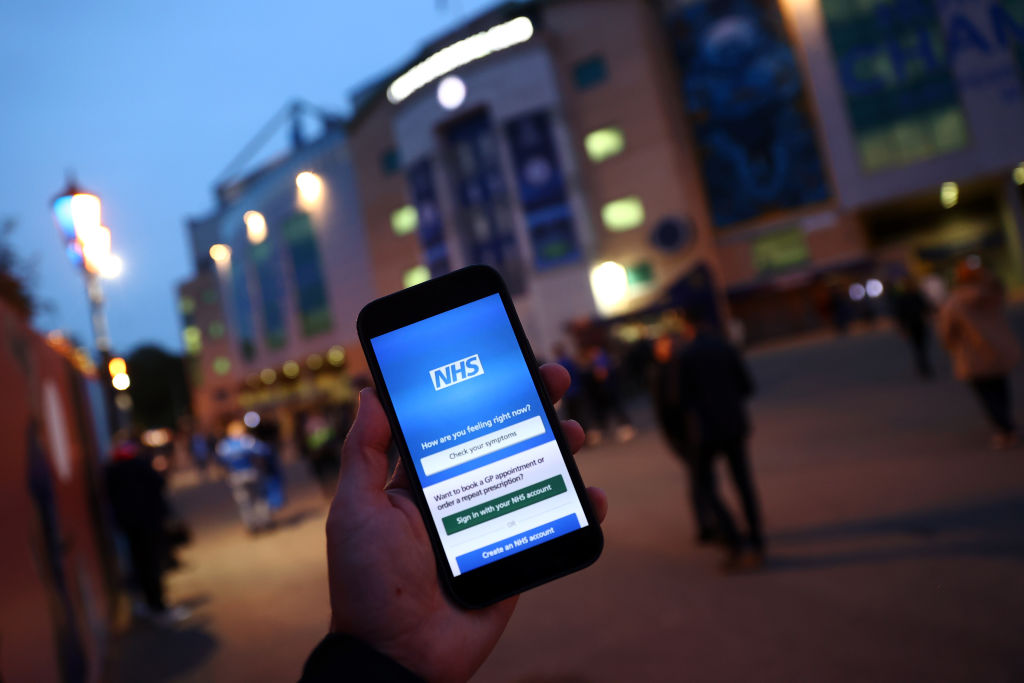
Chelsea FC v Malmo FF: Group H - UEFA Champions League
Some version of digital identities has been in mainstream use for years in the UK (Photo by Clive Rose/Getty Images)

Of all the things painted as nefarious threats to our civil liberties, digital identity combines a triangle of top targets: identity cards, technology and big government. Yesterday, Rishi Sunak ruled out identity cards on this very premise. The reality however, is far less threatening and in modern society, already part of our lives.

Digital identity has re-emerged as a solution to our burgeoning asylum processing crisis. One reason for the large number of people making the hazardous crossing to Dover is that it is easier to work in the informal economy in the UK, and thus fall off the radar.

This is a large contributor to the demand side of irregular migration. It is generally a result of employers avoiding compliance, enabling undocumented migrants to ‘disappear’ into the informal economy, where they are often paid below minimum agreed levels.

As surely as the sun rises in the east, one can guarantee a storm of vitriolic criticism from a vocal minority of civil liberties groups and libertarian MPs as soon as the word “identity” is mentioned. But this is misguided: digital identity, and identity infrastructure in general, is mired by misconceptions and tropes that are worth scrutinising in slightly closer detail.

In contrast to common perceptions, digital identity is not merely a digitised version of an “ID card”. It can act in this capacity if designed to, but mostly it is a type of government infrastructure that allows people to prove they are who they say they are and connects public services together.

There are broadly two types of digital identity: foundational digital identities – which provide identity as a public good, not for a specific service. And functional digital identities, which exist to prove your identity to serve a specific function – like the one proposed for immigration policy.

I also hate to break this news, but we have had digital identities in the UK for several years now. Gov.uk Verify – a way to log in to government services, with a guarantee you are who you say you are – has existed since 2016. NHS login, which allows individuals to sign onto many health websites, apps and services, is also a form of functional digital identity. They are generally convenient and far less threatening than people imagine.

Read more

The invisible workforce – why AI agents need new identity rules

IT professional managing server room equipment with focus on advanced technology and network infrastructure

For many, the ideal situation would be to have a foundational digital identity. In the same way physical infrastructure, like bridges and roads, supports the existence of services and businesses, digital identity is core infrastructure that supports public systems and business activities.

Digitalisation of basic services is happening across the world, and numerous use cases have demonstrated that digital identity facilitates everything from emergency cash payments to voting online. Estonia uses theirs to check medical records, submit tax claims, and even as a legal travel ID.

There is actually broad consensus in the development community – the UN, World Bank, and USAID –  that more digital identity is the right direction of travel, particularly when it comes to stateless citizens. Indeed, it is an almost certain one: ABI Research forecast over 850 million citizens will be equipped with a form of mobile identity by 2026.

A common criticism of digital identity, or identity infrastructure in general, is that it is a precarious, bureaucratic solution to a non existent problem. That is clearly no longer the case when it comes to border security, which is now a very tangible challenge.

Critics of digital identity would rightfully point to instances of data leaks and occasional misuse of surveillance and data retention powers. They might also focus on the potential targeting of minority groups by the authorities.

But these concerns are surmountable: foundational digital identity is used in pretty much every European country, as well as Canada, Australia and India. The reticence to it in the UK is increasingly becoming the outlier.

Many of our public services in the UK remain uniquely cumbersome and mismatched to the digital world we live in. We need to start thinking more creatively about how we solve seemingly intractable problems, and thus stop looking at digital identity as a controversial policy idea that simply renews the debate on ID cards, but as a genuinely useful piece of infrastructure that improves how governments deliver.

Read more

City calls on tech firms to tackle Britain’s fraud epidemic

Over £600m was stolen by fraudsters in the first half of 2025

Share this article

  • Facebook
  • X
  • LinkedIn
  • WhatsApp
  • Email

Similarly tagged content:

Sections

  • Opinion

Categories

  • Opinion

Trending Articles

  • As it happened: FTSE 100 relief rally runs out of steam as BP and Shell weigh; Oil hits three-month low

  • Rolls-Royce shares surge as SMR unit bags multi-billion pound Swedish nuclear contract

  • London Tech Week sums up everything wrong with UK tech

  • Rathbones to suspend thousands of client account inflows after FCA probe deals £530m blow

  • KPMG’s Summer Friday half-day rollback signals deeper woes for Big Four giants

More from CityAM

  • The invisible workforce – why AI agents need new identity rules

    Partner
    IT professional managing server room equipment with focus on advanced technology and network infrastructure
  • City calls on tech firms to tackle Britain’s fraud epidemic

    Tech
    Over £600m was stolen by fraudsters in the first half of 2025
  • Visa data leak piles pressure on Britain’s digital ID push

    Tech
    UK work and study visas have fallen as Labour faces pressure to reduce immigration.
  • Why identity security is now a board-level imperative

    Partner
    Corporate executives strategizing on managing shadow AI in business environments
  • Uber wants your journey on tape as safety concerns mount

    Tech
    Shares in Uber tumbled more than five per cent in pre-market trading as earnings missed analyst expectations.
  • Google built the internet economy. AI is rewriting it.

    Partner
    Halkin conference room with modern decor, large meeting table, and cityscape view through floor-to-ceiling windows
  • Starmer’s social media restrictions will mean the government can spy on every phone

    Opinion
    Keir Starmer at tech event discussing innovation and policy, surrounded by tech leaders and digital displays
  • Money20/20 Europe Celebrates Ten Years of Industry Leadership as AI, Digital Assets and Financial Sovereignty Take Centre Stage

    Business Wire
  • Terms & Conditions
  • Privacy Policy
  • Cookie Policy
  • News
  • Markets & Economics
  • Politics
  • Opinion
  • Life&Style
  • Personal Finance

Follow us for breaking news and latest updates

  • Facebook
  • X
  • Instagram
  • LinkedIn
Copyright 2026 CityAM Limited