How, what, when, where: Everything you need to know about the ECB’s impending quantitative easing announcement

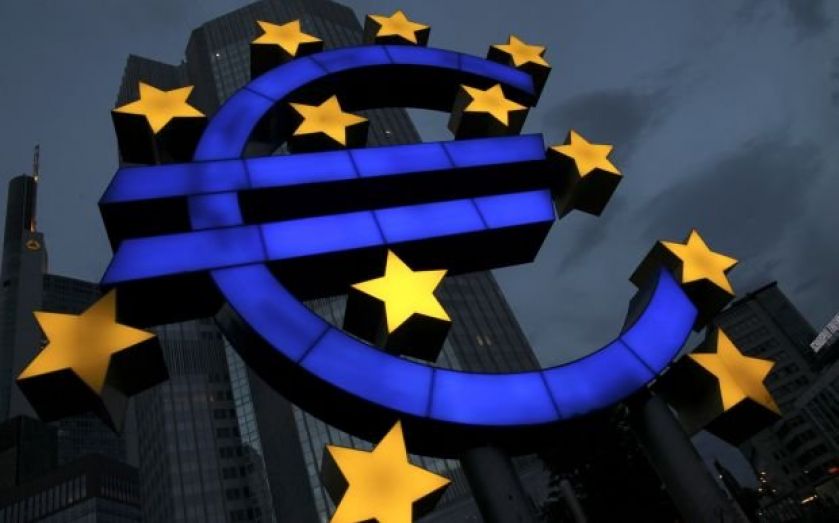
When the policy committee of the European Central Bank (ECB) meet tomorrow, they're widely expected to undertake the historic decision to embark upon full-blown quantitative easing (QE) policy.
The central bank has already slashed interest rates and is buying billions of euros of private sector debt. QE is the last major weapon in Draghi's arsenal – and here's everything you need to know:
What is quantitative easing?
Typically, central banks generate growth and lift inflation in the economy by cutting interest rates. Low interest rates encourage spending by making it cheaper to borrow money and diminishing returns on savings.
But the ECB's main interest rate – which is languishing at -0.05 per cent – is already at a record low. This means the ECB must enact QE if it's to re-ignite the euro area's ailing economy.
It will involve using newly printed money to buy the government bonds of the 18 Eurozone member states. Bond prices and their interest rates move in opposition directions, so while QE pushes up bond prices, it also brings down interest rates and consequently governments' borrowing costs. It's hoped this will have a knock-on effect on the interest rates of debt for households and businesses which are priced according to the government's borrowing costs.
What do they want to achieve (or why now)?
Tumbling oil prices have pushed the Eurozone's headline inflation rate into negative for the first time in five years.
There are fears that – unless the ECB acts quickly – the region could be plunged into a deflationary spiral. This is when people delay spending on the belief there will be better deals around tomorrow, which dents demand for company's products and services, prompting them to slash prices. After a while depressed demand becomes even more entrenched and eventually companies will start to cut investments, curtail hiring and even reduce wages.
This would be bad news for the ECB, because prolonged deflation is a little like quicksand, and once you're in it becomes very hard to get out.
Why is it so controversial?
Germany has been outspoken in its opposition to QE for the Eurozone.
Firstly, it has argued there's little chance a large-scale bond-buying scheme will actually work. It also argues that it will impose an unfair burden on the German taxpayer – as well as the tax payers of some other Eurozone countries. Under usual risk-sharing arrangements the 19 Eurozone countries share losses relative to the size of their economies – and Germany's is the biggest.
But this means that – if, say, Greece defaults – Germany could end up shouldering a sizeable amount of its debt. Finally, it's worried a weaker Euro will lead peripheral Eurozone countries – such as Greece, Portugal and Italy – slowing down painful but much-needed structural reforms to their economies.
So what will happen tomorrow?
The general belief is that the ECB will give the Eurozone a watered down dose of QE, largely due to pressure form the Germans (for reasons mentioned above). A typical QE policy would involve the ECB buying bonds from the 18 Eurozone governments directly.
However, Draghi is expected to say that those countries' central banks should shoulder responsibility for any bonds bought, meaning financial risks aren't distributed evenly between Eurozone members. The total amount is still expected to be pretty sizeable, with analysts and economists putting it anywhere between €500m and €1 trillion (although the former is much more likely).
Bloomberg has reported that an ECB executive board proposal circulated among its governing council foresees asset purchases of €50bn a month until the end of 2016.
How will markets react?
Anything equal to or above what investors are expecting (which is essentially a full-blown QE programme worth at least €500m) will make the markets pretty happy. Investors will also want details of how it's going to work (as they'll need to be convinced it will be easy to executive).
In such a scenario, bond and stocks prices would surge, as elated investors pile into these assets. But if the ECB disappoints tomorrow, there's a chance Eurozone stocks could fall, as investors pull money out. This could happen through two scenarios – either the ECB simply reveals guidance rather than enacting QE – or it panders to Germany and presents investors with a pretty disappointing version of QE.