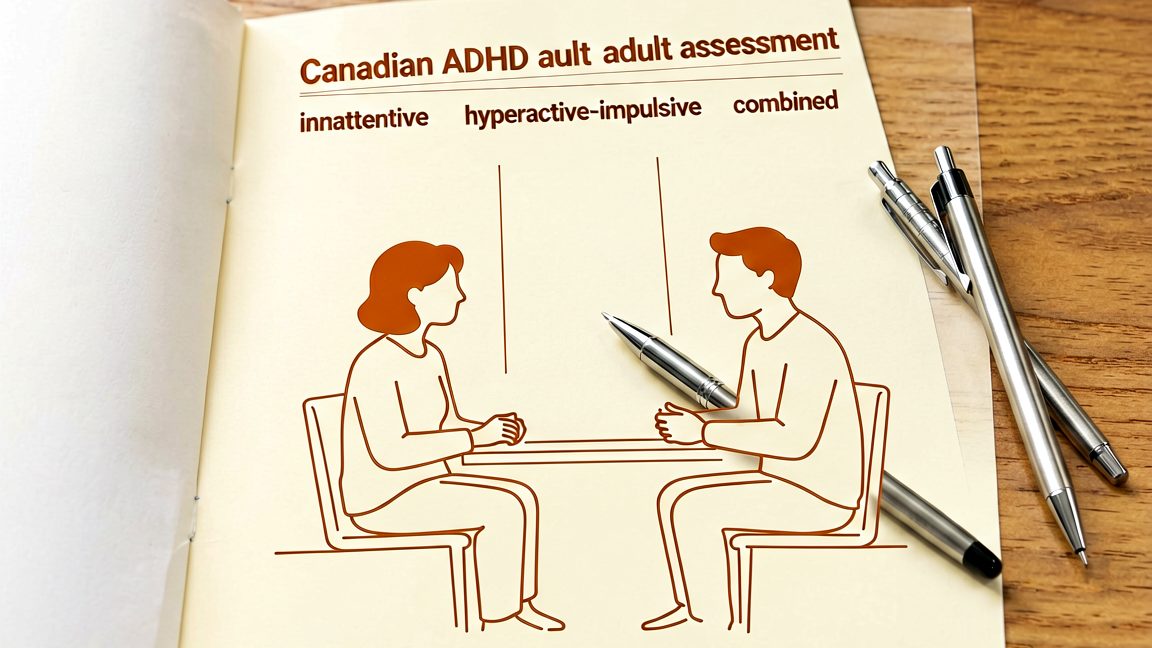
types of adhd in adults are split into three presentations, a framework employers are using to shape workplace accommodations.
Three recognised adult ADHD presentations
The health‑authority consensus is clear. The ADHD Test page lists three primary sub‑types – inattentive, hyperactive‑impulsive and combined – and assigns each a prevalence share of adult cases. The NHS describes ADHD symptoms as involving inattention, hyperactivity and impulsivity, noting that many people exhibit both inattentive and hyperactive‑impulsive traits. The U.S. National Institute of Mental Health (NIMH) echoes the same three‑symptom groups and adds that some individuals experience all three, which aligns with the combined presentation.
Prevalence snapshot
| Subtype | Approximate Share of Adult ADHD Cases |
|---|---|
| Inattentive | 33 % |
| Hyperactive‑Impulsive | 7 % |
| Combined | 60 % |
Source: ADHD Test.
Why the split matters for procurement and accommodation decisions
Canadian employers looking to purchase assessment tools, training modules or workplace‑adjustment services are now comparing offers on the basis of how well they address each presentation. An inattentive profile, for example, may call for structured task‑management software, while a hyperactive‑impulsive profile often benefits from flexible seating or movement breaks. The combined presentation, which accounts for 60 % of adult cases, typically requires a blended approach.
HR leaders cite the three‑type framework as a shorthand for tailoring benefits packages. The NHS notes that most people with ADHD show symptoms of both inattentive and hyperactive‑impulsive types, reinforcing the need for multi‑modal solutions.
Canadian disability‑accommodation landscape adds urgency
Statistics Canada reports that 27 % of Canadians aged 15 and older had at least one disability in 2022. Of employed Canadians with disabilities, 35.4 % required a workplace accommodation that year, with modified work hours (16.3 %) and altered duties (11.6 %) topping the list. While the data do not isolate ADHD, the prevalence of cognitive‑related disabilities suggests a sizable portion of that 35.4 % could be ADHD‑related, especially given the 33 % inattentive and 60 % combined shares.
Employers therefore face a dual pressure: comply with Canadian accessibility legislation and meet the practical needs of a workforce where a significant minority may fall into one of the three ADHD presentations. The StatCan figures underscore that unmet accommodation needs remain at 35.4 % despite modest improvements since 2017.
Practical steps for buyers
- Map the three presentations to specific accommodation categories – e.g., task‑management tools for inattentive, ergonomic furniture for hyperactive‑impulsive, and blended coaching programs for combined.
- Request vendor evidence of efficacy for each category. The NIMH highlights that symptom severity can vary widely, so a one‑size‑fits‑all solution is unlikely to satisfy the 60 % combined cohort.
- Align procurement timelines with the fiscal year to capture any government‑backed disability‑accommodation grants that may offset costs.
- Include internal audit checkpoints to verify that purchased solutions are being used by employees who match the targeted presentation.
What remains unknown
The packet does not contain sector‑specific adoption rates for the three‑type framework in Canada, nor does it break down the StatCan accommodation data by ADHD subtype. Employers therefore need to gather internal diagnostic data – where privacy regulations permit – before finalising procurement decisions.
For a deeper dive into the three presentations and their symptom profiles, see the original ADHD Test guide. For broader Canadian disability trends, consult the latest Statistics Canada release.
Internal reference: Markets overview | Employment trends