Skip to content
CityAM
Main navigation
  • News
    • News
      • Latest Business News
      • Economics
      • Politics
      • Tech
      • Banking
      • FTSE 100 Live
      • Retail
      • Insurance
      • Legal
      • Property
      • Transport
      • Markets
    • From our partners
      • AON
      • Bayes Business School
      • Canada BIDs
      • Central London Alliance CIC
      • Destination City
      • Halkin
      • Olympia
      • Inside Saudi
      • Tottenham Hotspur Stadium
      • Santander X
      • YEAR SIX Dividend
    • Featured

      UK manufacturers facing ‘steel quota cliff edge’

      The steel industry has been particularly badly hit by rising energy costs

      Submit a story

      Tell us your story.

      Submit
  • Opinion
  • Sport
    • Latest Sports News
      • Sport
      • Sport Business
    • From our partners
      • The Morning Briefing: SBS x CityAM
      • Aramco Team Series
      • LIV Golf
    • Featured

      2026 World Cup: England only attract half as many bets as Norway to lift trophy

      Breaking news concept with digital globe and financial charts, signifying global economy and stock market trends.

      Submit a story

      Tell us your story.

      Submit
  • Life&Style
    • Life&Style
      • Life&Style
      • Toast the City Awards
      • The Magazine
      • Travel
      • Culture
      • Motoring
      • Wellness
      • The RED BULLETiN
      • Do it with Shared Ownership
      • Media Speak Hub
    • Featured

      Old Pulteney releases 50-year-old whisky for 200th anniversary

      Old Pulteney 50-Year-Old single malt Scotch whisky bottle with elegant packaging on display, highlighting luxury and craft...

      Submit a story

      Tell us your story.

      Submit
  • Investec
  • Events
  • Latest Paper
Sunday 29 March 2020 9:40 pm  |  Updated:  Sunday 29 March 2020 9:44 pm

Extending the lockdown could have deadly consequences

By: Rachel Cunliffe

Add as a preferred source on Google
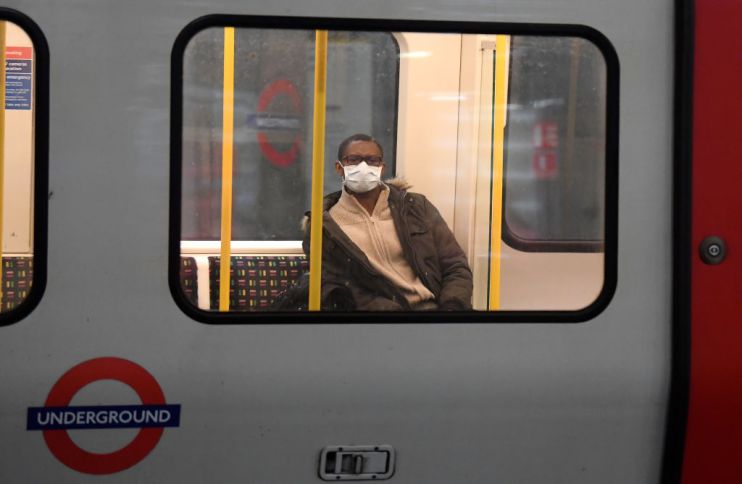
UK On Lockdown Due To Coronavirus Pandemic
Can the government prop up every business?

A week into what began as a three-week lockdown, the goalposts have been moved.

Government ministers and health officials spent the weekend recalibrating expectations, making it clear that people must be prepared for these unprecedented measures to last into June, perhaps longer.

The message from the government is that the measures cannot be lifted until the threat to life has passed. This is a noble goal, but the suggestion appears to be that this is a consequence-free policy: more time in lockdown means more lives saved, and is therefore without question the right thing to do.

The reality is, tragically, more complex.

For a start, as the chief medical officer noted when softer social distancing measures started to be introduced, the rules themselves may lead directly to avoidable deaths. Already, thousands of operations have been postponed. These delays may not cause immediate loss of life, but the long-term impact of denying people medical care for other conditions is no less real than the effects of coronavirus, for all that it might be less visible.

Then there are the health emergencies that are being missed: the appointments cancelled, the cancers going undiagnosed, the life-saving surgeries that are not happening because people are not seeing their doctors. Again, these may not be counted as Covid-19 deaths, and the shortening of lifespans because conditions were not caught early is hard to measure, but their impact is real.

More widely, although it may sound cold to try to compare the cost of businesses going under and jobs being lost with a human death, the two are inextricably linked. Coronavirus can kill in ways that go far beyond the lack of ventilators. 

Indeed, the cost to the economy cannot be separated from the cost to public health.

Read more

Treasury still has £5bn to spend on Covid-19 – taking total bill to £385bn

The UK economy has seen low growth under Chancellor Rachel Reeves.

People who are financially unstable have statistically lower life expectancies. Long-term unemployment is correlated with alcoholism and depression. Children in low-income families face far more precarious futures. Family breakdown — the rise of which is an inevitable consequence of both mass unemployment and trapping people in their homes —has an economic and social cost. So does widespread mental health deterioration.

The government has promised to do whatever it takes to stop the economy collapsing and support people whose income has suffered. But it cannot do so forever, nor for everyone. The existing package of support is both unsustainably generous (we will be paying off the debt for many generations to come), and insufficient. 

For it is not just pubs and restaurants being hit by these measures — it is virtually every sector. Retail, tourism and entertainment might have been the first victims, but keep these measures in place longer than a few weeks, and the list is endless: the arts, real estate, manufacturing, construction, education, marketing, consultancy, and media. Keep the economy on lockdown for months, and even sectors which could weather a brief crisis, like financial services and law — will start to suffer.

Can the government prop up every business? Is it prepared to put millions of additional claimants on Universal Credit? For how long? Already we have seen extraordinary fiscal and monetary measures to stabilise the economy. As more businesses collapse under the pressure of lockdown, the need for support will grow at an exponential rate, perhaps higher than that of the virus itself.

None of this is to suggest that the government should be blasé about relaxing rules. It is vital to give the health service all the time and resources possible to respond to the peak. But lockdowns cannot be extended indefinitely. The consequences are too great. 

Right now, the message from Downing Street is that any amount of economic damage is worth it to save more lives. But while we may not know the death toll from the lockdown itself for many years to come, those invisible future casualties must be recognised too.

The government has some agonising decisions to make. Extending the lockdown into June may seem the obvious choice, but the cure could prove worse than the disease itself.

Main image credit: Getty

Read more

Not just for lockdown: Pets at Home adapts to life after pet-buying boom

Pets at home, including a mix of cats, dogs, and small animals, creating a lively and heartwarming domestic scene.

Share this article

  • Facebook
  • X
  • LinkedIn
  • WhatsApp
  • Email

Similarly tagged content:

Sections

  • News
  • Opinion

Categories

  • Opinion
  • Politics

Trending Articles

  • Berg Finance 2021 DAC Expected to be Repaid on the July Payment Date

  • UK manufacturers facing ‘steel quota cliff edge’

  • Suralink Launches Cloud Testing Suite to Bring Agentic Execution to Audit Engagements

  • Lattice to Showcase Industry-Leading FPGA Innovations at FPGA Conference Europe 2026

  • CRH elects W. Anthony (Tony) Will to its Board of Directors

More from CityAM

  • Treasury still has £5bn to spend on Covid-19 – taking total bill to £385bn

    Economics
    The UK economy has seen low growth under Chancellor Rachel Reeves.
  • Not just for lockdown: Pets at Home adapts to life after pet-buying boom

    Retail
    Pets at home, including a mix of cats, dogs, and small animals, creating a lively and heartwarming domestic scene.
  • Is it even possible to regulate ‘misinformation’?

    Opinion
    Red bus with Brexit misinformation slogan parked on a street, highlighting controversial political claims and public react...
  • Starmer vows to end system ‘failing our kids’ ahead of expected social media ban

    Politics
    Keir Starmer speaking at London Tech Week conference, discussing innovation and technology advancements in the UK.
  • Reeves food tariffs policy will ‘barely touch the sides’ on supermarket prices

    Retail
    Keanu Reeves in a thoughtful pose, wearing a formal suit, looking contemplative during a business meeting or press event.
  • Energy price cap to jump 13 per cent this summer

    Energy
    A general view shows pylons and Ferrybridge C power station, owned by energy company SSE, which is set to stop generating and close in March 2016, near Knottingley, northern England, on May 24, 2015. The coal-fired powerstation went online in 1966. AFP PHOTO / OLI SCARFF (Photo credit should read OLI SCARFF/AFP/Getty Images)
  • King’s Speech: Red tape to be cut to help Britain host Euros and World Cup

    Sport Business
    Business professionals discussing strategy in a modern conference room with digital presentation screens in the background
  • Local authorities thwart housebuilding with ‘manifestly unfair’ council tax raid on developers

    Property
    Rachel Reeves at construction site, inspecting housebuilding progress, highlighting Labours commitment to housing developm...

CityAM Canada — business, markets and opinion for Canadian readers.

Sections

  • Business
  • Markets
  • Tech
  • AI
  • Economics
  • Opinion
  • Cities

Company

  • About
  • Contact

Legal

  • Terms of Use
  • Privacy Policy
  • Cookie Policy
© 2026 CityAM Canada. All rights reserved.
Terms · Privacy · Cookies