Go all the way with Beaujolais

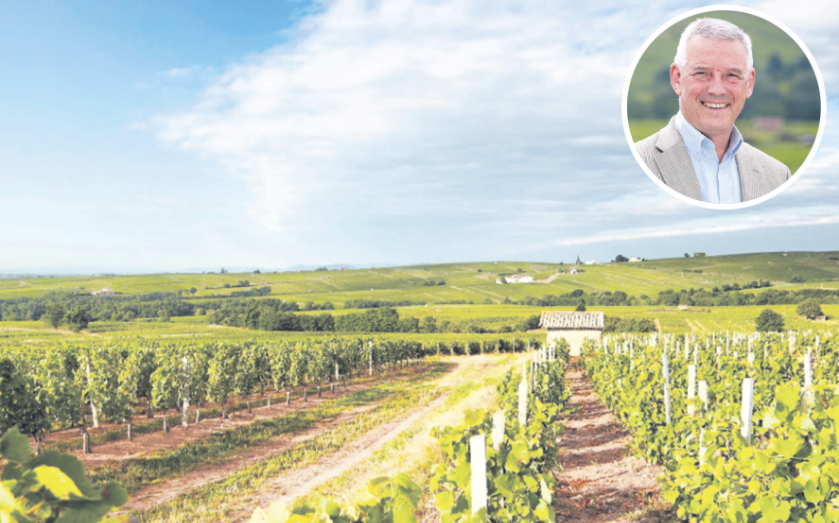
My least favourite date in the entire wine calendar is 19 November. It is, of course, Beaujolais Nouveau Day, the time when marketing men and desperate wine bar owners flood the Square Mile with cheap, nasty, pink plonk and try to kid us that it is something special.
If I haven’t made myself clear, Beaujolais Nouveau is nasty stuff. It should be abbreviated to Beaujolais NO. Most of the time, it smells unripe, tastes astringent and just looking at a bottle is enough to strip your stomach lining. Fortunately these days most people seem to agree. There was a time in the nineties when Britain would import 750,000 bottles of the stuff, causing shortages elsewhere. People indulged in crazy van journeys through the night from the middle of France, just to bring back the first batch. Madness.
Today, volumes have shrunk to a fraction of that (less than 100,000 bottles) as we’ve woken up to the fact that, despite all the erstwhile hype, it just isn’t very nice. A succession of scandals during the past 15 years about production methods (some leading producers were accused of doctoring the wines) have hardly helped. This has given the whole region a bad name, which is bad news for its hardworking wine-makers but good news for wine buyers. Beaujolais offers some lovely wines for people prepared to suspend judgement and hunt for quality.
Before we go any further, here’s a few facts. Beaujolais is a major French wine making region between Burgundy and Lyon that runs to the West of the Saone River. It’s unique because it grows the Gamay grape almost exclusively. This grape has a thin skin and ripens easily, making it ideal for making large quantities of fruity, low tannin wine. In many ways it’s a wine makers’ and drinkers’ delight – if you order a €5 carafe of vin rouge in a French café even today, the chances are it will be a Beaujolais.
Its downfall was a particularly grim wine-making technique called carbonic maceration. This is a system where the wine ferments while it’s still in the grape, before it’s even pressed. The winemakers simply dump vast quantities of grapes into a sealed vat, and pump in Carbon Dioxide. The grapes ferment rapidly and the wine maker presses out the produce a few days’ later, saving a fortune.
Before I put you off completely, let’s return to the map. Most of the ordinary Beaujolais is produced in the south of the region – and these were the vineyards and wine makers who made a mint when Beaujolais Nouveau was at its height. But to the North, Beaujolais takes on a completely different and rather more aristocratic air – and this is where we should look for something to drink.
In the north of Beaujolais there are 10 small Beaujolais Crus, special regions, with each producing its own wine with its own character. Their names alone roll wonderfully off the tongue: Brouilly, Cote de Brouilly, Régnié, Chiroubles, Fleurie, Saint Amour, Chénas, Juliénas, Morgon and Moulin a Vent.
Few British drinkers will have heard of the last one, but for me, Moulin a Vent is a show-stopper; a powerful, blackcurranty wine that’s fabulous, although hard to find.
In these ACs, the wines are made with gentle care, and a fierce determination to uphold the honour of their downtrodden region. This summer I served Fleurie – the lightest and best known of the Crus with hints of raspberries and roses – to some guests. They loved it and looked bewildered when they learned what it was.
The man who more than any other has made it his life’s work to rehabilitate Beaujolais is Guillaume de Castelnau, the director of Chateau de Jacques. He admits the Beaujolais Nouveau craze did enormous long term damage to the region. “Yes it did, but the reasons behind it were complex. After the Second World War, people became very interested in everything that was modern, and Beaujolais invented the wine you could drink now. Then fashion changed and people became more interested in quality. If Beaujolais Nouveau had been 25 per cent of our production it would have been okay. But it became unbalanced, more like 65 per cent.”
De Castelnau arrived from Meursault (that crown princess of the white Burgundy world) 14 years ago and has since worked tirelessly to improve quality. He presses his grapes in the usual way, has replanted much of Chateau de Jacques’ 90 hectares and, where possible, moved to a biodynamic method using natural yeasts – although he admits he can’t do it everywhere. “It is like a family. If I have young parcels of vines I can let the soil live around them, but with old vines, like old relatives I have to be more careful, and sometimes they need medicine.”
Unsurprisingly, De Castelnau’s show-stopping wines are his Moulin a Vent, which can allegedly last up to 20 years in bottle. Even better is his top wine, the Clos du Grand Carquelin, a dense fruit storm of a wine (and as I write I am lucky to have a glass of the 2005 by my keyboard – sadly no longer available in the UK so you will have to use your imagination).
It will be a long way back for Beaujolais. The marketing men did so much damage. There is also some real heavy lifting – whole areas need to be replanted, wine production methods changed and there has to be a cultural acceptance that quality should defeat quantity every time. For now though, the very best of Beaujolais is cheaper than the worst Burgundy, and there is a real buying opportunity for anyone willing to investigate.