Skip to content
CityAM
Main navigation
  • News
    • News
      • Latest Business News
      • Economics
      • Politics
      • Tech
      • Banking
      • FTSE 100 Live
      • Retail
      • Insurance
      • Legal
      • Property
      • Transport
      • Markets
    • From our partners
      • AON
      • Bayes Business School
      • Canada BIDs
      • Central London Alliance CIC
      • Destination City
      • Halkin
      • Olympia
      • Inside Saudi
      • Tottenham Hotspur Stadium
      • Santander X
      • YEAR SIX Dividend
    • Featured

      Banks woo the wealthy to ace stable income streams

      Breaking news concept with abstract digital elements and world map on a business news website

      Submit a story

      Tell us your story.

      Submit
  • Opinion
  • Sport
    • Latest Sports News
      • Sport
      • Sport Business
    • From our partners
      • The Morning Briefing: SBS x CityAM
      • Aramco Team Series
      • LIV Golf
    • Featured

      2026 World Cup: England only attract half as many bets as Norway to lift trophy

      Breaking news concept with digital globe and financial charts, signifying global economy and stock market trends.

      Submit a story

      Tell us your story.

      Submit
  • Life&Style
    • Life&Style
      • Life&Style
      • Toast the City Awards
      • The Magazine
      • Travel
      • Culture
      • Motoring
      • Wellness
      • The RED BULLETiN
      • Do it with Shared Ownership
      • Media Speak Hub
    • Featured

      Old Pulteney releases 50-year-old whisky for 200th anniversary

      Old Pulteney 50-Year-Old single malt Scotch whisky bottle with elegant packaging on display, highlighting luxury and craft...

      Submit a story

      Tell us your story.

      Submit
  • Investec
  • Events
  • Latest Paper
Friday 06 June 2014 11:38 am  |  Updated:  Wednesday 29 May 2019 9:30 pm

How climate change policies are hurting the world’s poor
Government policies intended to reduce carbon dioxide are directly harming the poor in both the developing and developed world, according to a report released by the Global Warming Policy Foundation (GWPF).

Energy sources that are not based on fossil fuels are making both power and food more expensive, the report argues. While the affluent remain relatively unaffected, the poor are bearing the brunt of rising prices.

The report urges caution with the pace of carbon reduction, warning that in the long term humans may have to replace fossil fuels as an energy source, but not now.

The report, entitled Climate Policy and the Poor, was the written by professor Anthony Kelly, who died on Tuesday. Kelly, who was widely regarded as the father of composite materials in the UK, points to two major ways government policy is harming the poor in the UK and overseas.

Raising the price of food

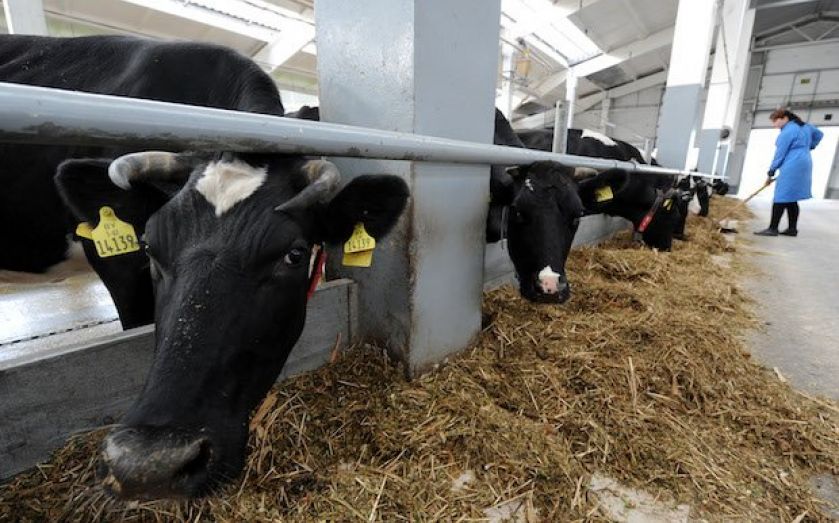
One part of the UK's Climate Change Act is the Renewable Transport Fuel Obligation. The majority of renewable transport fuel comes from ethanol. In the UK and elsewhere in the developed world, this policy has had a devastating impact on the ability of the poor to access affordable food, according to the report.

The principle source for non-fossil fuel motor car fuel has been Brazil, which distils pulp left when sugar has been extracted from its cane. Since sugar is plentiful in Brazil, ethanol production should not have a major impact on the price of food. However, in the US sugar is more expensive, so ethanol is made from maize grown in America's farm belt.

The consequence has been to set the interests of the biofuel industry in direct conflict with the interests of the poor, who rely on strong agricultural output from countries such as the US for affordable food. The United Nations Food Agency has even gone so far as to ask the US government to suspend its production of bio-fuel because of its contribution to a global food crisis.

In 2010, a World Bank Policy research paper estimated higher prices caused by increased bio-fuel production over the 2004 level would push 32m people into poverty.

Raising the price of energy

The EU Emissions Trading Scheme means electricity generators are compelled to buy permits to emit carbon dioxide or face penalties. The UK government's decision to introduce a minimum carbon floor price, because it believed the price of carbon was too cheap, has raised the cost energy even more so than would have been the case under the EU's original scheme.

The situation has been exacerbated by the Renewables Obligation (RO). All licensed electricity suppliers are under an obligation from the government to source some of the electricity sold from renewable energy. The Renewable Energy Foundation has estimated the cost of the RO between 2002 and 2030 will reach £100bn.

Kelly concludes: "The changes imposed thus far have not dealt with the risks of climate change through a sensible, steady and sustained improvement in energy and other technologies and have therefore failed to address the problems of the here and now".


Share this article

  • Facebook
  • X
  • LinkedIn
  • WhatsApp
  • Email

Similarly tagged content:

Sections

  • News

Categories

  • Business

Related Topics

  • Climate change

Trending Articles

  • As it happened: FTSE 100 relief rally runs out of steam as BP and Shell weigh; Oil hits three-month low

  • Rathbones to suspend thousands of client account inflows after FCA probe deals £530m blow

  • Rolls-Royce shares surge as SMR unit bags multi-billion pound Swedish nuclear contract

  • More Big Four blues as Deloitte plans to slash UK audit roles

  • London Tech Week sums up everything wrong with UK tech

More from CityAM

  • The Strait of Hormuz proves fossil fuels are essential for food security

    Opinion
    View of the Strait of Hormuz, showcasing bustling maritime traffic under clear skies, highlighting its strategic significa...
  • Data centres to consume tenth of global power by 2050

    AI
    Pylons standing tall against a clear sky following Engies acquisition of UK Power Networks, symbolizing energy sector growth.
  • The climate quango empire will keep growing until cheap matters more than ideology

    Opinion
    Net zero secretary Ed Miliband is set to face more pressure over high energy bills in the UK.
  • King’s Speech: Ministers ban North Sea oil and gas exploration

    Energy
    North Sea oil terminal with storage tanks and docking facilities under a clear sky, highlighting energy infrastructure.
  • Investment firms anticipate surge in renewable energy spending

    Energy
    Battery storage sites are seen as crucial to supporting renewable energy.
  • ‘Exceptionally challenging’: Starling puts climate target under review

    Fintech
    Starling is predicted to ramp up its banking-as-a-service platform in a rebrand. (Image: Starling)
  • UK carbon markets stand to get an AI boost

    Opinion
    AWS data centre exterior with modern architecture and advanced infrastructure in a business news context
  • Drill baby brill: Why the UK must develop it’s North Sea oil fields

    Opinion
    North Sea oil terminal with storage tanks and docking facilities under a clear sky, highlighting energy infrastructure.

CityAM Canada — business, markets and opinion for Canadian readers.

Sections

  • Business
  • Markets
  • Tech
  • AI
  • Economics
  • Opinion
  • Cities

Company

  • About
  • Contact

Legal

  • Terms of Use
  • Privacy Policy
  • Cookie Policy
© 2026 CityAM Canada. All rights reserved.
Terms · Privacy · Cookies