Skip to content
CityAM
Main navigation
  • News
    • News
      • Latest Business News
      • Economics
      • Politics
      • Tech
      • Banking
      • FTSE 100 Live
      • Retail
      • Insurance
      • Legal
      • Property
      • Transport
      • Markets
    • From our partners
      • AON
      • Bayes Business School
      • Canada BIDs
      • Central London Alliance CIC
      • Destination City
      • Halkin
      • Olympia
      • Inside Saudi
      • Tottenham Hotspur Stadium
      • Santander X
      • YEAR SIX Dividend
    • Featured

      Can football conquer the US? Why culture is key this World Cup

      GettyImages 2281127577 featuring a significant news event or business setting, capturing key moments and interactions

      Submit a story

      Tell us your story.

      Submit
  • Opinion
  • Sport
    • Latest Sports News
      • Sport
      • Sport Business
    • From our partners
      • The Morning Briefing: SBS x CityAM
      • Aramco Team Series
      • LIV Golf
    • Featured

      Can football conquer the US? Why culture is key this World Cup

      GettyImages 2281127577 featuring a significant news event or business setting, capturing key moments and interactions

      Submit a story

      Tell us your story.

      Submit
  • Life&Style
    • Life&Style
      • Life&Style
      • Toast the City Awards
      • The Magazine
      • Travel
      • Culture
      • Motoring
      • Wellness
      • The RED BULLETiN
      • Do it with Shared Ownership
      • Media Speak Hub
    • Featured

      The best places to eat sandwiches in Lisbon, from bifanas to pregos

      Bifana do Afonsos famous bifana sandwich showcasing tender pork in a freshly baked roll with savory sauce.

      Submit a story

      Tell us your story.

      Submit
  • Investec
  • Events
  • Latest Paper
Tuesday 10 June 2014 3:40 pm  |  Updated:  Wednesday 29 May 2019 9:22 pm

How the IMF got it wrong on austerity by ignoring psychology

By:

Add as a preferred source on Google

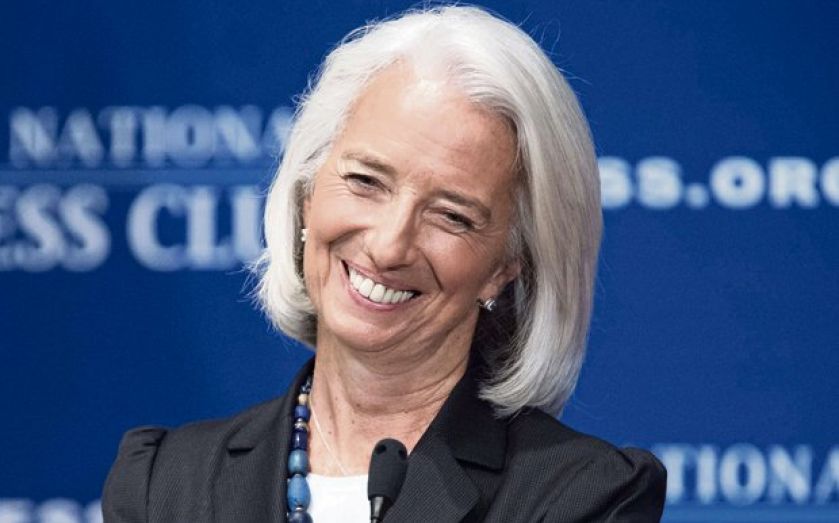
THE INTERNATIONAL Monetary Fund: wrong again. At the end of last week, the IMF abandoned its criticism of the UK government’s economic strategy. Christine Lagarde, the IMF chief, said her organisation had “underestimated” the strength of the recovery in Britain, and the IMF now believes that the UK will be the fastest growing of any major economy in 2014. In complete contrast, IMF chief economist Olivier Blanchard issued dire warnings in early 2013. George Osborne, he pronounced, was “playing with fire”. Unless austerity policies were abandoned, the UK economy risked a triple dip recession.

Both Blanchard and the IMF have got form on these matters. In early 2013, Blanchard and his colleague Daniel Leigh published an IMF working paper on the size of the fiscal multiplier. The multiplier, a theoretical concept invented by John Maynard Keynes in the 1930s, is the most fundamental concept in the whole of macroeconomics. It measures the eventual impact on the economy as a whole, GDP, of a sustained increase or decrease in public spending. An increase in such expenditure brings more people into work, they in turn will have more to spend, the companies whose products they buy will have more revenue, and will employ even more people. The initial impact is multiplied through the economy. Sounds simple. But there are many potentially offsetting factors to take into account. Some extra spending will be on imports, for example, which does not boost domestic output at all. The bigger public deficit which the extra spending creates may lead to higher interest rates.

Economists have struggled for decades to arrive at a consensus on how big the multiplier really is. While still being far from agreement, there is a general view that it is low. Indeed, a fiscal expansion, once all the other feedbacks are taken into account, may even lead to GDP rising by less than the size of the stimulus. In contrast, Blanchard and Leigh argued that, in the current circumstances, it is large and positive. So a fiscal contraction, the basis of the chancellor’s policies, will lead to the opposite, to a sharp reduction in GDP. Events have shown this to be wrong.

The IMF duo approvingly cited other estimates, derived from the exotically named dynamic stochastic general equilibrium (DSGE) models, that the multiplier is large. These models have been all the rage in both top academic circles and central banks. Blanchard eulogised them in a MIT discussion paper published three weeks before the collapse of Lehman Brothers in September 2008. Great progress had been made with DSGE models in understanding how the economy really worked. The state of macroeconomics, he declared, was “good”.

An inescapable problem for these highly mathematical models is that they do not take into account sentiment, the narrative which emerges around policy changes. Osborne’s fiscal contraction has gradually created a positive narrative across companies, so they are willing to create jobs and invest. Psychology rather than hardline maths is needed to tell us what the multiplier really is in any particular situation.

Paul Ormerod is an economist at Volterra Partners, a visiting professor at the UCL Centre for Decision Making Uncertainty, and author of Positive Linking: How Networks Can Revolutionise the World.

Share this article

  • Facebook
  • X
  • LinkedIn
  • WhatsApp
  • Email

Similarly tagged content:

Sections

  • Opinion

Categories

  • Opinion

Related Topics

  • Economic austerity
  • IMF

Trending Articles

  • Can football conquer the US? Why culture is key this World Cup

  • Starmer agrees investment deal with Japan as EU deal questioned

  • Elon Musk becomes world’s first trillionaire after SpaceX mega float

  • US and Iran agree to peace deal’s text, negotiators say

  • Thames Water, energy grid, rent prices: Burnham drums up public control agenda

More from CityAM

  • IMF warns AI cyberattacks could trigger global financial crisis

    Tech
    The ICO said it initially planned to fine Capita a total of £45m, but this was later reduced by “mitigating factors”
  • IMF tells Reeves to drop triple lock pension and make ‘fundamental’ tax reform 

    Economics
    Rachel Reeves discussing economic strategies amid forecasts of low growth for the year at a business conference podium.
  • Nvidia chief brushes off tech sell-off as a buying opportunity

    Markets
    Nvidia CEO Jensen Huang speaking at a tech conference, emphasizing AI advancements and industry innovation.
  • As it happened: IMF lifts UK GDP and stocks reverse losses as bonds warned of ‘correction’

    Markets
    Keir Starmer delivering a speech on May 11, addressing political issues, in a formal setting with an audience.
  • ‘It’s important we increase spending’: Treasury minister defends triple lock pension

    Politics
    Treasury team members discuss financial strategies at a business meeting, showcasing collaborative efforts in economic pla...
  • As it happened: Stocks and oil recover as Iran declares end to strikes; tech rally rocks markets

    Markets
    Breaking news graphic with headline text, featuring a digital world map and icons symbolizing global connectivity
  • UK ministers tell UK businesses to ‘step up’ cyber defences

    Tech
    The ICO said it initially planned to fine Capita a total of £45m, but this was later reduced by “mitigating factors”
  • Rachel Reeves battled Scott Bessent over Iran war

    Politics
    Scott Besent and Rachel Reeves discussing economic strategies at a business conference podium
  • Terms & Conditions
  • Privacy Policy
  • Cookie Policy
  • News
  • Markets & Economics
  • Politics
  • Opinion
  • Life&Style
  • Personal Finance

Follow us for breaking news and latest updates

  • Facebook
  • X
  • Instagram
  • LinkedIn
Copyright 2026 CityAM Limited