Skip to content
CityAM
Main navigation
  • News
    • News
      • Latest Business News
      • Economics
      • Politics
      • Tech
      • Banking
      • FTSE 100 Live
      • Retail
      • Insurance
      • Legal
      • Property
      • Transport
      • Markets
    • From our partners
      • AON
      • Bayes Business School
      • Canada BIDs
      • Central London Alliance CIC
      • Destination City
      • Halkin
      • Olympia
      • Inside Saudi
      • Tottenham Hotspur Stadium
      • Santander X
      • YEAR SIX Dividend
    • Featured

      ‘Very concerned’: City watchdog scolds motor finance lenders over £9bn redress scheme

      FCA sign

      Submit a story

      Tell us your story.

      Submit
  • Opinion
  • Sport
    • Latest Sports News
      • Sport
      • Sport Business
    • From our partners
      • The Morning Briefing: SBS x CityAM
      • Aramco Team Series
      • LIV Golf
    • Featured

      Dallas, Boston, New York New Jersey: Inside England’s Fifa World Cup stadiums

      Getty Images logo against a sleek, modern background, representing the influence of media in the business world

      Submit a story

      Tell us your story.

      Submit
  • Life&Style
    • Life&Style
      • Life&Style
      • Toast the City Awards
      • The Magazine
      • Travel
      • Culture
      • Motoring
      • Wellness
      • The RED BULLETiN
      • Do it with Shared Ownership
      • Media Speak Hub
    • Featured

      Glengarry Glen Ross at the Old Vic fails to close

      Glengarry Glen Ross production at Old Vic Theatre showcasing intense business negotiations and dramatic performances

      Submit a story

      Tell us your story.

      Submit
  • Investec
  • Events
  • Latest Paper
Monday 02 February 2015 8:05 pm

How paving over London’s rail routes could end the miserable commuter squeeze

By: Express KCS

Add as a preferred source on Google

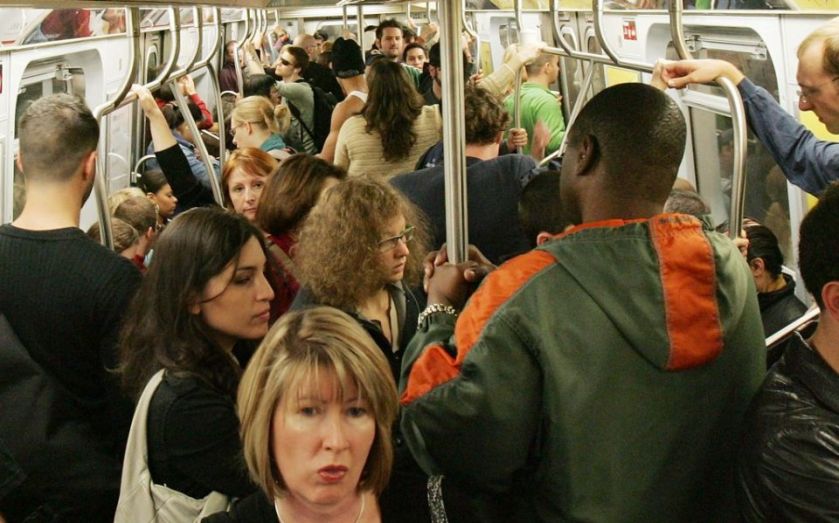
London’s population is forecast to hit 10m in 2030 and it’s difficult to see how the transport system will cope. A high proportion of commuters already endure severe overcrowding, standing in jam-packed carriages or even struggling to find enough space to get on trains.

The government sees additional rail capacity as the best way to address rising demand. But this is unrealistic. With further spending cuts needed to reduce government debt, there is simply no way the Treasury will be able to fund the scale of investment required.

Part of the problem is that rail schemes in London are hugely expensive. The proposed Crossrail 2 scheme, which will add relatively little to the capital’s transport capacity, is predicted to cost an astounding £27bn. Many more big projects would be needed for the network to accommodate the projected additional numbers of passengers. This is simply unaffordable. Public transport subsidies already cost taxpayers £12bn a year, with roughly half of this spent in London.

An alternative strategy would be to manage demand by raising fares. Yet despite the economic logic, fare hikes have become politically toxic. Even rises of just 1 per cent above inflation are now deemed unacceptable.

Future governments will therefore face a difficult predicament. They won’t be able to afford to increase rail capacity to cope with growing demand and they will struggle to manage congestion with fare increases due to political constraints. Fortunately, there is a potential solution if policymakers are prepared to think outside the box and take a more flexible approach to the use of transport infrastructure.

Rapidly-growing cities in Latin America and Asia have faced similar issues: rising demand but severe budgetary constraints. But rather than investing in hyper-expensive rail infrastructure, local governments have often decided to build much cheaper high-capacity busways instead. From Istanbul to Mexico City, these busways carry vast numbers of commuters while offering cheap and affordable fares.

So why not do this in London? One apparent reason is the lack of space, with the city lacking the wide boulevards used for busways elsewhere. But London does have an extensive rail network, with often vast corridors reaching right into the centre. This raises the question, would some of these routes deliver better value for money if they were converted into busways?

There is certainly strong evidence that this would bring a major increase in capacity. A single bus lane in New York’s Lincoln Tunnel carries up to 30,000 commuters in the peak hour, compared with a figure closer to 10,000 for a typical railway track entering Central London. And on former railway routes managed to avoid congestion, the potential capacity of busways would be much higher.

There could also be a big reduction in fares. Operating costs are likely to be much lower than on comparable rail routes. Busways are far simpler to manage and maintain.

Concerns about journey times can also be dismissed. On the shorter commuter routes where busways would be most appropriate, a combination of more direct services and increased frequency would deliver faster door-to-door travel times for the vast majority of passengers.

While busways may not be the best option in every location, the next government should not set transport infrastructure in stone. A more flexible approach may be the only way to avoid a severe capacity crunch.

Dr Richard Wellings is head of transport at the Institute of Economic Affairs and the co-author, with Paul Withrington, of Paving Over the Tracks… a better use of railways?

Share this article

  • Facebook
  • X
  • LinkedIn
  • WhatsApp
  • Email

Similarly tagged content:

Sections

  • Opinion

Categories

  • Opinion

Related Topics

  • Crossrail

Trending Articles

  • Who could be Andy Burnham’s Chancellor? 

  • As it happened: FTSE 100 finishes higher as US-Iran talks progress and Starmer resigns; Space X shares fall after bond sale

  • Starmer will resign, Trump says

  • Kaleb Cooper: Brits don’t care about the price of milk 

  • Iran to close Strait of Hormuz as Trump threatens toll

More from CityAM

  • Let’s help London’s £53.5bn airport investment opportunity take off

    Opinion
    Commercial airplane flying in clear blue sky, representing aviation news and current trends in the airline industry.
  • Hopes rise for decision on Heathrow’s third runway plan

    Transport & Infrastructure
    Heathrow boss Thomas Woldbye is expected to lay the groundwork for what is the largest private investment programme in Heathrow's history.
  • London City Airport faces opposition over bigger planes plan

    Transport & Infrastructure
    London City Airport terminal bustling with travelers and staff, showcasing modern architecture and vibrant city backdrop.
  • Lyft bets black cabs and robotaxis can share London’s streets

    Transport & Infrastructure
    A professional news setting with a diverse team discussing current events, laptops open, in a modern conference room.
  • Universal reveals £133m investment in Bedford theme park

    Media
    Rachel Reeves and Comcast
  • Balfour Beatty emerges from US oversight scheme after fraud against military

    Transport & Infrastructure
    Balfour Beatty construction site showcasing cranes, workers, and building progress against a city skyline backdrop
  • Fideres Study Finds TfL Fare Zones Disproportionately Burden Ethnic Minority Commuters

    Business Wire
  • Manchester United secure site for new stadium after switching location

    Sport Business
    Foster Partners architecture firm showcases innovative building design, highlighting sustainable and modern elements in ur...

CityAM Canada — business, markets and opinion for Canadian readers.

Sections

  • Business
  • Markets
  • Tech
  • AI
  • Economics
  • Opinion
  • Cities

Company

  • About
  • Contact

Legal

  • Terms of Use
  • Privacy Policy
  • Cookie Policy
© 2026 CityAM Canada. All rights reserved.
Terms · Privacy · Cookies