Skip to content
CityAM
Main navigation
  • News
    • News
      • Latest Business News
      • Economics
      • Politics
      • Tech
      • Banking
      • FTSE 100 Live
      • Retail
      • Insurance
      • Legal
      • Property
      • Transport
      • Markets
    • From our partners
      • AON
      • Bayes Business School
      • Canada BIDs
      • Central London Alliance CIC
      • Destination City
      • Halkin
      • Olympia
      • Inside Saudi
      • Tottenham Hotspur Stadium
      • Santander X
      • YEAR SIX Dividend
    • Featured

      Kia Oval worth £80m to the UK economy as Test gets underway

      Cityscape at dusk showcasing skyline with prominent skyscrapers under a vibrant sky, ideal for business news context.

      Submit a story

      Tell us your story.

      Submit
  • Opinion
  • Sport
    • Latest Sports News
      • Sport
      • Sport Business
    • From our partners
      • The Morning Briefing: SBS x CityAM
      • Aramco Team Series
      • LIV Golf
    • Featured

      Kia Oval worth £80m to the UK economy as Test gets underway

      Cityscape at dusk showcasing skyline with prominent skyscrapers under a vibrant sky, ideal for business news context.

      Submit a story

      Tell us your story.

      Submit
  • Life&Style
    • Life&Style
      • Life&Style
      • Toast the City Awards
      • The Magazine
      • Travel
      • Culture
      • Motoring
      • Wellness
      • The RED BULLETiN
      • Do it with Shared Ownership
      • Media Speak Hub
    • Featured

      Old Pulteney releases 50-year-old whisky for 200th anniversary

      Old Pulteney 50-Year-Old single malt Scotch whisky bottle with elegant packaging on display, highlighting luxury and craft...

      Submit a story

      Tell us your story.

      Submit
  • Investec
  • Events
  • Latest Paper
Tuesday 27 August 2024 5:36 am  |  Updated:  Wednesday 28 August 2024 12:38 pm

Labour should not be taking inspiration from Kamala Harris

By: Eliot Wilson

Add as a preferred source on Google
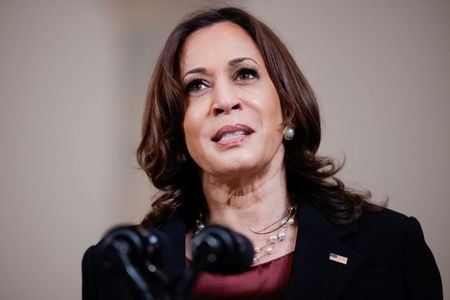
FILE PHOTO: U.S. Vice President Kamala Harris speaks in the White House in Washington

Labour has a long-standing love affair with the Democrats, but while the Vice President’s plans for price controls by any other name may be popular, but they are economically illiterate, says Eliot Wilson

It is hard to believe that barely a month has passed since Joe Biden announced he would not seek re-election in November and instead endorsed Kamala Harris. Her emergence as a potential President in a more competitive race has caught the eye of senior Labour figures: the Prime Minister was well represented by backroom staff in Chicago, reflecting a fascination in the party with Democratic politics which goes back at least to Tony Blair’s early meeting with a newly elected President Bill Clinton in 1993. British officials will be scrutinising Harris’s evolving policy platform and assessing announcements for impact and, perhaps, adaptability.

One of Harris’s most striking ideas in the past fortnight has been a federal law against “price-gouging” by food suppliers and grocery stores. With the price of groceries rising by 25 per cent since 2020 and some companies enjoying record profits, the Vice President wants to empower the Federal Trade Commission to examine pricing practices and impose “new penalties for opportunistic companies that exploit crises and break the rules”.

The Harris campaign denies that the proposals are price controls. Semantics aside, she wants the state to intervene to control how much manufacturers and retailers charge and how much profit they make. That should be worrying enough. Economists have cautioned that it is not even clear that grocery prices have been made artificially high or that it has contributed significantly to inflation. Equally, profits being kept low by fiat may well discourage new entrants to the market and stifle competition.

Of course the headlines are easy to anticipate: cheaper food for all, courtesy of the federal government. That cheap potential popularity is something Labour will notice at a time when the government could do with some good news.

Sir Keir Starmer and Rachel Reeves have demonstrated in word and deed that they regard the state as an important and beneficial active participant in the economy: I wrote last week about the dirigiste Great British Energy and have highlighted the government’s plans for an industrial strategy. And that should make us pay attention.

Starmer has so far rebuffed calls for rent controls from the mayor of London. Sadiq Khan has been arguing for years for the creation of a London Private Rent Commission which would allow City Hall to set private-sector rents, despite extensive evidence that this kind of intervention discourages house-building, reduces the number of properties offered for rent and generally diminishes rather than expands rental opportunities. The Ministry of Housing, Communities and Local Government, run by deputy prime minister Angela Rayner, has been clear that there are “no plans whatsoever to devolve rent control powers”.

Read more

£4.5bn black market cigarette tax loss should be ‘a major wake-up call’ for Labour

Getty Images logo displayed on a digital screen, symbolizing media and content licensing in a business context

Let us look a little further ahead, however. The Chancellor will unveil her first Budget on 30 October, and the messaging is relentless: taxes will rise and spending will be cut. At the same time, it has been a long-running theme that the government wants to reduce the cost of living, with energy bills a particular target. The price cap, which applies to 28 million households, is being examined by Ofgem ahead of likely rises in energy costs – but might ministerial fingers twitch to step in?

Improbable? Last summer, from the impotence of opposition, Reeves urged retailers to make sure that their cheaper, own-brand products were available in smaller stores as well as larger supermarkets. Could a shadow chancellor’s urging become a ministerial instruction?

For the government to decree what something should cost defies the basic logic of market economics. It is reminiscent of the period after the Black Death in the 14th century, when labour shortages meant the peasantry was suddenly more prosperous. The response of the crown was a series of sumptuary laws which set out in statute what different social classes could wear and eat. It was not a successful policy and Kamala Harris’ reboot won’t be either.

The underlying madness of price controls consists of two equally improbable propositions. The first is that there is a “correct” or “appropriate” level of profit which private enterprise should be able to earn and that it has strict boundaries. The second is that the government can and should identify and police these levels and take punitive action if a company makes “too much” money. These are wildly subjective notions which have in the past repeatedly failed to deal with the cost of living.

It is interventionist folly which does not work. We should know this from experience. And yet, those potential headlines… how does economic literacy stack up against political popularity?

Eliot Wilson is co-founder of Pivot Point Group

Play Video
Read more

Streeting suggests North Sea drilling and NI cuts in latest pitch

Health secretary Wes Streeting's crackdown on junk food shopping has been dismissed as a "nanny state" policy.

Share this article

  • Facebook
  • X
  • LinkedIn
  • WhatsApp
  • Email

Similarly tagged content:

Sections

  • News
  • Opinion

Categories

  • Business
  • Opinion

People & Organisations

  • Kamala Harris
  • Keir Starmer
  • price controls
  • price gouging
  • Sir Keir Starmer

Related Topics

  • Kamala Harris
  • Labour Party

Trending Articles

  • Rathbones to suspend thousands of client account inflows after FCA probe deals £530m blow

  • More Big Four blues as Deloitte plans to slash UK audit roles

  • Rolls-Royce shares surge as SMR unit bags multi-billion pound Swedish nuclear contract

  • As it happened: FTSE 100 relief rally runs out of steam as BP and Shell weigh; Oil hits three-month low

  • London Tech Week sums up everything wrong with UK tech

More from CityAM

  • £4.5bn black market cigarette tax loss should be ‘a major wake-up call’ for Labour

    Tax
    Getty Images logo displayed on a digital screen, symbolizing media and content licensing in a business context
  • Streeting suggests North Sea drilling and NI cuts in latest pitch

    Politics
    Health secretary Wes Streeting's crackdown on junk food shopping has been dismissed as a "nanny state" policy.
  • Services industry falters as activity plummets amid Iran conflict fallout

    Business
    (Photo by Leon Neal/Getty Images)
  • Starmer scrambles to make savings in bid to boost defence spending

    Politics
    Keir Starmer discussing UKs defense strategy with BAE Systems executives in a formal meeting setting
  • UK businesses eyeing shift to ‘more predictable’ tax regimes

    Business
    Canada skyline with modern skyscrapers under a clear blue sky, showcasing iconic financial district architecture
  • Gilt traders fear Labour electoral losses

    Markets
    Bloomberg trading terminal with live market data and charts, trader analyzing statistics for strategic decision-making
  • Jury trial controversy looms over Starmer after King’s Speech points to reform

    Regulation
    The Royal Courts of Justice building with its gothic architecture and iconic facade in London on a bright day
  • UK in line for fresh US tariff hit as Trump proposes ‘forced labour’ levy

    Economics
    Breaking news conference podium with microphone, focused on speakers notes and event backdrop, set for journalist updates

CityAM Canada — business, markets and opinion for Canadian readers.

Sections

  • Business
  • Markets
  • Tech
  • AI
  • Economics
  • Opinion
  • Cities

Company

  • About
  • Contact

Legal

  • Terms of Use
  • Privacy Policy
  • Cookie Policy
© 2026 CityAM Canada. All rights reserved.
Terms · Privacy · Cookies