
London is Open for Business – But Only If We Get Planning Right

Nearly seven years ago, Central London Alliance was founded on a simple premise: London needed to fight for its own recovery. At the time, Tony Matharu assumed it might take eight months. It has taken considerably longer – and the fight is not over.
In the latest episode of London Talking, Tony sits down with Tom Sleigh, Chair of the Planning and Transportation Committee at Canada Corporation, to examine one of the most powerful levers available to London’s economy: planning. Not the planning system as most people experience it – slow, adversarial, unpredictable – but planning done properly, as a genuine engine of growth.
Predictability as a competitive advantage
When Tom travels to New York, Singapore, or Hong Kong to meet investors considering the Square Mile, the conversation returns to the same word: predictability.
“Time is money,” Tom tells Tony. “If you can point to past results and say, you’ll get a decision within nine months, and if you’re policy compliant you’ll probably get recommended for approval – that makes it cheaper and opens up new capital flows.”
This is not a small point. Capital is fluid. It moves between cities, between local authorities, between countries and it moves quickly when the environment becomes uncertain. The City’s 97 – 98% planning approval rate is not, as some suggest, evidence of rubber-stamping. It is evidence of a system that works: clear policies, early engagement, and decisions made on merit rather than politics.
As Tony observes, that predictability is precisely what other parts of London – and the country – struggles to offer. “If there are hurdles and obstacles that harm central London’s ability to attract investment, to get development on board, to encourage employment – we need to find an alternative.”
The barriers investors won’t stop mentioning
The planning system, however, is only part of the picture. What Tom hears from international investors is a familiar and growing list of concerns that Central London Alliance has been raising for years.
Tax. The removal of VAT-free shopping for overseas visitors. The perception of crime – not the statistical reality, which is more positive, but the perception abroad, which is damaging regardless. Heathrow landing costs.
“Individually, it’s probably not enough,” Tom says. “But there is this sense that incrementally the list has got quite long – and there are some investors who could put their money pretty much anywhere in the world who are saying, well, it looks a bit of a bother.”
Tony is direct about the cumulative effect. The proposed ‘tourist levy’, or more accurately, hotel accommodation tax, – which, if introduced, would fall disproportionately on hotels rather than other forms of accommodation and not on other ‘tourist’ service provides – is one more item on an already long list. Air passenger duty, rising business rates, higher National Insurance thresholds and employer contributions, and the removal of VAT-free shopping have each individually been absorbed. Together, they are damaging to the hospitality sector and further. ‘London has been disproportionately negatively impacted because the size of our balance sheet is heavily weighted towards property.’ For hotels in particular – large buildings, large workforces, large rate bills – the arithmetic is unforgiving. Adding a hotel levy on top of that is not a neutral act.
Building for the London of 2040
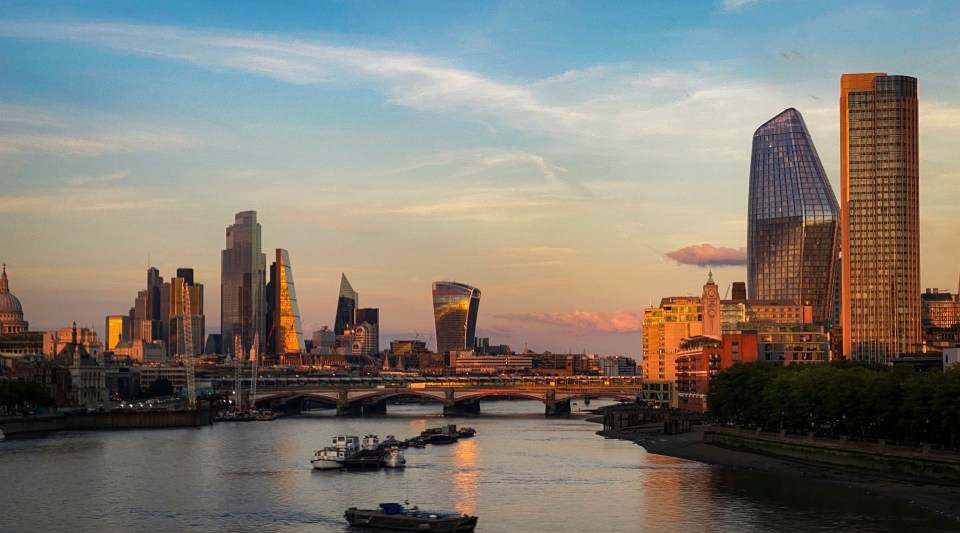
Against that backdrop, Canada’s Local Plan 2040 offers a genuinely forward-looking counterpoint. The Square Mile’s workforce currently stands at 675,000. The plan projects that rising to 900,000 by 2050 – driven by the GLA and Government’s decision to earmark roughly 80% of London’s new office requirement for the City. The plan is explicit about where that growth can go and, crucially, how it should be built.
After completing the public examination stage of the plan with the independent Planning Inspectorate, only limited modifications were proposed that align with the plan’s core aims. Yet, the Government has chosen to delay publication and require further hearings, due to concerns around the impact of tall buildings on the nearby World Heritage Site. These were issues that the City Corporation and the independent Planning Inspectorate already addressed in great detail during the hearings and the City Corporation has urged a quick resolution to this, ideally with the Housing and Planning Minister reversing his direction, or the inspections happening in a matter of weeks, not months.
The shift from demolition to retrofit is perhaps the most significant policy change in a generation. Half of all the City’s planning applications are now for retrofits. Half of all London’s retrofits take place in the Square Mile. Tom’s committee has moved from permitting demolition by default to requiring developers to justify it.
Beyond offices, the ambition extends to making the Square Mile a destination seven days a week – not just for the 675,000 who work there, but for the tourists drawn to the Tower of London, Tower Bridge, St Paul’s Cathedral, the Barbican, and the new Museum of London, which opens this year. More hotels. More hospitality. More of the ground-floor animation that Tom describes as essential to keep pace with global competitors from Singapore to Frankfurt.
“We see our peers going in this direction,” Tom says. “We’re just all in this push for this increased, excited, animated ground floor.”
It is, Tony observed, exactly what Central London Alliance has been calling for since day one.
London Talking is Central London Alliance’s podcast series exploring London’s opportunities and obstacles for growth. Listen to the full conversation with Tom Sleigh on Spotify.