‘Dispiriting’: Ministers speed up crackdown on Shein and Temu – by just six months

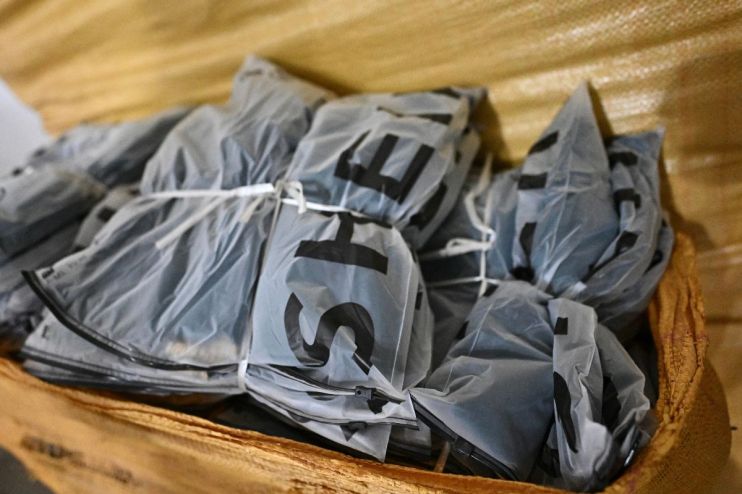
Retailers have criticised the government for failing to move fast enough on closing a tax loophole that they say favours fast-fashion importers like Shein and Temu.
High street businesses had been urging the government to bring forward its planned end to the “de minimis” regime, which exempts imports worth less than £135 from paying tax.
Leading retailers – including Primark, M&S and Next – had warned that this loophole gives e-commerce giants like Temu and Shein an upper hand and opens the door to unsafe imports.
On Tuesday, the government announced that it will end the loophole on low value imports (LVIs) in October 2028, just six months earlier than previously planned.
New deadline ‘not soon enough’
Labour said that this change shows that it has “listened” to industry figures and is taking action to “back the high street”.
Dan Tomlinson, exchequer secretary to the Treasury, said that the closure of the loophole ahead of schedule “tackles the unfair competition and dodgy businesses that are doing real damage to our high streets”.
But retailers have said that they are in urgent need of this reform and are frustrated by the government’s decision to speed up its legislation by only half a year.
The British Retail Consortium (BRC), which represents the UK’s retailers, said that high street firms “cannot afford to compete on an unfair playing field” for any longer.
Helen Dickinson, the trade body’s chief executive, said: “While the government has rightly recognised that a three year timeline for implementing low-value import reforms is too long, bringing it forward by just six months does not go far enough.”
The BRC said it would lobby the government to bring an end to this loophole before October 2028.
The owner of Primark, Associated British Foods (ABF), said that ministers must accelerate this “unacceptable” timeline to prove that they are “serious about rejuvenating town and city centres and preserving UK jobs”.
George Weston, the FTSE 100 firm’s chief executive, added: “This is so dispiriting. A system that the government itself recognises damages UK high streets and loses the exchequer hundreds of millions in potential revenue is being left in place for two more years.”
UK ‘years behind’ EU and US
Earlier this week, Primark and Monsoon Accessorize told CityAM that they fear the UK will become a “dumping ground” for low-value imports from fast-growing e-commerce operators like Shein and Temu.
They warned that British retailers will face a fresh wave of competition from these companies once the EU clamps down on LVIs at the start of July.
Responding to the government’s announcement on Tuesday, Debenhams chief executive Dan Finley said that the UK remains “years behind” the EU and the US, which closed its de minimis loophole last year.
“Every month this loophole remains open not only disadvantages UK businesses, but also means the Treasury misses out on billions of pounds in potential tax revenue,” he said.
A spokesperson for Shein said: “We support fair, clear and consistently enforced customs rules, and we have been engaging constructively with HMRC on the UK’s proposed reforms. We are committed to complying with all applicable customs and tax requirements.
“Shein’s success is not dependent on the de minimis threshold, but rather on our innovative on-demand production model. Advocating for measures that risk increasing costs for British shoppers in the name of competitiveness will not ultimately benefit British consumers or retailers.”
The government also said on Tuesday that it will review how VAT is collected from e-commerce companies following reports that these firms are dodging tax.
Ministers said that money raised from this tax clampdown would be funnelled into improvements of the business rates system, which high street businesses have said needs urgent reform.
“Measures to reduce this burden will support investment, protect jobs on the high street and be strongly welcomed by the industry,” the BRC said.