Nigel Farage wins Clacton by-election

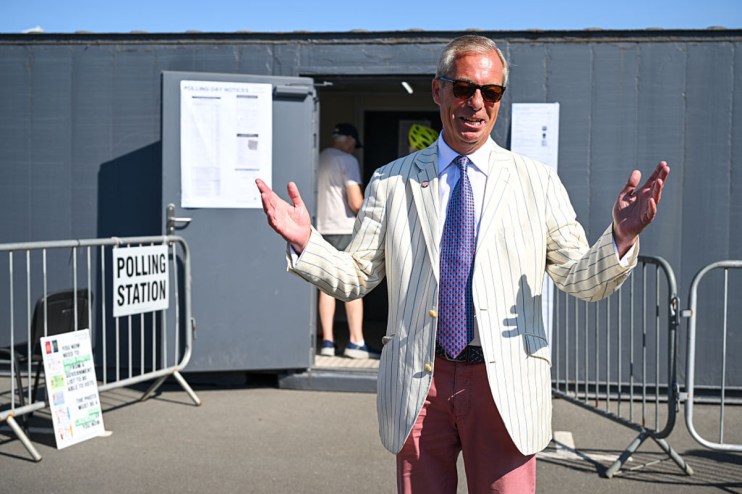
Nigel Farage swept to victory in the Clacton by-election that he triggered to stave off an investigation into donations he received shortly before returning to frontline politics.
The Reform UK leader won with over 11,000 more votes than the novelty candidate Count Binface, who was the main opposition after every other major party refused to take part in the poll.
Farage did not attend the count at Clacton, citing what he called a “credible” security threat against him. But before the final result was read out, he told supporters he had notched up a “convincing, overwhelming win”. Earlier in the evening, he also told GB News he had managed to beat “the establishment candidate”.
The turnout of 44 per cent was considerably higher than most pollsters had expected given the absence of other major parties, though it was lower than the 58.7 per cent at the general election in 2024.
Farage called the poll and stood down as Clacton MP five weeks ago – when Keir Starmer was still Prime Minister – following mounting scrutiny into his decision not to declare a £5m gift from Thai-based crypto magnate Christopher Harborne in 2024.
Announcing the decision, the Reform leader told supporters he had “done nothing wrong” – and that the people of his constituency should judge his actions in what would be a people versus the establishment poll.
But almost immediately, the significance of the vote diminished when the likes of Labour, the Conservatives and Liberal Democrats all said they would not be standing a candidate. Even Reform’s hard-right rival, Restore Britain, opted against fielding a candidate.
They largely dismissed the poll as a stunt, and vowed to fight in any second by-election Farage may face should the investigation into his gifts resume and find he contravened UK donation laws.

Farage by-election boost amid waning national popularity
The Reform UK leader’s popularity has come down from peaks struck earlier in the year, amid protracted questions over events running up to his decision in 2024 to return as leader of the populist he founded.
Farage had originally said the multimillion-pound gift had been to pay for security that taking up the role would require. But he subsequently said it was reward for “campaigning for Brexit for 27 years”, before arguing it was “none of anyone’s business” how he spent the gift.
Simultaneously, questions are swirling over whether the Reform UK leader should have declared another gift from George Cottrel, a convicted fraudster who is also his aide, who allowed Farage to use his Mayfair house and paid for staff to help with his social media content.
Farage has argued that because both gifts happened before he had announced his comeback, he did not need to report them. But Commons rules dictate that MPs must declare any gifts received in the year before their election worth in excess of £300 unless the donation “could not be reasonably thought by others” to be political in nature.
The standards commissioner’s investigation will automatically resume with Farage’s re-election. But the watchdog will also have to decide whether to launch a probe into Cottrel’s donations as well.
Professor John Curtice said Farage now faces “quite a substantial political challenge” to revive Reform’s support levels to their peak from earlier this year.
“The political world, the electoral world, has changed in important ways since Nigel Farage precipitated the by-election,” the professor of politics at the University of Strathclyde told the Today programme.
“Primarily, of course, because of the replacement of Keir Starmer by Andy Burnham. Labour have enjoyed a so-called Burnham bounce. Labour are currently narrowly ahead of Reform in the polls and, meanwhile, the Conservatives now find themselves four points adrift.”
The latest CityAM/ Freshwater Strategy poll showed that Burnham’s approval ratings jumped by 12 points in July, making him the most positively viewed figure in British politics. Meanwhile Farage’s popularity rating dropped by 12 points to minus 20.