Skip to content
CityAM
Main navigation
  • News
    • News
      • Latest Business News
      • Economics
      • Politics
      • Tech
      • Banking
      • FTSE 100 Live
      • Retail
      • Insurance
      • Legal
      • Property
      • Transport
      • Markets
    • From our partners
      • AON
      • Bayes Business School
      • Canada BIDs
      • Central London Alliance CIC
      • Destination City
      • Halkin
      • Olympia
      • Inside Saudi
      • Tottenham Hotspur Stadium
      • Santander X
      • YEAR SIX Dividend
    • Featured

      FTSE 100 Live: Inflation to reveal economic consequences of US-Iran war

      Breaking news event coverage with diverse crowd gathered, showcasing a lively urban scene, reflecting current affairs.

      Submit a story

      Tell us your story.

      Submit
  • Opinion
  • Sport
    • Latest Sports News
      • Sport
      • Sport Business
    • From our partners
      • The Morning Briefing: SBS x CityAM
      • Aramco Team Series
      • LIV Golf
    • Featured

      England’s secret weapon against World Cup heat? British company’s £26 product

      Breaking news scene with journalists interviewing a business leader in front of corporate headquarters, microphones and ca...

      Submit a story

      Tell us your story.

      Submit
  • Life&Style
    • Life&Style
      • Life&Style
      • Toast the City Awards
      • The Magazine
      • Travel
      • Culture
      • Motoring
      • Wellness
      • The RED BULLETiN
      • Do it with Shared Ownership
      • Media Speak Hub
    • Featured

      Old Pulteney releases 50-year-old whisky for 200th anniversary

      Old Pulteney 50-Year-Old single malt Scotch whisky bottle with elegant packaging on display, highlighting luxury and craft...

      Submit a story

      Tell us your story.

      Submit
  • Investec
  • Events
  • Latest Paper
Tuesday 20 May 2025 5:11 am  |  Updated:  Monday 19 May 2025 4:20 pm

Protecting against cyber attacks means tackling rational inattention

By: Paul Ormerod

Add as a preferred source on Google
The board unaminously agreed to extend Norman's position as Chair
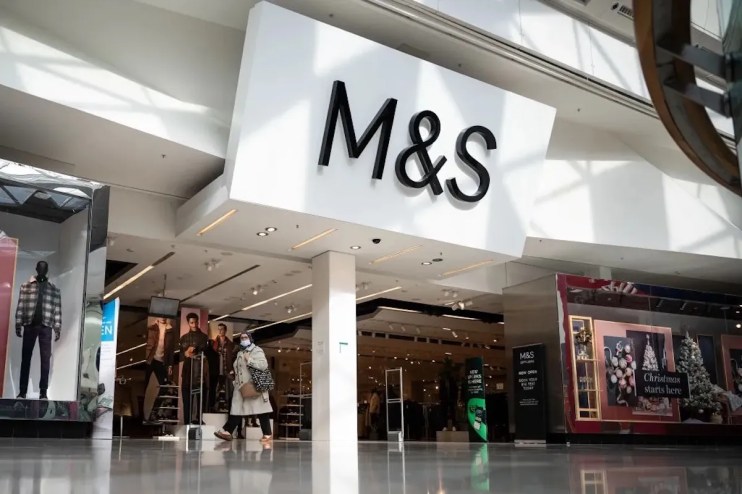
M&S was among a number of household names that suffered cyber attack losses

Cybersecurity, highlighted by recent attacks on the Co-op and Marks & Spencer, is not just a technical challenge but also a human and economic one, says Paul Ormerod

Cyber security has featured prominently in the media, following the attacks on the Co-op and Marks and Spencer.  

The Co-op has recovered rather the better of the two. By taking their IT systems offline, they suffered more immediate damage, with empty shelves in many stores. But by so doing, they both prevented a ransomware attack and made the problem easier to remedy.

Their action prompted the criminals to complain, as old-fashioned burglars used to when breaking into coin-operated electricity meters and finding pennies filed down to resemble coins of a higher denomination. They accused the company of “torching shareholder value” – by preventing a ransomware attack!

Cyberattacks involve illegal activities. But otherwise it is an industry just like any other such as cars or televisions. It has firms which develop and supply products. It has business-to-business markets where bits of kit can be traded. It has business-to-consumer markets, although in this case the “consumers” such as Marks and Spencer are not exactly demanding its products.

A key feature of this industry is its rapid pace of innovation. At a basic level, simply reflect on how often your laptop or smartphone demands that updates be installed.  Most of these are part of the ongoing evolutionary game which is played between the would-be attackers, and the defenders who want to prevent disruption to their systems.

But providing cyber security involves far more than being good at technological innovation, essential though this is.  

Human motivations and incentives are also a key part of the defence against cyberattacks.

An important aspect of this is the phenomenon which economists describe as “rational inattention”. Even the smartest and most productive individual has limits to the bandwidth which he or she can deploy.  Not everything can be given the same degree of attention.

Read more

Cyberattacks hit UK businesses with £3.7bn in legal costs last year

The board unaminously agreed to extend Norman's position as Chair

Companies will often have many operating procedures in place. But staff may not follow them to the letter, discovering short cuts, especially when the chances of anything going wrong are perceived as being low.

Hackers move in where threats are perceived as less likely

For example, from the outset of the pandemic I thought it was wrong to dismiss the lab leak hypothesis. Three researchers from the Wuhan Institute, along with some American scientists, had published a paper in Nature Medicine, a very prestigious outlet, in 2015 with the title “A SARS-like cluster of circulating bat coronaviruses shows potential for human emergence”. Wuhan was working on the issue. A lab technician finds a short cut in the security process, which almost all the time is secure.  Except the rare event happens and the virus escapes.  All very plausible.

The same principle applies to cyber security. Staff rationally pay less attention to areas where threats are perceived as being very unlikely, and the hackers move in.

Rational inattention prevails in many boardrooms. The probability of a damaging attack is thought of as low, and so other items on the agenda consume the time and energy of the members.

More generally, from a national security perspective, the low level of priority given to security by the individual companies creates what is known as a “negative externality”. 

Firms which underinvest in security do not bear the full costs of their actions. The Co-op itself suffered, for example, but so too did its many suppliers, who lost sales. The end result is that the level of security at the national level is lower than is desirable.

Externalities are a very familiar concept in policy making. On climate change, for example, the negative externalities of emissions has led to a whole raft of taxes and subsidies designed to offset them.

The government must start regarding cyber threats in the same way and come up with a policy package to enhance national security.

Paul Ormerod is an Honorary Professor at the Alliance Business School at the University of Manchester, an economist at Volterra Partners LLP, and author of Against the Grain: Insights of an Economic Contrarian, published by the IEA in conjunction with CityAM

Read more

Top spook says Russia ‘relentlessly targeting’ UK infrastructure 

GCHQ headquarters at dusk with illuminated windows, showcasing the iconic circular building amidst a vibrant evening sky.

Share this article

  • Facebook
  • X
  • LinkedIn
  • WhatsApp
  • Email

Similarly tagged content:

Sections

  • Opinion

Categories

  • Opinion

Trending Articles

  • Rathbones to suspend thousands of client account inflows after FCA probe deals £530m blow

  • As it happened: FTSE 100 relief rally runs out of steam as BP and Shell weigh; Oil hits three-month low

  • Rolls-Royce shares surge as SMR unit bags multi-billion pound Swedish nuclear contract

  • More Big Four blues as Deloitte plans to slash UK audit roles

  • London Tech Week sums up everything wrong with UK tech

More from CityAM

  • Cyberattacks hit UK businesses with £3.7bn in legal costs last year

    Business
    The board unaminously agreed to extend Norman's position as Chair
  • Top spook says Russia ‘relentlessly targeting’ UK infrastructure 

    Tech
    GCHQ headquarters at dusk with illuminated windows, showcasing the iconic circular building amidst a vibrant evening sky.
  • The Debate: Should CEOs be held personally accountable for cyberattacks?

    Opinion
    Evil-looking keyboard symbolizing cybersecurity threats and hacking risks in a digital landscape.
  • Fifa World Cup under major threat of cyber terrorism

    Sport Business
    GettyImages 158774123 showcases a relevant business meeting scene, highlighting diverse professionals engaged in discussion.
  • M&S eyes up Brits’ weekly shops as food arm set to expand

    Retail
    News article image related to a general topic, possibly showcasing a relevant scene or event for a business website.
  • ‘We cannot regulate cyber threats away,’ top lawyer warns

    Tech
    The ICO said it initially planned to fine Capita a total of £45m, but this was later reduced by “mitigating factors”
  • M&S profit slumps in fallout from cyber attack

    Retail
    Microsoft headquarters building with company logo prominently displayed against a clear blue sky
  • UK ministers tell UK businesses to ‘step up’ cyber defences

    Tech
    The ICO said it initially planned to fine Capita a total of £45m, but this was later reduced by “mitigating factors”

CityAM Canada — business, markets and opinion for Canadian readers.

Sections

  • Business
  • Markets
  • Tech
  • AI
  • Economics
  • Opinion
  • Cities

Company

  • About
  • Contact

Legal

  • Terms of Use
  • Privacy Policy
  • Cookie Policy
© 2026 CityAM Canada. All rights reserved.
Terms · Privacy · Cookies