75% of the SIXEP Continuity Plant is complete as of 18 August 2026, with 14 pump‑and‑valve modules and a 55‑tonne gantry crane installed, and the project remains on track for a 2029 operational start. The figures come from a GOV.UK news release dated 18 August 2026.
Government announcement and key milestones
The Department for Business, Energy & Industrial Strategy (BEIS) announced that the SIXEP Continuity Plant (SCP) – the backup facility for the UK’s nuclear waste‑management programme – has reached three‑quarters of its construction schedule. The release states that the plant is 75% complete (as of 18 Aug 2026) and that the major equipment lifts carried out in the past weeks represent the most significant progress to date.
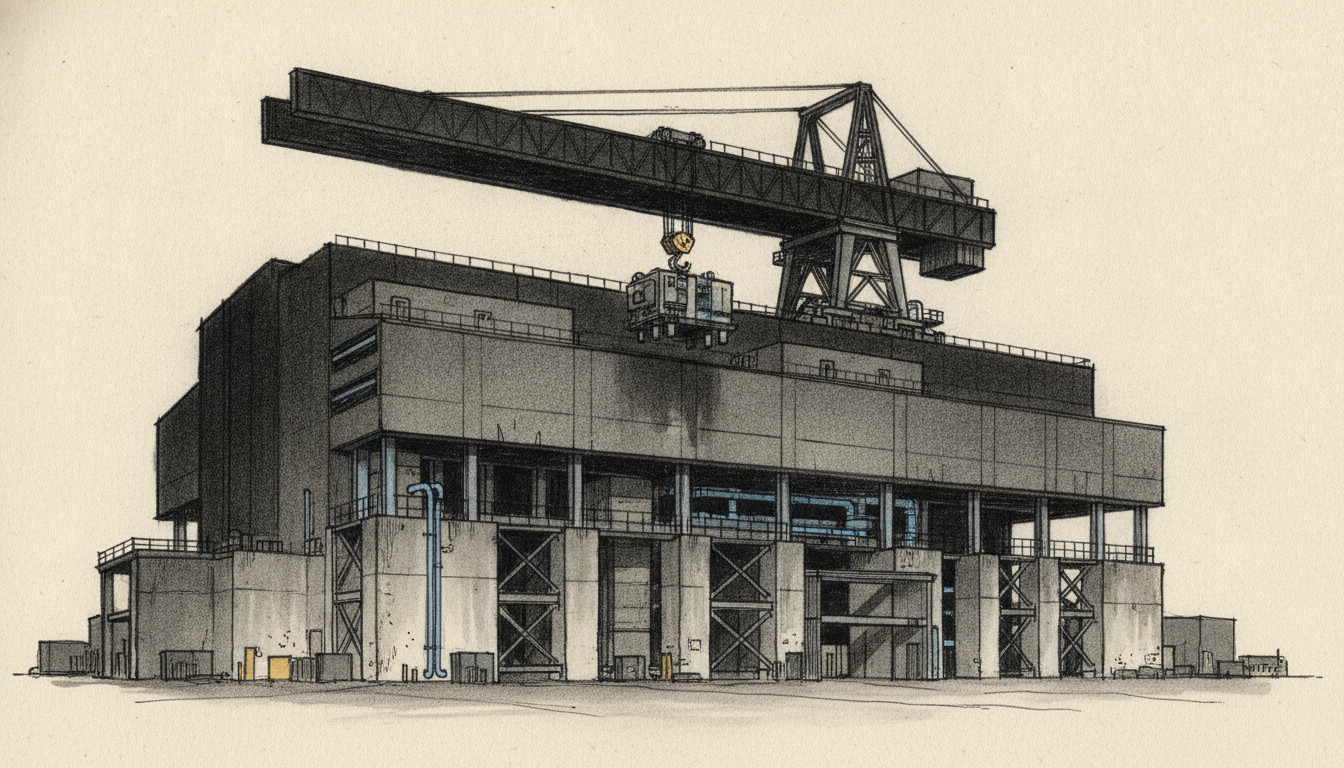
Specifically, the release confirms that 14 pump‑and‑valve modules have been moved into position. Each module weighs 16 tonnes, meaning a total of 224 tonnes of critical process equipment is now on‑site. In addition, a gantry crane with a 55‑tonne lifting capacity and a 21‑metre span has been installed, enabling the final phases of construction and future maintenance activities.
All of these elements are cited as evidence that the plant is on schedule to begin operations in 2029, the target year set out in the original programme documentation.
What the plant does and why it matters
The SIXEP Continuity Plant is part of the broader Sellafield nuclear site, which houses the UK’s primary facilities for handling, storing and treating radioactive waste. The continuity plant provides a redundant, secure environment for processing waste should the primary facilities become unavailable. Its completion is therefore a critical risk‑mitigation step for the national nuclear waste strategy.
While the release does not quantify the financial outlay, the installation of heavy‑duty equipment such as the 55‑t crane signals a move from civil works to full‑scale plant integration. The crane’s 21‑metre span is sufficient to lift the 16‑t modules and other large components across the plant’s interior, a capability that was previously unavailable.
Company background
Sellafield Ltd, the operator of the site, is a UK‑based entity headquartered in Risley. The company was founded in 2005 and is owned by the UK government through the Nuclear Decommissioning Authority. The packet’s Wikidata entry provides these basic details, but it also notes that the information on senior leadership and employee numbers may be out of date and should be confirmed against the company’s own filings.
Because the continuity plant is a government‑funded project, its progress is reported directly by the Department for Business, Energy & Industrial Strategy rather than through corporate earnings releases. Consequently, there are no earnings or cash‑flow figures to report for the plant itself.
Timeline of recent activity
- 2026‑08‑18 – Government news release announcing 75% construction completion, installation of 14 pump‑and‑valve modules and a 55‑t gantry crane, and reaffirming the 2029 operational target.
The release marks the latest in a series of milestones that have been publicly disclosed since the programme’s inception. Earlier phases involved civil engineering, foundation work and the installation of underground utilities, all of which have now given way to the heavy‑equipment phase.
Equipment details
| Item | Quantity | Weight per unit | Total weight | Capacity / Span | Source |
|---|---|---|---|---|---|
| Pump‑and‑valve modules | 14 units | 16 tonnes | 224 tonnes | — | GOV.UK – Latest crane lifts mark major progress on SIXEP Continuity Plant |
| Gantry crane | 1 unit | 55 tonnes (lifting capacity) | — | 21 metres span | GOV.UK – Latest crane lifts mark major progress on SIXEP Continuity Plant |
The table summarises the two principal pieces of equipment that have been installed. The crane’s capacity exceeds the weight of any single module, ensuring that the plant can safely handle the remaining components as construction proceeds.
With the continuity plant now 75% complete, the UK government can be more confident that the nuclear waste‑management chain has a robust backup. The 2029 operational target aligns with the broader timetable for decommissioning legacy facilities at Sellafield, many of which are slated for closure over the next decade.
Stakeholders—including the Nuclear Decommissioning Authority, the Department for Energy Security and Net Zero, and the private contractors involved in the build—have all indicated that staying on schedule is essential to avoid cost overruns. The release does not provide a cost estimate for the remaining 25% of work, but the presence of the gantry crane suggests that the final installation phase can proceed without major logistical delays.
What remains unknown
The packet notes that the chief executive of Sellafield Ltd and the exact employee headcount have not been confirmed in the source material. Those details should be verified against the latest corporate filings before publication. Additionally, while the operational target is set for 2029, the release does not specify the exact month or the commissioning schedule for the plant’s systems.
Finally, the financial implications of the remaining construction work are not disclosed. Investors and market participants will likely watch for a future budget update from the Department for Business, Energy & Industrial Strategy.
Looking ahead
Assuming the project stays on track, the SIXEP Continuity Plant will become operational in 2029, providing a critical safety net for the UK’s nuclear waste‑management infrastructure. The next milestones will involve the integration of process equipment, testing of safety systems, and the commissioning of the plant’s control rooms.
For market‑focused readers, the key takeaway is that the project’s schedule appears intact, reducing the risk of unexpected capital calls or delays that could affect contractors and suppliers linked to the nuclear sector. The installation of the 55‑t crane also signals that the supply chain for heavy‑lift equipment is functioning smoothly, a positive sign for firms that specialize in large‑scale industrial installations.
Until the plant reaches full operational status, the UK government will continue to monitor progress through regular updates. The next public briefing is expected in early 2027, when the remaining construction work will be assessed against the 2029 target.