Skip to content
CityAM
Main navigation
  • News
    • News
      • Latest Business News
      • Economics
      • Politics
      • Tech
      • Banking
      • FTSE 100 Live
      • Retail
      • Insurance
      • Legal
      • Property
      • Transport
      • Markets
    • From our partners
      • AON
      • Bayes Business School
      • Canada BIDs
      • Central London Alliance CIC
      • Destination City
      • Halkin
      • Olympia
      • Inside Saudi
      • Tottenham Hotspur Stadium
      • Santander X
      • YEAR SIX Dividend
    • Featured

      ‘Very concerned’: City watchdog scolds motor finance lenders over £9bn redress scheme

      FCA sign

      Submit a story

      Tell us your story.

      Submit
  • Opinion
  • Sport
    • Latest Sports News
      • Sport
      • Sport Business
    • From our partners
      • The Morning Briefing: SBS x CityAM
      • Aramco Team Series
      • LIV Golf
    • Featured

      Dallas, Boston, New York New Jersey: Inside England’s Fifa World Cup stadiums

      Getty Images logo against a sleek, modern background, representing the influence of media in the business world

      Submit a story

      Tell us your story.

      Submit
  • Life&Style
    • Life&Style
      • Life&Style
      • Toast the City Awards
      • The Magazine
      • Travel
      • Culture
      • Motoring
      • Wellness
      • The RED BULLETiN
      • Do it with Shared Ownership
      • Media Speak Hub
    • Featured

      Glengarry Glen Ross at the Old Vic fails to close

      Glengarry Glen Ross production at Old Vic Theatre showcasing intense business negotiations and dramatic performances

      Submit a story

      Tell us your story.

      Submit
  • Investec
  • Events
  • Latest Paper
Friday 03 May 2024 4:56 am  |  Updated:  Thursday 02 May 2024 5:59 pm

The history of rail suggests renationalisation will make little difference

By: Paul Ormerod

Add as a preferred source on Google
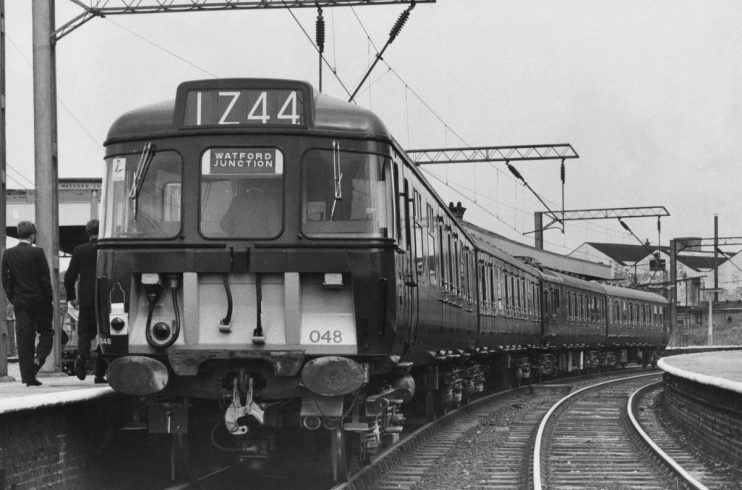
A British Rail Electric Multiple Unit Passenger train on a demonstration run through Watford Junction on 23 August 1965 at Watford Junction, London, United Kingdom. (Photo by Harry Todd/Fox Photos/Hulton Archive/Getty Images).

Britain has never cracked the formula for cheap, efficient, reliable rail, so what makes Labour think renationalisation is the answer? Asks Paul Ormerod

Getting the railways to function properly has been a problem ever since they were first invented.  

The opening ceremony of the Liverpool and Manchester railway in 1830 was a major event in world history. For the first time ever, two cities were connected by a form of transport which could go considerably faster than a horse.  

A stellar list of politicians was present. The event was marred by the death of one of them, William Huskisson. He was run over by George Stephenson’s iconic locomotive, Rocket.

Over the next two or three decades, railways spread rapidly all over the UK. But there were already many tensions between the desires of politicians and the performance of the railway companies.

For example, initially fares were very expensive. The Railway Regulation Act 1844 was introduced, which required train companies to provide inexpensive and basic rail transport for less affluent passengers. The companies responded by providing just a single train a day with cheap fares, stopping at every possible station, with passengers being made to sit in open-top wagons.

Complaints about the arrogance and inefficiencies of the railways were a standard topic of discussion throughout the rest of the 19th century. But they held a monopoly over everything except very short-range journeys and the companies were largely indifferent to what anyone else, including Parliament, said or did.

When they encountered their first serious competition with the rise of the motor vehicle, the railways had no real idea how to respond. Total passenger journeys peaked around 1920 and were then in more or less continuous decline until the early 1990s.

A continuous lack of funds, exacerbated by the demands of the Second World War, led to the companies being nationalised in 1948.

Despite this, the old British Railways (BR), as it was called, continued to be plagued by massive underinvestment in modern technology and equipment.

Read more

Taxpayers will foot the bill for Burnham’s renationalisation whims

Andy Burnham speaking at Makerfield community event, addressing local issues and engaging with residents in a public setting.

If fares had to rise to fund new investment, the political incentive facing the minister of transport was to refuse the increase. Given the choice between political popularity in the here and now, and the longer-term benefit to the industry, guess which one usually won.

Stories of the gross inefficiencies of BR are legion. New heating stoves really were installed in stations on the day of their closure under the Beeching cuts of the 1960s.

The privatisation of the railways in the 1990s did lead to a massive turn round in performance. Essentially for the first time ever, railways were run by companies with an interest in their customers. The number of passengers had more than doubled by the time of the pandemic.

But, gradually, this has been undermined. The railways have become in many ways effectively re-nationalised already.

Network Rail, a byword for poor performance, is a nationalised entity. In terms of the train operating companies, LNER was taken into state control in 2018. Northern, South Eastern and TransPennine have followed.

The operating franchises still supposedly in private hands are owned by state-backed foreign companies. The notoriously unreliable Cross Country, for example, is ultimately owned by Deutsche Bahn, in which the German government is the majority shareholder. 

Labour has now pledged that one of its first major acts in government will bring all passenger rail into national ownership under Great British Railways as contracts with private operators expire. The plans, however, do not include nationalisation of privately owned freight or rolling stock companies.

A cynic might say that not much will change, given the state’s already extensive involvement in the system.   Further, we now have almost two centuries’ worth of experience of generally shoddy performance by the railways.

Still, it must be worth another attempt to discover the elusive formula for a successful railway.  But let’s not expect too much.

Paul Ormerod is an economist at Volterra Partners LLP, an Honorary Professor at the Alliance Business School at the University of Manchester and author of Against the Grain: Insights of an Economic Contrarian, published by the IEA in conjunction with CityAM

Read more

Andy Burnham will crumble like a biscuit he can’t even name

Burnham 1 showcases a bustling cityscape highlighting economic growth and urban development in the region.

Share this article

  • Facebook
  • X
  • LinkedIn
  • WhatsApp
  • Email

Similarly tagged content:

Sections

  • Opinion

Categories

  • CityAM Content
  • Opinion

Related Topics

  • great british railways
  • Network Rail
  • Railways

Trending Articles

  • Who could be Andy Burnham’s Chancellor? 

  • As it happened: FTSE 100 finishes higher as US-Iran talks progress and Starmer resigns; Space X shares fall after bond sale

  • Starmer will resign, Trump says

  • Coca-Cola brings in restructuring lineup over failed Costa sale

  • Ocado to replace founder Steiner as shares plunge 

More from CityAM

  • Taxpayers will foot the bill for Burnham’s renationalisation whims

    Opinion
    Andy Burnham speaking at Makerfield community event, addressing local issues and engaging with residents in a public setting.
  • Andy Burnham will crumble like a biscuit he can’t even name

    Opinion
    Burnham 1 showcases a bustling cityscape highlighting economic growth and urban development in the region.
  • Como 1907: How to make it on the lake with tourist fans and fashion

    Sport Business
    GettyImages 2231827196 showing a significant event or landmark relevant to the latest news in General category
  • British pensions are about to bankroll the American tech revolution

    Opinion
    SpaceX Falcon 9 rocket launching into a clear sky during May 2026 mission, showcasing advanced aerospace technology
  • Starmer resigns as Prime Minister

    Politics
    Business conference attendees networking at a corporate event with banners and presentation screens in the background
  • London Concours to celebrate rare Porsches and more next week

    Life&Style
    Classic cars displayed at the prestigious London Concours 2026 event, showcasing automotive elegance and innovation
  • Paris Saint-Germain’s Champions League final shirts smash records in auction

    Sport Business
    Breaking news event with diverse crowd gathered at a press conference, microphones and cameras capturing the unfolding story.
  • Acres Engineering boosts UK industry with prestigious King’s Award win

    Partner
    Acres logo with sleek design on a business news website, representing innovation and growth in the industry.

CityAM Canada — business, markets and opinion for Canadian readers.

Sections

  • Business
  • Markets
  • Tech
  • AI
  • Economics
  • Opinion
  • Cities

Company

  • About
  • Contact

Legal

  • Terms of Use
  • Privacy Policy
  • Cookie Policy
© 2026 CityAM Canada. All rights reserved.
Terms · Privacy · Cookies