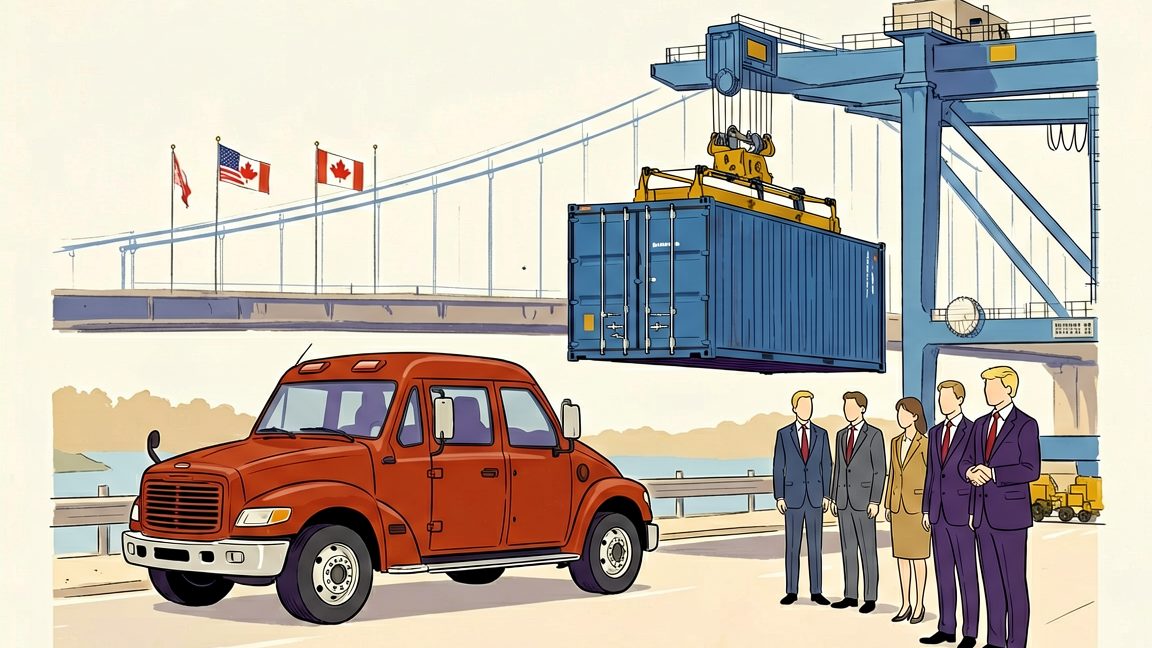
A three‑day pause to a 50% tariff on roughly $20 bn of Canadian imports was announced less than two hours before the duties were to start on 19 August 2026. President Donald Trump posted on social media that the United States would delay the levy while a trade agreement was being finalised.
Tariff pause announced
At approximately 06:00 UTC on 19 August 2026, Trump posted: “I have paused the 50% Tariffs against Canada, that were scheduled to kick in tomorrow morning for a three day period, based on the fact that Canada and the U.S.A., subject to the finalization of documents, have a DEAL!” The BBC World article published the same day confirms the content of the post and the timing of the announcement.
Two hours later, at roughly 08:00 UTC, the tariffs that were slated to take effect were instead held in abeyance for three days, running through 21 August 2026. The pause covers a 50% levy on a range of Canadian goods whose total annual import value to the United States is estimated at $20 billion (≈ £14.8 bn; C$28 bn).
What the pause covers
The tariff regime in question targets a broad basket of Canadian products – from agricultural commodities to manufactured items – and would have imposed a flat 50% duty on each eligible import. The $20 billion figure represents the annual value of those imports, not a one‑off amount.
| Metric | Value | Unit | Period covered |
|---|---|---|---|
| Tariff rate | 50 | % | effective 19 Aug 2026 |
| Value of affected imports | 20 | billion USD | annual |
| Pause length | 3 | days | 19‑21 Aug 2026 |
The table shows each figure with its unit and the period to which it applies, exactly as reported by the BBC World source.
Market reaction and uncertainty
Because the pause was announced less than two hours before the tariffs were to be imposed, market participants had little time to adjust positions. Canadian exporters, particularly those in agriculture and manufacturing, faced immediate uncertainty about whether shipments scheduled for early August would be subject to the 50% levy or enjoy the temporary reprieve.
Analysts noted that the timing of the announcement – a “last‑minute” move – signalled that trade talks were at a critical juncture. The pause does not remove the tariff; it merely delays its enforcement while the two governments finalise the pending documents. As a result, the underlying risk of a permanent 50% duty remains.
Trump characterised the forthcoming deal as “very good” for both countries and hinted that it would include concessions on agriculture and manufacturing. No specific terms were disclosed, and the BBC World article does not provide further detail on the content of the agreement.
What remains unknown
- The exact list of goods covered by the 50% tariff has not been itemised in the public record.
- Whether the three‑day pause will be extended if the trade deal is not finalised by 21 August 2026 is unclear.
- Details of the concessions – such as the magnitude of any agricultural or manufacturing trade‑off – have not been released.
- Both governments have not confirmed the precise timeline for signing the final agreement.
Until those questions are answered, traders and businesses will continue to monitor official statements for any further adjustments.
For firms that rely on the U.S. market, the pause offers a brief window to ship goods without incurring the 50% duty. However, the short notice means many companies may have already prepared for the tariff’s implementation, potentially incurring additional logistical costs to alter shipping schedules.
In the longer term, the prospect of a trade deal could reshape the tariff landscape. If the deal materialises as suggested, the 50% levy could be reduced or removed, dramatically altering cost structures for exporters. Conversely, if negotiations stall, the tariff could be reinstated after the three‑day pause, restoring the original 50% cost penalty.
Next steps
Stakeholders are watching for a formal announcement from the United States Trade Representative or the Canadian Ministry of International Trade confirming the final terms of the agreement. The next public update is expected before the pause expires on 21 August 2026.
In the meantime, the three‑day suspension remains the only concrete change to the tariff regime, and its impact will be measured in the short‑term movement of cross‑border trade flows.