
We need a humanitarian vision for AI and robotics


Robotics and artificial intelligence are beginning to transform a broad spectrum of industries, and I believe that in time, given its near-endless applications, omnipresent AI will contribute $150 trillion to the global economy. I also believe that humanitarian efforts all over the world will be greatly advanced by emerging artificial intelligence and robotics technologies as they continue on their rapid exponential growth trajectory.

But before we can begin to analyse and realize the potential of humanitarian AI and robotics, we have to address the most common questions that people ask about the future of human and machine collaboration. Will robots take our jobs? And will artificial intelligence and robots create a more unequal society?
Back in 1962, Doug Engelbart hypothesized that the future of our race lay not in replacing humans but in augmenting them. His work culminated in the invention of the computer mouse. After Apple and Microsoft repackaged it for commercial deployment, the computer mouse changed the course of modern life by transforming human productivity.
Similarly, at this inflection point of artificial intelligence and robotics, I actually think that what we are looking at is the prospect of a huge leap forward in productivity that will allow humans to accomplish more, not less. Yes, short term disruption is inevitable, and it may even widen the gap between rich and poor. But over longer time horizons I believe that by augmenting human abilities using AI and robotics all of humanity can be much better off.

By assigning robots the task of working in hazardous conditions such as poor lighting, toxic chemicals, tight spaces and heavy lifting, we can remove the risk to humans of workplace injuries. By deploying robots to execute dangerous tasks, we can keep humans out of harm’s way. We can also use robots to assist humans, so that they can continue to work without fearing long-term health issues.

Take robot-assisted surgery, for example. Surgical robots are advanced enough to allow for remote surgery and have already dramatically improved the limitations of minimally invasive surgery. Exoskeletons are currently being developed to help workers with heavy lifting. Intelligence amplification will also open new opportunities for alleviating suffering and improving the human condition.
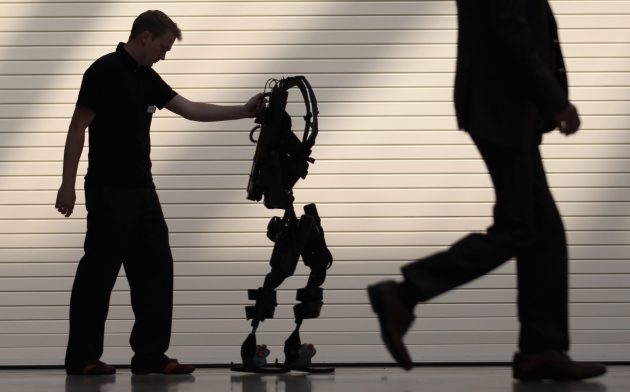
Efforts like these in robotics and AI will create more jobs, safer jobs. And I am certain that human ambition will grow proportionately – if not exponentially – once that we are freed to focus on doing what we humans do best.
But whilst I am optimistic that these new technologies have continually amplified our natural human abilities – and that this trend will not abate any time soon – I have to emphasize that we can all too easily get ahead of ourselves. I’d love to concern myself and my team at the not-for-profit Tej Kohli Foundation solely with trendy future-forward matters like human longevity. But what I’m really worried about is that, right now, 39 million people can’t see. Their eyes are failing them, and so are we.
This is why I’ve committed to take a portion of any profits realized through my investments in robotics and AI and from my Zibel Real Estate portfolio, and put them towards far more basic and urgent human needs. Most recently the Tej Kohli Foundation gave $2M to Massachusetts Eye and Ear, a teaching hospital of Harvard Medical School. You can watch Dr. Joan Miller, Chair of the Department of Ophthalmology at Harvard, talking about our new Tej Kohli Cornea Program here.
We absolutely must keep ambitiously pursuing what we once believed to be the impossible. The majority of our effort, however, should go toward attending the most basic requirements of our fellow humans. Many families aren’t worried about being replaced by a robot. Instead, they’re worried about basic crop viability and about access to water. Their fear is becoming a climate or economic refugee. This is why I’m driven to eradicate blindness. A similar belief guided Bill Gates to eradicate Malaria.
It is therefore imperative to shape emerging technologies in such a way that is socially responsible and beneficial to humanity as a whole. Take for example, the millions of digital patient records collected by the Tej Kohli Cornea Institute. What was once passive data is now being used as training data for the development of preventative algorithms, and our machine learning team is urgently pursuing technology-enabled interventions, or “digital therapeutics,” which could also have an outsized impact.
Overall, I’m very bullish that machine vision and other applied technologies being developed by AI and robotics teams around the world will play an essential role in the fight to cure blindness, and other diseases too. Basic human problems and deep technological challenges have more in common than you might realize. In my view the solutions to seemingly intractable human problems are most likely to emerge from cutting-edge science and technology labs and start-ups. Better food systems and solving climate change are as much data problems and computer science problems as anything else.
A more humanitarian vision of AI and Robotics is particularly needed. Machines won’t replace us. Ignore the fear mongering. If pointed in the right direction, AI and Robotics will accelerate the impact of the solutions we’ve already developed, and will present new opportunities to advance our civilization too.
Tej Kohli regularly writes #TejTalks blogs on Medium, Ghost and The Motley Fool about subjects including real estate, cryptocurrency, deep tech, stock market investing, philanthropy and global health. He is also shares daily wisdom, commentary and insights on Twitter, LinkedIn and Facebook as @MrTejKohli.