Skip to content
CityAM
Main navigation
  • News
    • News
      • Latest Business News
      • Economics
      • Politics
      • Tech
      • Banking
      • FTSE 100 Live
      • Retail
      • Insurance
      • Legal
      • Property
      • Transport
      • Markets
    • From our partners
      • AON
      • Bayes Business School
      • Canada BIDs
      • Central London Alliance CIC
      • Destination City
      • Halkin
      • Olympia
      • Inside Saudi
      • Tottenham Hotspur Stadium
      • Santander X
      • YEAR SIX Dividend
    • Featured

      ‘Very concerned’: City watchdog scolds motor finance lenders over £9bn redress scheme

      FCA sign

      Submit a story

      Tell us your story.

      Submit
  • Opinion
  • Sport
    • Latest Sports News
      • Sport
      • Sport Business
    • From our partners
      • The Morning Briefing: SBS x CityAM
      • Aramco Team Series
      • LIV Golf
    • Featured

      Dallas, Boston, New York New Jersey: Inside England’s Fifa World Cup stadiums

      Getty Images logo against a sleek, modern background, representing the influence of media in the business world

      Submit a story

      Tell us your story.

      Submit
  • Life&Style
    • Life&Style
      • Life&Style
      • Toast the City Awards
      • The Magazine
      • Travel
      • Culture
      • Motoring
      • Wellness
      • The RED BULLETiN
      • Do it with Shared Ownership
      • Media Speak Hub
    • Featured

      Glengarry Glen Ross at the Old Vic fails to close

      Glengarry Glen Ross production at Old Vic Theatre showcasing intense business negotiations and dramatic performances

      Submit a story

      Tell us your story.

      Submit
  • Investec
  • Events
  • Latest Paper
Tuesday 09 April 2024 7:17 am  |  Updated:  Tuesday 09 April 2024 8:02 am

Why Britain should be spending 3 per cent of GDP on defence

By: Paul Mason

Add as a preferred source on Google
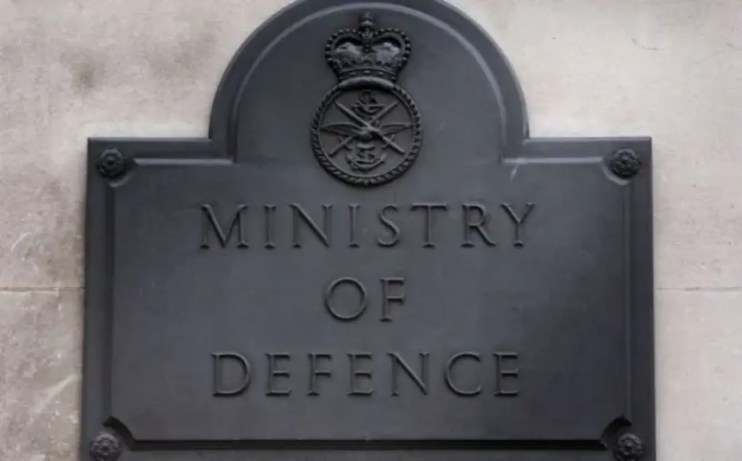
The Ministry of Defence must learn from Ukraine and 'embrace AI'

Fiscal rules must not outweigh our defence priorities – we are facing war and we should be spending like it, says Paul Mason

Momentum is building for an increase in UK defence spending. Last week saw the launch of a cross-party “defence pledge”, calling on the government to raise the MOD’s budget from 2.2 per cent to 2.5 per cent of GDP next year, and to 3 per cent by the end of the decade. I support that call, but it’s not enough.

That 2.5 per cent would put an extra £9bn on the defence budget and require either a penny on income tax or a penny on VAT to pay for it. To raise the budget to 3 per cent of GDP would need either the same taxes raised by 3p in the pound or significant extra borrowing.

I know that’s a hard sell, but we have to face the facts. Russia is spending 40 per cent of its state budget, and 6 per cent of its GDP, to rebuild its armed forces. That’s not just to fund a new offensive in Ukraine, but to menace the UK and our Nato allies. And if Donald Trump wins the US presidential election in November, and reduces the USA’s commitment to Nato, then 3 per cent might be the minimum the UK needs to spend to hold things together in Europe.

The Ministry of Defence is currently £17bn short of the money it needs to pay for its 10-year equipment plan. Meanwhile, long-promised military commitments – like a warfighting division with enough tanks, artillery, missiles and drones to deter Putin from attacking our allies in the Baltic States – have simply evaporated.

That’s why, in January, the outgoing head of the army, General Sir Patrick Sanders, warned that Britain’s ability to think and act strategically is being put at risk. The underlying problem is well known: a decade of austerity has hollowed out the armed forces; the £24bn Boris Johnson injected at the start of his premiership has – as one senior Tory put it – “been spent and didn’t even touch the sides”. Meanwhile MOD procurement is cumbersome, wasteful and geared to peacetime priorities. So the Treasury calls the shots.

Grant Shapps is right to say we could be in a “pre-war” situation. In that context we have to balance fiscal imperatives with those of national security.

In the 1930s, as soon as Britain realised both Germany and Japan were intent on aggression, the government formed a “defence requirements Ccommittee” to design the response. It said: deter Germany, appease Japan and build an air force big enough to stop German bombers and hit back at German cities. They made choices the Treasury didn’t like – and those choices mattered. As a result, Britain’s defence spending grew from 2.2 per cent of GDP in 1933 to 6.8 per cent on the eve of the Second World War. And even then, it was not enough to deter a German attack.

Read more

Starmer clings on as defence spending plan in disarray after resignations

Breaking news concept with digital world map and glowing data streams, symbolizing global communication and technology tre...

Rearming now, to the tune of at least 3 per cent of GDP, while creating the industrial capacity to do more if needed, has to be a cross-party commitment in the next Parliament.

Why 3 per cent? Because austerity has left so many gaps in what our armed forces can do, recruitment so short, and satisfaction with service life so low, that 2.5 per cent would just be like throwing water onto a dry sponge.

If we hike the MOD’s Budget by £9bn next year, and a further £20bn in 2026-27, we give ourselves choices. And we should fund it through borrowing.

Even using the OBR’s relatively conservative fiscal multipliers, debt would peak below 100 per cent of GDP and meet the government’s primary fiscal rule in Year 5. There will also be big potential economic upsides, too, if we hike investment defence production and R&D and – as Labour proposes – enact a deep procurement reform at the MOD.

There is an unresolved debate between military thinkers about what Britain’s main contribution to Nato should be. Some say that, as a historically maritime power, we should concentrate on expanding the Royal Navy.

Others, like me, believe that land is where history is made. To re-establish our moral authority with our European partners and show leadership when it matters, the UK has to have skin in the game in land warfare. Given the way Putin fights, we should also urgently invest in the defence of our airspace against air and missile attacks, and the dispersal and hardening of our bases and critical energy infrastructure.

We’re spending at 1932 levels when we are facing 1937-38 levels of strategic risk. To move on, we need to start by admitting that fiscal rules are important but not decisive when it comes to national security. In the 1930s, a balanced budget would have been the sure-fire pathway to defeat.

Paul Mason is an author and journalist

Read more

Starmer dodges questions on funding for defence spending

Keir Starmer

Share this article

  • Facebook
  • X
  • LinkedIn
  • WhatsApp
  • Email

Similarly tagged content:

Sections

  • Opinion

Categories

  • CityAM Content
  • Opinion

Related Topics

  • Defence

Trending Articles

  • Who could be Andy Burnham’s Chancellor? 

  • As it happened: FTSE 100 finishes higher as US-Iran talks progress and Starmer resigns; Space X shares fall after bond sale

  • Starmer will resign, Trump says

  • Coca-Cola brings in restructuring lineup over failed Costa sale

  • Ocado to replace founder Steiner as shares plunge 

More from CityAM

  • Starmer clings on as defence spending plan in disarray after resignations

    Politics
    Breaking news concept with digital world map and glowing data streams, symbolizing global communication and technology tre...
  • Starmer dodges questions on funding for defence spending

    Politics
    Keir Starmer
  • UK government borrowing overshoots expectations on day Burnham elected

    Economics
    Westminster Houses of Parliament under clear sky, iconic London landmark representing UK government and politics
  • War bonds to lift defence spending ruled out

    Politics
    Rachel Reeves will look to offer entrepreneurs tax breaks in her battle to keep her headroom intact.
  • Truth bomb: Defence secretary John Healey resigns over funding battles

    Politics
    Defence secretary John Healey is leading calls for further investment in the sector.
  • Starmer scrambles to make savings in bid to boost defence spending

    Politics
    Keir Starmer discussing UKs defense strategy with BAE Systems executives in a formal meeting setting
  • I was defence secretary, here’s how we fund our armed forces

    Opinion
    Business professionals in a modern office discussing a strategic plan with charts and graphs displayed on a large screen
  • Healey condemns Reeves: ‘Our adversaries do not follow timetables set by the Treasury’

    Politics
    Massachusetts Governor Maura Healey speaking at a press conference, addressing state initiatives and policy updates

CityAM Canada — business, markets and opinion for Canadian readers.

Sections

  • Business
  • Markets
  • Tech
  • AI
  • Economics
  • Opinion
  • Cities

Company

  • About
  • Contact

Legal

  • Terms of Use
  • Privacy Policy
  • Cookie Policy
© 2026 CityAM Canada. All rights reserved.
Terms · Privacy · Cookies