Ed Warner: This year could be huge for those with a stake in Formula 1

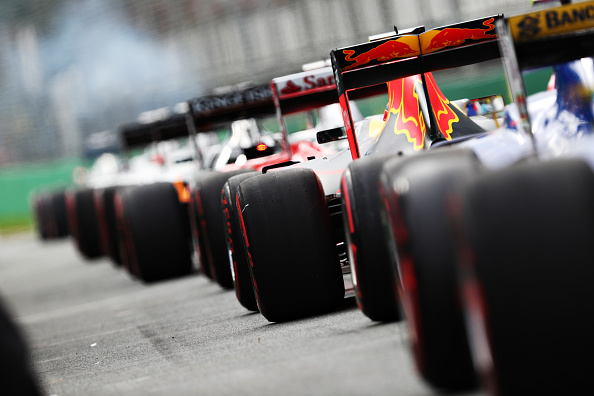
The rubber hits the road again this weekend as Liberty Media’s $8bn Formula 1 circus fires up its engines for the 2022 season.
The tumultuous end to last year’s race series has yet to be resolved. It’s not clear whether the inquiry report will be published on the eve of the Bahrain GP as originally promised.
But an air of unprecedented financial optimism surrounds the sport that may make for a sense of shared enterprise if not outright harmony between the teams.
F1 is an example of the closed shop model adopted by the big American sports, all of which have demonstrated their ability to generate handsome profits for prudent franchise owners.
Until last year, however, motor racing’s premier competition lacked the embedded financial constraints that are needed to maximise returns from its ring-fenced structure.
And so F1 was a licence to lose money for all team owners, and a sport whose competitive edge was blunted by the spending of the wealthiest players.
Liberty Media took control from CVC Capital Partners at the start of 2017 and it has since adopted an approach to F1’s finances that one might have expected of a private equity firm. CVC profited handsomely from its decade of ownership, but the sport stalled.
Perhaps personalities were at fault. Or maybe Covid provided the challenge required to galvanise all parties to agree to radical action. Whatever the reasons, the Liberty era is proving a good advert for collective action.
The ins and outs of F1 finances are complex and reflect myriad past agreements. The teams of longest standing and greatest past success take a bigger upfront payment from the sport’s commercial income as a contribution to their costs.
Ferrari receive $68m just for, well, being Ferrari. Red Bull get a $35m reward for being the first team to sign the Concorde Agreement that enshrines the new financial constraints.
This agreement, finalised in August 2020, is the game changer. In pre-pandemic 2019, Mercedes’ budget was reported to be $484m, dwarfing the $173m of Haas. Now, all teams are constrained to $140m of core costs, providing scope for smarts not dollars to win the technology battle – or at least to narrow performance differentials.
The playing field isn’t entirely level though. There are the historic deals that skew the split of income. And, crucially, driver (as well as team principal) employment costs are excluded from the spending cap.
If the race, over time, is won by the best driver in the best car then uncapped driver rewards constitute a competitive opportunity.
Part way through last season, it was estimated that Lewis Hamilton’s overall race earnings would be $62m. It’s reported that defending champion Max Verstappen has just massively upped his package at Red Bull to a level around Hamilton’s.
Drivers at the back of the grid probably pull down only a tenth of those sums, and some of these only have a seat because far greater sums are invested by a connected party to “buy” it for them.
It’s easy to see why car manufacturers and global consumer brands have been prepared to pump cash into F1 down the years, even to the extent of losing money upfront. Which of us who’s not a billionaire can speak to the whims of the super-rich petrolhead either?
Now, though, there is the realistic prospect of all these disparate funders at least breaking even from their F1 ventures. Mercedes’ Toto Wolff said as much to The Race late last year. Just as telling was the confirmation from a smaller team’s principal.
“I would agree with Toto that if you do a good job here, the aim of our business should be to make a profit,” said Guenther Steiner, Haas team principal. “A business which is losing money, after a while you run out of money or you run out of passion, one of the two, so then you stop. And then you get into the teams not being worth a lot of money. But I think it’s a very good time at the moment for all the teams.”
All of which spells good news for drivers. As the economics for teams become significantly more favourable, so the negotiating leverage of their stars increases. This is true of all sports. And the Netflix audience recognition for individuals being generated by hit show Drive to Survive will add a go-faster stripe in contract talks.
What of Liberty Media itself? Late last month it announced annual results which showed $466m of F1 cash profits from revenues of $2.1bn. Expect these to balloon this year with pandemic operating restrictions significantly eased and crowds back across the race calendar. Already its shareholders are making a decent return on that $8bn enterprise value at acquisition.
Liberty has a convoluted share structure. It has a tracking stock instrument, Formula One Group, listed on NASDAQ which reflects its F1 activities. These shares are up by around 90 per cent since the deal with CVC, but have lagged the overall NASDAQ index.
If Covid and geopolitics allow normal operations, though, 2022 could prove to be a breakthrough year for F1 and everyone with a stake in its financial success.
Out of the park
If you want evidence of a franchise sport model increasing player power, look no further than Major League Baseball. The three-month lockout – a stand-off between the talent and the owners that put the 2022 season in jeopardy – has been resolved with a new collective bargaining agreement. The start to the new season has been delayed, but no games will be lost. By holding their nerve the players have secured much that they demanded, including a 23 per cent jump in minimum salaries to $700,000.
This, remember, is a sport with declining attendances, trapped in a bubble of nostalgia, albeit a profitable one. Players and owners have agreed some minor tweaks to the game that seem unlikely to reverse its gently receding tide of popularity. Both are probably gambling that this will become a real problem for future generations, not today’s parties to the new CBA.
Balmy army
Talking of decline and nostalgia: a bout of Covid meant I watched far more of England’s first Test match in the West Indies last week than was good for me. Balmy conditions for the Barmy Army amongst a sparse Antiguan crowd, but soporific cricket for much of the five days on a lifeless pitch. What a poor advertisement for the game. How long can cricket’s authorities rely on TV audiences tuning in for dull fare played out in front of banks of empty seats at Test grounds around the world.
As usual, Mike Atherton poses the killer question: “Test cricket is followed in many different ways, often remotely from those who cannot spare the time. This asks a fundamental question about the game and of those who run it: who exactly is it for?”.
Saudi take 2
I was suitably pelted by Newcastle United fans on Twitter for last week’s column suggesting the club’s new Saudi owners might have buyer’s remorse now that Chelsea is up for sale. Amusingly many wrongly assumed I was a Chelsea fan. Kindest booting was from an old athletics contact: “Come on Ed, let us enjoy it, we’ve only had a few months!”
Intriguing though that Jamie Reuben, a director of Newcastle and whose family are members of the Saudi PIF consortium, has been mentioned as having an interest in bidding for Chelsea. But not as interesting as the reports that Saudi Media is preparing a bid. With cash in short supply within the club, the sale process is urgent. How will due diligence processes on any prospective buyers, wherever in the world they emanate from, stand up to the pressure to conclude a deal swiftly? Get this one wrong and there is surely no way back for football’s owners’ and directors’ test.
Ed Warner is chair of GB Wheelchair Rugby and writes at sportinc.substack.com.