UK economy falters as deeper damage to growth to come

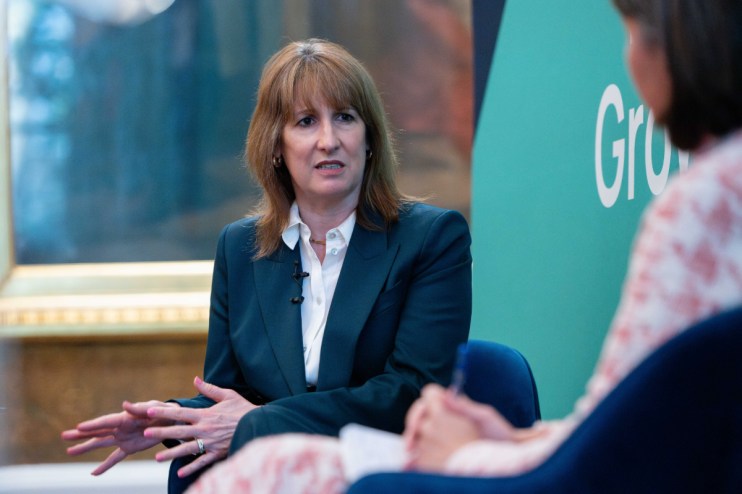
The UK economy lost momentum in April, official data has revealed, as the energy price shock from the Iran war took its toll on businesses and consumers.
The Office for National Statistics said GDP declined by 0.1 per cent in April.
The services sector contracted by 0.2 per cent while manufacturing output did not post any growth. Construction, however, recovered slightly as growth in the sector was 0.1 per cent.
Over a three-month period, growth was 0.7 per cent, building on momentum built in the first quarter of the year.
“Services were again the driver [over three months] with a particular strength in computer programming, marketing and wholesale companies across the three months, while construction showed some further signs of recovery after a weak winter,” said Liz McKeown, director of economic statistics at the ONS.
Reeves said: “Before the conflict in the Middle East, growth was higher than expected and inflation was falling. This is not a war we wanted or joined, but one that will have an impact at home.”
The data shows how early disruption in international trade across the Strait of Hormuz after the Iran war began in March has affected UK households and firms.
Economists have said that the UK economy is still set to suffer a larger hit as the delayed effects of trade disruption will show up in data later this year.
Inflation is also expected to rise as the Iran war drags on, adding to fears that interest rates could be hiked. The Bank of England is set to meet again next year and take another assessment on the likelihood of inflation spiking this year.
Tensions have re-escalated in recent days despite hopes of a peace deal being struck between parties, with Iran sending missiles into Israel and the US targeting Iran’s critical infrastructure.
The National Institute of Economic and Social Research’s Fergus Jimenez-England said he expected a slowdown in the UK economy to “intensify as higher energy costs feed through the economy, with the impact likely to be felt most acutely in the third quarter as the energy price cap rises”.
KPMG chief economist Yael Selfin said: “In contrast to 2022, subdued domestic demand is limiting firms’ ability to pass these higher costs on to consumers, which is likely to squeeze profit margins.
“This could lead firms to scale back investment plans, particularly against the backdrop of higher borrowing costs and geopolitical uncertainty.”
World economy to slow to lowest growth since pandemic
The global economy is also set to slow to its lowest growth rate since the pandemic as a result of the energy price shock that has sent oil prices above $90 per barrel.
The World Bank said on Thursday that global growth was forecast to come to 2.5 per cent, lower than the 2.9 per cent mark for 2025.
World Bank president Ajay Banga said that developing countries other than China and India would suffer the largest consequences as they will have “collectively experienced nearly a decade of no progress on narrowing their per capita income gap with advanced economies”.
The United Nations organisation also said that economies in Europe, Central Asia and the Middle East would grow at a lower rate than those in sub-Saharan Africa and Latin America.
The low growth figures across the UK economy and the rest of the world will likely concern Treasury officials who are already in a tussle with other government departments over tight budgets.
Growth in the first quarter of the year was estimated at 0.6 per cent though some of the gains are expected to be unwound due to global conflicts.
On Thursday, John Healey resigned from government as he blamed Sir Keir Starmer and Rachel Reeves for failing to provide enough funding to defence.