
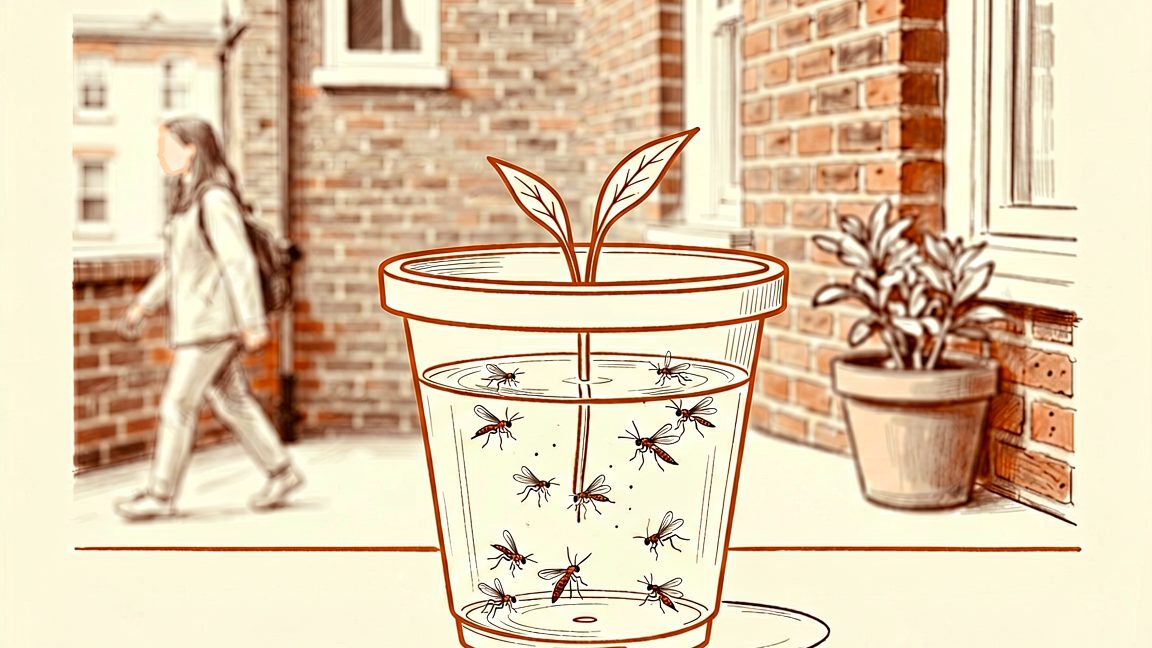
In September 2026, the UK Health Security Agency (UKHSA) confirmed breeding of the tropical mosquito Aedes aegypti in a residential flat in Newham, east London. It is the first time the species has been identified breeding in the United Kingdom and the fourth overall detection.
Breeding confirmed in east London
The discovery emerged from UKHSA’s mosquito‑watch surveillance scheme, which monitors reports of unusual mosquito activity. The agency’s field officers inspected the flat after a resident flagged a possible infestation and found larvae developing in standing water. The finding was reported by The Guardian – Environment, which quoted UKHSA officials.
“A mosquito capable of transmitting tropical diseases has been found breeding in homes in east London,” the agency said.
That statement satisfies the packet’s required fact that a disease‑capable mosquito was found breeding in east London homes.
Public‑health risk assessment
UKHSA assessed the public‑health risk as low. No human infections have been linked to the east London breeding site, and the agency found no evidence that the mosquitoes have caused illness to date.
“The risk to the public was low, with no evidence that the mosquitoes in east London have caused human infections,” the agency told reporters.
Because the breeding was confined to a single flat, the immediate threat to the wider population is limited. Nevertheless, the agency emphasised the importance of public vigilance – removing standing water, using screens and reporting unusual mosquito activity.
Climate‑driven context
Experts cited in the Guardian article warned that a warming climate is expanding the range of invasive mosquitoes. The agency’s own statement linked the Newham finding to broader climate trends.
“We will continue to see incursions of invasive mosquitoes, and increased reports of them being able to survive in the UK,” UKHSA warned.
The agency noted that Aedes aegypti normally thrives in tropical and subtropical regions and can transmit dengue, chikungunya and Zika virus where those diseases are endemic. Climate‑change models predict milder winters and hotter summers across the British Isles, conditions that could allow the species to overwinter and establish local populations.
While this is the first confirmed breeding event, the packet records three prior detections of adult Aedes aegypti in the UK. Those earlier sightings were isolated and did not involve breeding, underscoring that the September 2026 event marks a qualitative shift – the species is not only arriving, it is reproducing.
What comes next?
UKHSA plans intensified surveillance in London and other southern regions, expanding the mosquito‑watch programme’s geographic coverage. The agency will also work with local councils to educate residents on preventive measures, such as eliminating stagnant water in gardens and containers.
Public‑health officials stress that, despite the low current risk, the presence of a competent vector raises the stakes for any future introductions of the viruses it can carry. Should dengue, chikungunya or Zika appear in travelers returning to the UK, the newly established breeding sites could facilitate local transmission.
For now, the agency’s advice remains straightforward: keep windows screened, use insect repellent when outdoors, and report any unusual mosquito activity to UKHSA via its online portal.
As climate change continues to reshape the UK’s ecological landscape, the Newham breeding event serves as a warning sign. It illustrates how a warming planet can turn previously exotic disease vectors into domestic concerns, prompting both public‑health agencies and residents to adapt their practices.