Bank of England waters down stablecoin rules after industry backlash

The Bank of England has diluted its incoming stablecoin rules after warnings from currency providers that the UK risked falling behind rival jurisdictions in a rapidly growing pocket of the global financial system.
In its final framework for regulating the fledgling currencies, which are a digital form of money whose value is pegged to another asset like sterling or the dollar, the central bank ditched plans to impose a limit on customer deposits. Instead it will impose a temporary cap on the total volume of sterling-denominated stablecoins in circulation.
It also lowered the percentage of deposits that issuers have to hold in the central bank’s non-interest bearing reserves after a backlash from the cryptocurrency industry, which argued the watchdog’s previous plans would make it impossible for operators to turn a profit.
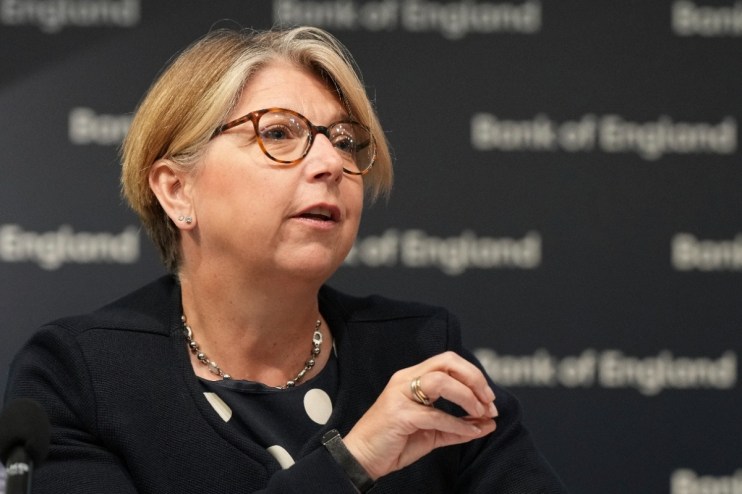
Sarah Breeden, the Bank of England’s deputy governor who has spearheaded the central bank’s crypto regulation, hailed the new set of rules as a “major milestone” in UK payments.
“Today we’ve set out the foundations of that trust for a new form of money – with prompt redemption, strong protections and central bank support,” she added.
Bank of England rules still ‘ world’s most conservative regime’
The watered-down plans represent the Bank of England’s final framework for stablecoin regulation in Britain, after a lengthy consultation process during which the central bank has floated blueprints with vastly differing levels of red tape.
Its deliberative approach earned it several dressing downs from both the crypto industry and senior political figures. Nigel Farage, who – along with his party, Reform UK – is an enthusiastic backer of the cyrpto industry, branded Bank governor Andrew Bailey a “dinosaur” last year after its plans to introduce a strict individual holding limit of £20,000 first emerged.
The Bank shelved those plans in its final approach, and will instead impose a temporary £40bn cap on the total number of stablecoins in circulation at any one time. Bank of England officials expect to revise that cap or remove it entirely once stablecoins have been digested by the financial system.
Under the rehashed proposal, stablecoin providers will also face looser rules around the amount of cash they have to hold in the central bank’s vaults. The regulator had previously said it would force them to hold 40 per cent of their sterling holdings with them, with the rest allowed to be invested in short-term government bonds. But the new rules state that threshold has been lowered to 30 per cent, allowing providers the chance to make more money on their holdings.
The framework represents the final attempt from the Bank to draw up rules for the fast-growing stablecoin sector. Currently, almost all stablecoins are dollar-denominated, meaning that for every dollar’s worth of stablecoin a provider issues, it holds the same amount of US dollars in cash or bonds.
The digital coins are held up by advocates as a less volatile version of cryptocurrencies which allow instant and cheap international payments. But regulators have been divided over how closely to regulate them, after the collapse of Silicon Valley Bank showed one provider, Circle, had over $3.3bn (£2.5bn) of its deposits in the failing lender.
More cautious than the EU
Janine Hirt, chief executive of Innovate Finance, said: “Despite some positive changes in response to industry feedback, the Bank of England’s approach still risks creating the most conservative and cautious stablecoin regime in the world.
“Widespread adoption of stablecoins in financial markets is critical to maintaining the competitiveness of UK wholesale financial markets and in the wider economy can enable significant cost savings and productivity gains for businesses and families.
“The ability of the UK to benefit from these and to attract investment will be hampered by the Bank of England approach which is more cautious than not only the US, Singapore and UAE but also the EU and Canada.”