Just under 34 million hectolitres is the forecast for the 2026 French wine harvest, a 6 % decline from the 2025 vintage and 17 % below the five‑year average for 2021‑2025, the French agriculture ministry announced on 7 September 2026.
Forecast figures and their context
The ministry’s estimate, reported by The Guardian and backed by Agreste, marks the lowest output in three decades. The forecast is expressed as “just under 34 million hl” for the 2026 vintage. The same source quantifies the drop as 6 % versus the 2025 harvest and 17 % versus the 2021‑2025 average.
| Metric | Value | Period | Comparison base |
|---|---|---|---|
| 2026 wine production forecast | 34 million hectolitres | 2026 vintage | – |
| Percentage drop vs 2025 | 6 % | 2026 vs 2025 | 2025 harvest |
| Percentage below 2021‑2025 average | 17 % | 2026 vs 2021‑2025 average | 2021‑2025 five‑year average |
The 2026 figure is therefore not only a year‑on‑year contraction but also a sizeable deviation from the recent multi‑year trend.
Weather extremes as the primary driver
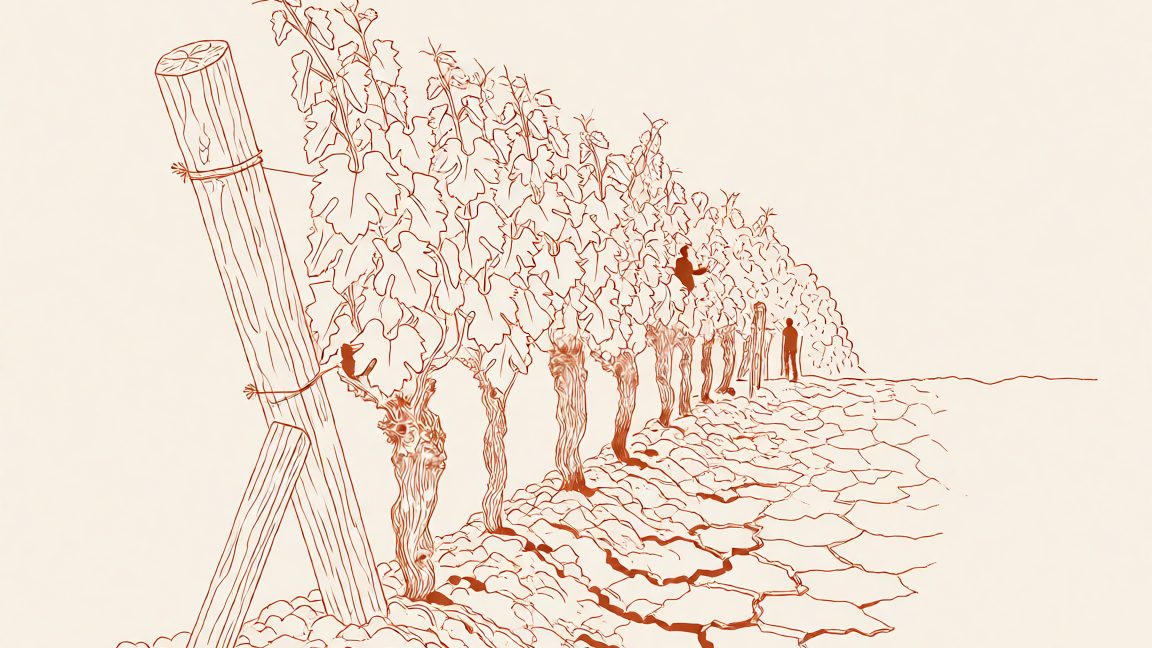
The ministry attributes the shortfall to a “hottest on record” summer. Temperatures reached or exceeded 40 °C in half of France, intensifying soil drought and triggering sun‑scald, scorching, defoliation and wilting of vines. The Guardian excerpt notes that these conditions “reduced harvest volumes”.
In addition to drought, wildfire smoke has tainted grapes in key regions such as Bordeaux and Burgundy. The source reports concerns that “smoke from rampant wildfires… causing ‘smoke taint’ and affecting the taste of the finished wine”.
Cécile Mathiaud, speaking for the Burgundy wine producers association, said she was “surprised by the government’s disastrous figures for her region’s vineyards”. Her comment underscores the unexpected severity of the climate shock for producers who traditionally count on more stable yields.
Market implications for global wine supply
France accounts for roughly 40 % of global premium‑wine production. A 6 % cut in French output therefore removes an estimated 2 million hl from the world market, a volume that would normally flow to export destinations in the United States, China and the United Kingdom.
Analysts at City AM note that a supply contraction of this size can lift benchmark prices for French appellations by several percentage points, especially for Bordeaux and Burgundy labels that already trade at a premium. The price impact will be felt most strongly in the premium segment, where inventories are thin and buyers are sensitive to vintage quality.
Import‑dependent retailers may see higher landed costs, prompting them to adjust pricing or shift sourcing to other European producers such as Italy or Spain, whose 2026 forecasts remain undisclosed but are expected to be less affected by heatwaves.
Outlook and unknowns
The ministry’s estimate is a first‑ever figure for the 2026 vintage; final production numbers will be confirmed after the harvest is completed in October. The packet does not provide a definitive 2025 production volume, so the exact magnitude of the year‑on‑year change cannot be quantified beyond the 6 % percentage.
What remains unclear is how quickly vineyards can recover from the combined stress of drought and smoke. Agreste cites reduced vineyard area as a factor, but the packet does not detail the extent of acreage loss.
Investors should watch for subsequent releases from Agreste that may adjust the forecast as more weather data becomes available. In the meantime, the current outlook suggests a tighter supply environment for French wine and a potential upside for price‑sensitive market participants.
For a broader view of how climate change is reshaping European agriculture, see City AM’s analysis “How climate change is reshaping European agriculture”. A complementary piece on price dynamics, “Impact of French wine supply shocks on global wine prices”, provides a deeper dive into market reactions.