Skip to content
CityAM
Main navigation
  • News
    • News
      • Latest Business News
      • Economics
      • Politics
      • Tech
      • Banking
      • FTSE 100 Live
      • Retail
      • Insurance
      • Legal
      • Property
      • Transport
      • Markets
    • From our partners
      • AON
      • Bayes Business School
      • Canada BIDs
      • Central London Alliance CIC
      • Destination City
      • Halkin
      • Olympia
      • Inside Saudi
      • Tottenham Hotspur Stadium
      • Santander X
      • YEAR SIX Dividend
    • Featured

      ‘Very concerned’: City watchdog scolds motor finance lenders over £9bn redress scheme

      FCA sign

      Submit a story

      Tell us your story.

      Submit
  • Opinion
  • Sport
    • Latest Sports News
      • Sport
      • Sport Business
    • From our partners
      • The Morning Briefing: SBS x CityAM
      • Aramco Team Series
      • LIV Golf
    • Featured

      Dallas, Boston, New York New Jersey: Inside England’s Fifa World Cup stadiums

      Getty Images logo against a sleek, modern background, representing the influence of media in the business world

      Submit a story

      Tell us your story.

      Submit
  • Life&Style
    • Life&Style
      • Life&Style
      • Toast the City Awards
      • The Magazine
      • Travel
      • Culture
      • Motoring
      • Wellness
      • The RED BULLETiN
      • Do it with Shared Ownership
      • Media Speak Hub
    • Featured

      Glengarry Glen Ross at the Old Vic fails to close

      Glengarry Glen Ross production at Old Vic Theatre showcasing intense business negotiations and dramatic performances

      Submit a story

      Tell us your story.

      Submit
  • Investec
  • Events
  • Latest Paper
Wednesday 05 April 2023 5:15 am  |  Updated:  Wednesday 05 April 2023 11:14 am

From international trade to interest rates, macroeconomics is in yet another tail spin

By: Paul Ormerod

Add as a preferred source on Google
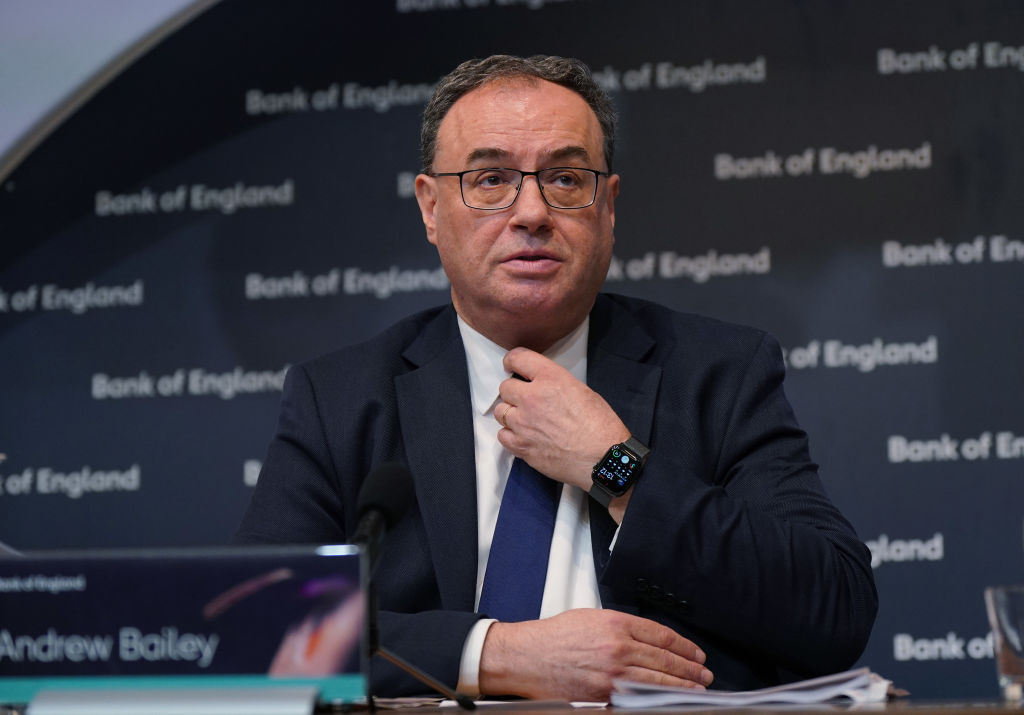
Bank of England Raises Key Interest Rate To 4%
Andrew Bailey, Governor of the Bank of England, during the Bank of England Monetary Policy Report Press Conference, at the Bank of England last month. (Photo by Yui Mok – Pool/Getty Images)

Last week, anti-Brexit campaigners started complaining about the minuscule economic benefit of joining the CPTPP, but almost no one shaking a fist knows a thing about microeconomics, writes Paul Ormerod

Fifty years ago, the Euro area accounted for 30 per cent of the world’s economy. Since then, there has been a steady fall; now, its share of world output has halved.

In contrast, the Asia-Pacific economies have grown much faster. These trends are well established, and this region will increasingly dominate the world economy.

Yet, on the logic of the received wisdom in UK economics, any weakening of our links with the EU is a disaster. In contrast, any recognition given to strengthening our links with the Asia-Pacific region is at best grudging.

Hence the estimate published last week by the Office for Budget Responsibility (OBR). It calculated the new trade deal between the UK and the Comprehensive and Progressive Agreement for Trans-Pacific Partnership (CPTPP) would only add a trivial 0.08 per cent to the size of our economy.

The CPTPP countries do not include Asian giants India and China, but their share of world output is now not much less than that of the EU. Despite this, the models used to estimate these effects churned out a dismally low number.

Truth is, the models used to predict the economy at the macro level are just not very good, to say the least. “Macro” of course means “big”: in economics, the term refers to things such as inflation, the growth of the economy and overall movements in trade.

Because of the media exposure it gets, most people think economics is mainly about macro. But whether it is in theory or in practice, most of economics is carried out at the “micro” level, trying to understand how individuals and companies behave.

Read more

Bank of England waters down stablecoin rules after industry backlash

Bank of England deputy governor Breeden discusses economic policies during a press conference

Here, economics has made a lot of progress over the past thirty years. Descriptions of behaviour are now much more realistic. There is still a way to go, but this part of the discipline is in good health.

The same cannot be said of macroeconomics. The models are mathematically more sophisticated than the ones which I used when doing economic forecasting in the late 70s and 80s. But their performance is no better.

A stark illustration of this is provided by two of the 2019 Nobel Laureates, Abhijit Banerjee and Esther Duflo, in their book “Good Economics for Hard Times”. They devote a long chapter specifically to international trade.

They note that a number of key propositions in trade theory in economics lack empirical support. Indeed, the evidence even appears to contradict some of them.

Macroeconomics in the UK, whether on the Monetary Policy Committee or in the wide forecasting community, suffers from a problem which Keynes identified in the 1930s when writing about the economic crisis: “A sound banker, alas, is not one who foresees danger and avoids it, but one who, when he is ruined, is ruined in a conventional way along with his fellows, so that no one can really blame him.” What this means is that there’s a real reluctance amongst macroeconomists in the UK to go out on a limb. There are exceptions such as Tim Congdon, the founder of the Institute of International Monetary Research, but groupthink pervades the community.

The Bank of England’s recent record on inflation, for example, has been catastrophically poor. The Treasury’s original Project Fear warning of the consequences of a Leave vote was, according to many, completely wrong.

There is not, unfortunately, a rival set of theories which are scientifically unequivocally superior. But we can start by stopping treating pronouncements from the likes of the OBR as though they were science. A healthy dose of scepticism would prove useful.

Read more

Mortgage approvals jump to 15-month high despite Iran war chaos

Homeowners may be eying fresh mortgage deals after the Bank of England's cut.

Share this article

  • Facebook
  • X
  • LinkedIn
  • WhatsApp
  • Email

Similarly tagged content:

Sections

  • Opinion

Categories

  • Opinion

Trending Articles

  • Who could be Andy Burnham’s Chancellor? 

  • As it happened: FTSE 100 finishes higher as US-Iran talks progress and Starmer resigns; Space X shares fall after bond sale

  • Starmer will resign, Trump says

  • Coca-Cola brings in restructuring lineup over failed Costa sale

  • Ocado to replace founder Steiner as shares plunge 

More from CityAM

  • Bank of England waters down stablecoin rules after industry backlash

    Regulation
    Bank of England deputy governor Breeden discusses economic policies during a press conference
  • Mortgage approvals jump to 15-month high despite Iran war chaos

    Property
    Homeowners may be eying fresh mortgage deals after the Bank of England's cut.
  • Job vacancies fall again in unemployment risk 

    Economics
    People waiting outside a job centre, highlighting unemployment issues and job search challenges in the current economy.
  • An England World Cup isn’t just football – it is money, politics and a nation’s bad habits

    Sport Business
    Business professionals in a meeting discussing strategic planning and market trends in a modern office setting.
  • Burnham turns to ex-OBR and Bank of England chiefs on economic policy

    Politics
    British Chambers President Andy Haldane speaking at a business conference, addressing economic growth and industry challen...
  • Inflation expectations at record high in interest rates signal

    Economics
    Bank of England building on Threadneedle Street, London, showcasing its historic architecture and financial significance
  • Bank of England unveils Armageddon stress test scenario ‘more severe than the financial crisis’

    Regulation
    bank of england
  • High streets score big after England World Cup win

    Retail
    Soccer players competing in the World Cup, showcasing intense action on the field with a stadium full of cheering fans

CityAM Canada — business, markets and opinion for Canadian readers.

Sections

  • Business
  • Markets
  • Tech
  • AI
  • Economics
  • Opinion
  • Cities

Company

  • About
  • Contact

Legal

  • Terms of Use
  • Privacy Policy
  • Cookie Policy
© 2026 CityAM Canada. All rights reserved.
Terms · Privacy · Cookies