Skip to content
CityAM
Main navigation
  • News
    • News
      • Latest Business News
      • Economics
      • Politics
      • Tech
      • Banking
      • FTSE 100 Live
      • Retail
      • Insurance
      • Legal
      • Property
      • Transport
      • Markets
    • From our partners
      • AON
      • Bayes Business School
      • Canada BIDs
      • Central London Alliance CIC
      • Destination City
      • Halkin
      • Olympia
      • Inside Saudi
      • Tottenham Hotspur Stadium
      • Santander X
      • YEAR SIX Dividend
    • Featured

      Government departments will look at cutting budgets to fund defence, minister says

      Getty Images collection showcasing diverse business professionals in a collaborative office environment, emphasizing teamw...

      Submit a story

      Tell us your story.

      Submit
  • Opinion
  • Sport
    • Latest Sports News
      • Sport
      • Sport Business
    • From our partners
      • The Morning Briefing: SBS x CityAM
      • Aramco Team Series
      • LIV Golf
    • Featured

      Can football conquer the US? Why culture is key this World Cup

      GettyImages 2281127577 featuring a significant news event or business setting, capturing key moments and interactions

      Submit a story

      Tell us your story.

      Submit
  • Life&Style
    • Life&Style
      • Life&Style
      • Toast the City Awards
      • The Magazine
      • Travel
      • Culture
      • Motoring
      • Wellness
      • The RED BULLETiN
      • Do it with Shared Ownership
      • Media Speak Hub
    • Featured

      The best places to eat sandwiches in Lisbon, from bifanas to pregos

      Bifana do Afonsos famous bifana sandwich showcasing tender pork in a freshly baked roll with savory sauce.

      Submit a story

      Tell us your story.

      Submit
  • Investec
  • Events
  • Latest Paper
Wednesday 24 April 2024 5:00 am  |  Updated:  Tuesday 23 April 2024 11:47 am

Have we passed peak electric car?

By: Paul Ormerod

Add as a preferred source on Google
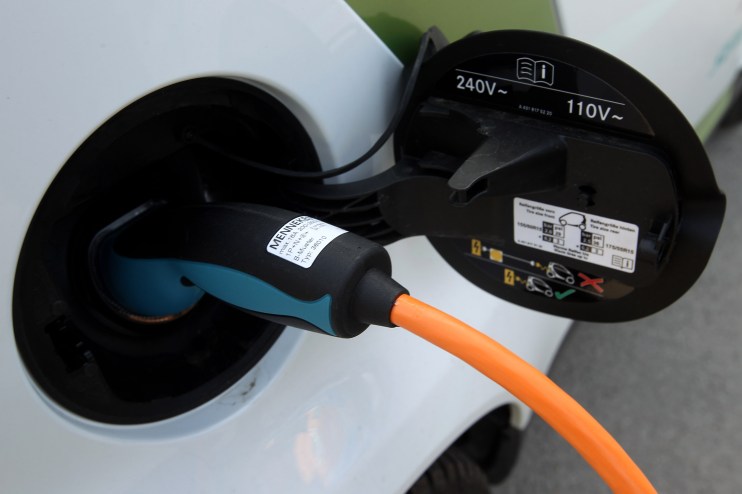
Labour have unveiled their plans for the car industry which they say could create 80,000 jobs.
Labour has unveiled its plans for the car industry which it says could create 80,000 jobs.

Electric cars have not become better or cheaper fast enough, and without rapid improvements the market will run out of road, says Paul Ormerod

This week I got rid of my electric car.  As a car, it was a pleasure to drive.  I also enjoyed the fact that it disconcerted at least some of my liberal friends who would not naturally associate me with such a “progressive” consumer choice.

But the downsides, as increasing numbers of people are realising, began to outweigh the advantages.  The reasons are familiar.  The overclaiming by the manufacturers on range in normal traffic conditions, the problems of finding chargers outside London.

On top of all this, the favourable tax treatment of electric vehicles is gradually being withdrawn, right down to the discounts on residents’ parking spaces.

At the end of last year, Germany abandoned, almost without warning, the €4,500 subsidy to electric cars.  It was therefore no surprise to read that in March the sales there fell by 29 per cent compared to the same month a year ago.

More general evidence that the electric market is contracting is shown by the fact that Tesla, the biggest seller in many countries, announced that it is laying off 14,000 workers, 10 per cent of its labour force.

These stories reveal several points about consumers and their preferences which are vital to any government trying to move towards a net zero target.

The first is that there is a sizeable group of people who are in principle willing to buy into the agenda.  In the UK, for example, electric car sales are still around 15 per cent of all new registrations, albeit a figure down slightly on 2023 as a whole.

Most of these early adopters, however, are affluent.  Electric car prices remain significantly higher than their petrol competitors and they are financially out of reach of many

This fits the classic pattern of how innovations come to be adopted.  Consumers who are the first to take up a new technology, whatever it might be, tend to be well off, of relatively high social status and have gone through higher education.

Read more

Porsche Cayenne Coupe Turbo Electric: a super-powered SUV

Porsche Cayenne SUV in sleek design on display, highlighting luxury features and modern automotive elegance

For an innovation to spread more widely, two things needs to happen.  This group of relatively early adopters needs to reach a critical size so that other people can readily notice that the technology is being used and therefore gain confidence to adopt it themselves.

In addition, advances in the technology need to lead to its initial high price falling, often rapidly.  Think, for example, of mobile phones or personal computers.

Electric cars simply have not improved rapidly enough.  Their ranges remain restrictive and their price remains high.

And the early adopters, despite their affluence, respond to incentives in a rational way.  Their income levels means that in general they are less sensitive to price changes than most.  But they are not completely indifferent, as the example of the German market shows.  A big cut in a subsidy has led to a huge fall in sales.

A further factor is that when people begin to use an innovative new product, they gradually learn more not only about how it works, but the costs and benefits.  Because it is new, not everything about it is obvious at the start.

And so the group of early adopters are beginning to realise that the costs associated with electric cars are rather more than they imagined them to be.  A simple point is the time and potential inconvenience associated with finding a charger and then waiting for it to charge.

The evidence on how innovations spread is very well documented and there are many examples.  If the initial group of enthusiasts fails to reach a critical size, the product simply does not spread amongst the rest of the population.

Without massive price reductions or improvements in performance, the electric car market is at a dead end.

Paul Ormerod is an economist at Volterra Partners LLP, an Honorary Professor at the Alliance Business School at the University of Manchester and author of Against the Grain: Insights of an Economic Contrarian, published by the IEA in conjunction with CityAM

Read more

Porsche Cayenne Electric review: luxury SUV is the most powerful Porsche ever

Porsche Cayenne SUV parked on urban street showcasing sleek design and luxury automotive features

Share this article

  • Facebook
  • X
  • LinkedIn
  • WhatsApp
  • Email

Similarly tagged content:

Sections

  • Opinion

Categories

  • Opinion

People & Organisations

  • electric car
  • electric vehicle
  • innovation

Related Topics

  • Climate change
  • climate tech
  • Electric Cars

Trending Articles

  • KPMG’s Summer Friday half-day rollback signals deeper woes for Big Four giants

  • Inflation expectations at record high in interest rates signal

  • London Tech Week sums up everything wrong with UK tech

  • KPMG report on AI found riddled with AI hallucinations

  • UK economy falters as deeper damage to growth to come

More from CityAM

  • Porsche Cayenne Coupe Turbo Electric: a super-powered SUV

    Life&Style
    Porsche Cayenne SUV in sleek design on display, highlighting luxury features and modern automotive elegance
  • Porsche Cayenne Electric review: luxury SUV is the most powerful Porsche ever

    Life&Style
    Porsche Cayenne SUV parked on urban street showcasing sleek design and luxury automotive features
  • Stamer overrules Miliband on electric car sales targets as he looks to appease automotive industry

    Energy
    Ed Miliband and Keir Starmer discussing wind energy policy at a press conference, highlighting renewable energy initiatives.
  • Used EV sales soar as drivers look to curb fuel costs

    Tech
    JBR was founded in 2015 and specialises in high-end vehicles like Aston Martin, Lamborghini and Rolls-Royce.
  • Sexy EV coupe joins Porsche Cayenne SUV range – and it looks like a 911

    Life&Style
    Porsche Cayenne showcasing sleek design and advanced features in a dynamic city setting
  • ‘Watershed moment’: EV sales soar as oil price volatility drives away petrol car demand

    Motoring
    Chery Tiggo 4 electric vehicle showcasing sleek design and innovative features in the Chinese automotive market
  • Polestar 3: Swedish electric SUV delivers premium performance

    Life&Style
    Polestar 3 electric SUV in sleek urban setting showcasing modern design and advanced technology features
  • Government urged to accelerate review of ‘disruptive’ EV sales targets

    Motoring
    Caledonia has bought a majority stake in DTM for £55m
  • Terms & Conditions
  • Privacy Policy
  • Cookie Policy
  • News
  • Markets & Economics
  • Politics
  • Opinion
  • Life&Style
  • Personal Finance

Follow us for breaking news and latest updates

  • Facebook
  • X
  • Instagram
  • LinkedIn
Copyright 2026 CityAM Limited