Skip to content
CityAM
Main navigation
  • News
    • News
      • Latest Business News
      • Economics
      • Politics
      • Tech
      • Banking
      • FTSE 100 Live
      • Retail
      • Insurance
      • Legal
      • Property
      • Transport
      • Markets
    • From our partners
      • AON
      • Bayes Business School
      • Canada BIDs
      • Central London Alliance CIC
      • Destination City
      • Halkin
      • Olympia
      • Inside Saudi
      • Tottenham Hotspur Stadium
      • Santander X
      • YEAR SIX Dividend
    • Featured

      Advertising at World Cup: Levi’s genius, hydration breaks and dodging rules

      Breaking news event with diverse crowd gathered outside urban office building on sunny day, capturing vibrant city life.

      Submit a story

      Tell us your story.

      Submit
  • Opinion
  • Sport
    • Latest Sports News
      • Sport
      • Sport Business
    • From our partners
      • The Morning Briefing: SBS x CityAM
      • Aramco Team Series
      • LIV Golf
    • Featured

      Advertising at World Cup: Levi’s genius, hydration breaks and dodging rules

      Breaking news event with diverse crowd gathered outside urban office building on sunny day, capturing vibrant city life.

      Submit a story

      Tell us your story.

      Submit
  • Life&Style
    • Life&Style
      • Life&Style
      • Toast the City Awards
      • The Magazine
      • Travel
      • Culture
      • Motoring
      • Wellness
      • The RED BULLETiN
      • Do it with Shared Ownership
      • Media Speak Hub
    • Featured

      Procter & Gamble axes relationship with Kremlin propaganda channel

      007 PG news article image featuring a business meeting with executives discussing strategy at a modern conference table

      Submit a story

      Tell us your story.

      Submit
  • Investec
  • Events
  • Latest Paper
Tuesday 30 January 2024 5:00 am  |  Updated:  Monday 29 January 2024 7:48 pm

High interest rates hurt but they might just be the medicine UK productivity sorely needs

By: James Sproule

Add as a preferred source on Google
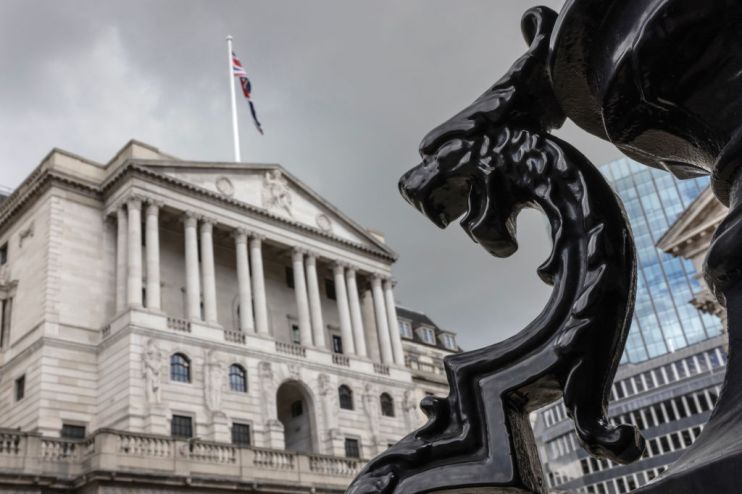
Jonathan Haskel, an external member of the Bank of England's Monetary Policy Committee said the bank was still a "long way off" before rates can come down

A post Global Financial Crisis policy of zero interest rates has facilitated investments which deliver poor returns, writes James Sproule

Productivity is often seen as the key for sustainable growth. But it is hardly a secret that Britain’s productivity is stuck in the doldrums – and has been so since the Global Financial Crisis (GFC) of 2007. Britain has not been alone in finding it difficult to generate any meaningful advances in productivity, but the UK’s record has been notably lamentable, lagging behind both Germany and France: we have ended up in the bottom half of the class in the OECD.  

Economists have a number of explanations as to why. The GFC resulted in significant changes to financial markets regulation, and the UK – with its large international capital markets – was heavily affected. Moreover, Britain has a plethora of smaller firms. While this may help economic agility, smaller firms do tend to be less efficient. So in comparison to France and Germany, UK firms are less productive overall. There is also the issue that the UK potentially under-invests. The remedy here seems clear enough: encourage more capital expenditure – which is pretty much what the Chancellor’s last few budgets have sought to do.  

But there is another, less-cited reason at work here as well: capital has been so cheap that it has not just encouraged investment, but facilitated investments which deliver poor returns. 

The Zero Interest Rate Policy, or ZIRP, occurs when a central bank sets interest rates at, or close to, zero in order to spur economic activity through low-cost borrowing and easy access to credit. A raft of countries chose this route in the wake of the GFC. 

From 2008 to 2022 interest rates were held at such a level that the cost of capital was almost immaterial to any investment decision. Indeed, for some larger companies the cost of borrowing after tax has actually been below the rate of inflation, making debt effectively cost-free in real terms. This has had an inevitable knock-on effect on investment decisions. At best, it has meant that extremely low – read ‘not very productive’ – returns are still seen as justifiable. It is, after all, no surprise that fifteen years of ZIRP has also seen the inexorable rise of businesses that did not seem, on the face of it, to have any cast-iron plan for making money in any sort of normal and sustainable financial situation. 

This is changing. Looking over the last century, the Bank of England’s average nominal interest rate has been 5.25 percent, matching today’s base rate. To suppose that interest rates are going to revert to anything close to the levels seen between 2008-2022 is to assume we are going to see not only a renewed financial crisis, but that central bankers are willing to accept the consequences of having kept rates so low for so long. All the evidence suggests that the ‘new normal’ is far closer to where it is today than where it was prior to 2022. The result will be companies having to consider investments far more carefully –  they will need to make their money work. And as firms make investments that meet higher return criteria, there will be a positive impact on productivity, an impact that will in time be felt across the economy as a whole. 

There is little doubt that the shift to higher rates is causing pain – business plans have had to be rewritten, intended investments abandoned.  But the upside is that the growth that emerges in the coming years should be a good deal more financially sustainable. We are facing a future where we have to realise that money is finite, that it has to be used judiciously. But if we can embrace the need to make money work harder, it may just be that we can start to look forward to a more productive second half of the decade. In other words, this might just be the spur that Britain’s productivity needs. 

James Sproule is chief economist at Handelsbanken

Read more

Andy Haldane: Britain after Brexit

British Chambers President Andy Haldane speaking at a business conference, addressing economic growth and industry challen...

Share this article

  • Facebook
  • X
  • LinkedIn
  • WhatsApp
  • Email

Similarly tagged content:

Sections

  • Opinion

Categories

  • Opinion

Trending Articles

  • Who could be Andy Burnham’s Chancellor? 

  • As it happened: Stocks recover after markets rocked by tech-sell off; US claims ‘good foundations’ of Iran deal

  • As it happened: FTSE 100 finishes higher as US-Iran talks progress and Starmer resigns; Space X shares fall after bond sale

  • Coca-Cola brings in restructuring lineup over failed Costa sale

  • Starmer will resign, Trump says

More from CityAM

  • Andy Haldane: Britain after Brexit

    Opinion
    British Chambers President Andy Haldane speaking at a business conference, addressing economic growth and industry challen...
  • Financial services contributed a tenth of UK economic output in 2025 

    Economics
    Skyline of Canada financial district with modern skyscrapers and historic landmarks under a clear blue sky
  • Industry Execs Think Digital Transformation Is Working – but Staff Still Rely on Shadow IT to Get the Job Done

    Business Wire
  • Never forget the undeniable moral case for capitalism

    Economics
    Canary Wharf skyline featuring modern high-rise buildings under a clear sky, highlighting Londons financial district.
  • Tony Blair has issued a call to arms – but will Labour listen?

    Opinion
    Tony Blair speaking at a press conference, addressing current political issues and highlighting future strategies.
  • Bank of England waters down stablecoin rules after industry backlash

    Regulation
    Bank of England deputy governor Breeden discusses economic policies during a press conference
  • Andrew Bailey warns on AI: ‘Everybody is currently priced to be a winner’

    Tech
    Bank of England Governor Andrew Bailey said cited several indicators that the labour market was softening.
  • Savvy the Squirrel and ‘simpler regulation’: New City minister reaffirms Labour’s investment push

    Investing
    Savvy the Squirrel mascot promotes retail investing campaign with vibrant graphics and engaging call-to-action elements

CityAM Canada — business, markets and opinion for Canadian readers.

Sections

  • Business
  • Markets
  • Tech
  • AI
  • Economics
  • Opinion
  • Cities

Company

  • About
  • Contact

Legal

  • Terms of Use
  • Privacy Policy
  • Cookie Policy
© 2026 CityAM Canada. All rights reserved.
Terms · Privacy · Cookies