
Ottawa is allocating roughly CAD ≈ 900,000 in grants to two Calgary firms to accelerate AI‑driven indoor farming, a move tied to the $750 million National Food Strategy and rising food‑price pressure from new U.S. counter‑tariffs.Calgary Herald
Grant details and programme context
The federal announcement specifies a total grant of about CAD 900,000 for the 2026 fiscal year. The amount is split roughly equally between Hydragreens Produce Ltd. and SmartGRO Bioengineering Inc., each receiving an estimated CAD ≈ 450,000.Calgary Herald The funding sits within the broader National Food Strategy, a CAD 750 million programme launched to improve Canadian food security, increase domestic production capacity, and reduce reliance on imports.Calgary Herald
Companies and technology
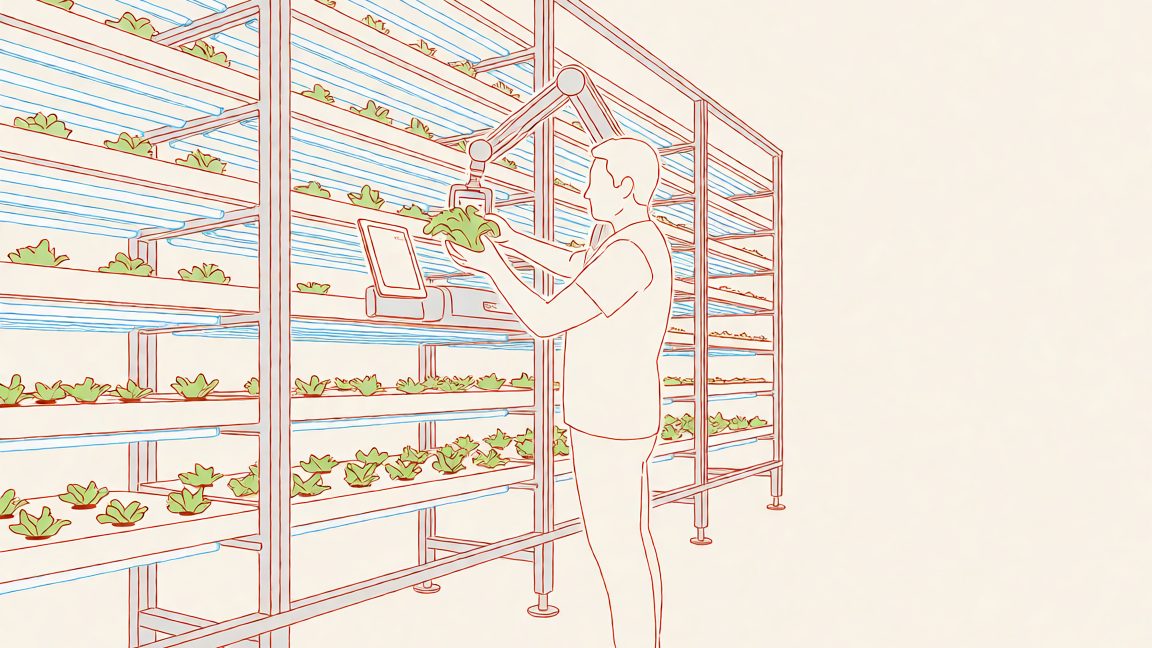
Hydragreens Produce Ltd. operates a vertical hydroponic lettuce farm in Springbank, a Calgary suburb. The facility grows leafy greens year‑round using stacked trays, nutrient‑rich water, and controlled‑environment lighting. SmartGRO Bioengineering Inc. is developing an AI‑sensor lighting system that continuously monitors plant‑growth metrics and adjusts light intensity and spectrum in real time. The system promises higher yields per square metre and lower energy consumption, key advantages for indoor farms that must balance production costs against electricity rates.Calgary Herald
Tariff backdrop and food‑security rationale
The grant announcement coincides with a wave of U.S. counter‑tariffs that have pushed Canadian food prices higher. Ottawa imposed CAD 28 billion in duties in response to a 50 percent tariff on Canadian imports that Washington had previously levied. About 700 U.S. products are now subject to these retaliatory measures, and roughly 70 percent of the fresh produce Canadians consume is imported from the United States.Calgary Herald Agriculture Minister Heath MacDonald told reporters at Hydragreens that the uncertainty surrounding trade disputes and the broader geopolitical climate makes domestic food‑production projects “something we’re all worried about.”Calgary Herald
Implications and unanswered questions
For Canadian consumers, the grants signal a policy shift toward building resilient, locally sourced food supply chains. If the AI‑assisted systems deliver the projected yield and energy gains, indoor farms could supply a larger share of the nation’s lettuce and herb demand, potentially lowering the 70 percent import dependence figure over time. For the two companies, the near‑CAD 900,000 injection provides critical capital to move from pilot to commercial scale, but the exact timing of commercial rollout remains unclear.
Several details have not been disclosed. The precise split of the grant between the two firms is described as “estimated” in the source, and the duration of the funding beyond 2026 is not mentioned. Neither the federal release nor the Calgary Herald article provides a timeline for when the AI‑sensor system will be field‑tested at scale, nor does it indicate whether additional provinces will receive similar support.
What is clear is that the funding sits within a larger strategic effort. The National Food Strategy’s CAD 750 million budget will continue to fund projects across the country, and the Calgary grants represent one of the early allocations aimed at high‑tech, climate‑smart agriculture. As trade tensions persist, Ottawa is likely to monitor the performance of these pilot projects closely and may consider expanding the programme if the technology proves cost‑effective.
| Company | Grant Amount (CAD) |
|---|---|
| Hydragreens Produce Ltd. | ≈ $450,000* |
| SmartGRO Bioengineering Inc. | ≈ $450,000* |
| Source: Calgary Herald (grant total disclosed; individual splits estimated) | |
*Figures are rounded estimates based on the disclosed total grant of CAD ≈ 900,000.
As the first wave of AI‑enabled indoor farms receives federal backing, the next question for policymakers will be how quickly the technology can be scaled to offset the import share that currently sits at more than two‑thirds of Canada’s fresh‑produce consumption.