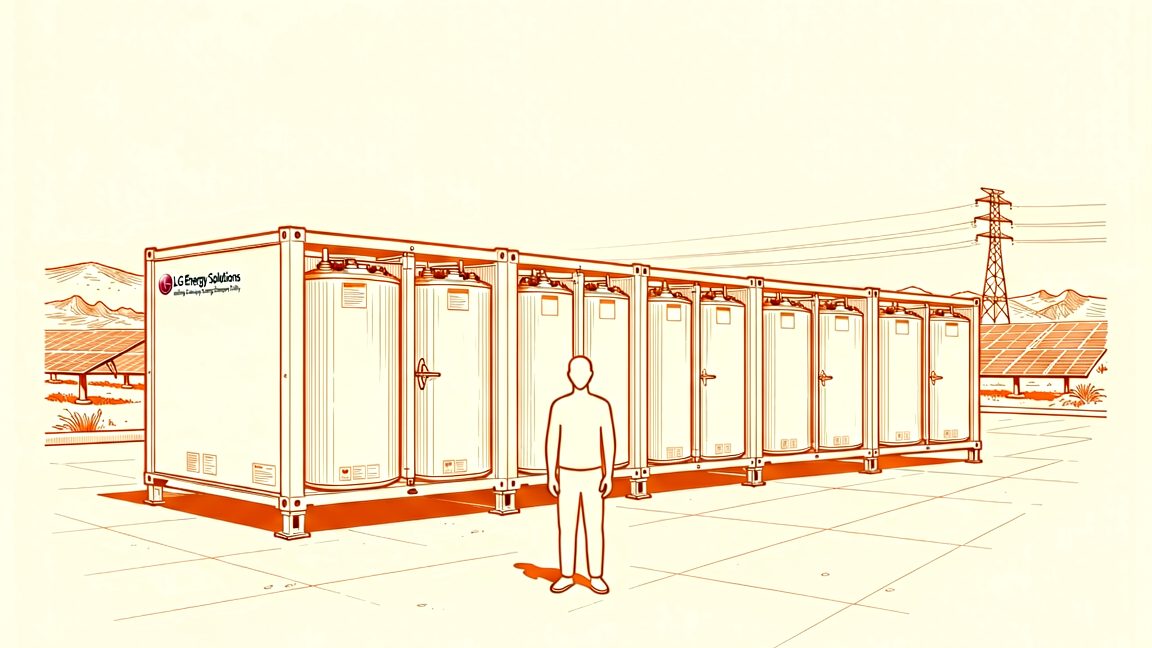
In January 2026 the United States lifted the tariff on imported batteries to 25 %, up from 7.5 %, and simultaneously required that 55 % of the material cost of new energy‑storage projects be sourced outside China to qualify for federal tax credits, effectively barring Chinese‑origin batteries from new grid‑scale storage projects.
Policy package and its components
The tariff increase and the non‑Chinese material rule are detailed in an MIT Technology Review analysis titled “Can the US battery market untangle from China?”. The article states that the import tax rose to 25 % in January 2026 and that legislation enacted for 2026 mandates a 55 % non‑Chinese material content threshold for storage‑tax‑credit eligibility. Both measures are part of a broader national‑security push, reinforced by an executive order announced in late August 2025 that declares a national emergency and bans the installation of foreign‑produced bulk‑power system equipment, explicitly calling out battery energy‑storage systems.
Timeline of the regulatory rollout
| Date | Event |
|---|---|
| January 2026 | Battery import tariff raised to 25 % (from 7.5 %). |
| Late August 2025 | Executive order declares national emergency and bans Chinese batteries from grid‑scale storage. |
| 2026 (effective) | 55 % non‑Chinese material content required for storage‑tax‑credit eligibility. |
The sequence shows a rapid escalation: the tariff change took effect at the start of 2026, while the material‑content rule becomes enforceable later that year. The executive order, issued months earlier, provides the legal footing for both measures.
Implications for battery manufacturers and project developers
Any new grid‑scale storage project that relies on batteries sourced primarily from China will now miss out on the Investment Tax Credit (ITC) and Production Tax Credit (PTC) that have driven much of the sector’s growth. Developers must either source a majority of battery materials from non‑Chinese suppliers or absorb the full cost of the 25 % import duty.
South‑Korean battery maker Samsung SDI, headquartered in Yongin, is positioned as a non‑Chinese alternative. While the packet only provides background on Samsung SDI (founded 20 January 1970, industry: battery), it does not contain its current pricing or capacity data, so the impact on the company can only be noted in general terms.
Domestic automaker Ford Motor Company, led by CEO Jim Farley and based in Dearborn, Michigan, reported $184.992 bn of revenue for FY 2024 and a net loss of $36 m for Q2 2025 (filed in 2025‑07‑31). Although Ford’s filings do not break out battery‑related costs, the company’s exposure to the new rules will hinge on its plans for vehicle‑to‑grid storage and any partnership with battery suppliers for future electric‑vehicle (EV) battery packs.
Market reaction and unanswered questions
The policy shift arrives as the United States records rapid growth in its energy‑storage market, a trend highlighted by MIT Technology Review: “The US is hitting records for the rapid growth of its energy storage market… most of this growth has been powered by cheap Chinese batteries.” The new rules aim to reduce that reliance, but the article does not provide quantitative forecasts of how much domestic production will increase.
What remains unclear from the packet is the exact timeline for compliance verification, the definition of “material cost” in the 55 % rule, and whether any exemptions exist for projects already under construction. The executive order also mentions “other restricted countries” without specifying them, leaving developers to interpret the scope.
Bottom line
Effective January 2026, US policy raises the cost of importing batteries by 25 % and adds a 55 % non‑Chinese material threshold for storage‑tax‑credit eligibility. The combined effect is to make Chinese‑origin batteries ineligible for new grid‑scale storage projects that seek federal incentives, reshaping supply‑chain decisions for manufacturers and developers alike. Stakeholders will need to adjust sourcing strategies before the 2026 compliance deadline.