Skip to content
CityAM
Main navigation
  • News
    • News
      • Latest Business News
      • Economics
      • Politics
      • Tech
      • Banking
      • FTSE 100 Live
      • Retail
      • Insurance
      • Legal
      • Property
      • Transport
      • Markets
    • From our partners
      • AON
      • Bayes Business School
      • Canada BIDs
      • Central London Alliance CIC
      • Destination City
      • Halkin
      • Olympia
      • Inside Saudi
      • Tottenham Hotspur Stadium
      • Santander X
      • YEAR SIX Dividend
    • Featured

      The next person to shop your store may not be a person at all

      AI shopping agents are rewriting the rules of online retail across North America

      Submit a story

      Tell us your story.

      Submit
  • Opinion
  • Sport
    • Latest Sports News
      • Sport
      • Sport Business
    • From our partners
      • The Morning Briefing: SBS x CityAM
      • Aramco Team Series
      • LIV Golf
    • Featured

      Cohere's Aidan Gomez bets the house on 'sovereign AI' with Aleph Alpha merger valuing the group at $20bn

      Cohere CEO Aidan Gomez on stage discussing the Toronto AI lab's strategy

      Submit a story

      Tell us your story.

      Submit
  • Life&Style
    • Life&Style
      • Life&Style
      • Toast the City Awards
      • The Magazine
      • Travel
      • Culture
      • Motoring
      • Wellness
      • The RED BULLETiN
      • Do it with Shared Ownership
      • Media Speak Hub
    • Featured

      Moonvalley's Naeem Talukdar is selling Hollywood the one thing rival AI video tools cannot: legal cover

      Moonvalley's Marey AI video model produces Hollywood-grade footage trained on licensed data

      Submit a story

      Tell us your story.

      Submit
  • Investec
  • Events
  • Latest Paper
Monday 03 February 2020 6:00 am  |  Updated:  Sunday 02 February 2020 11:17 am

Boris Johnson’s disastrous Huawei decision is an act of national self-harm

By: John Hulsman

Add as a preferred source on Google
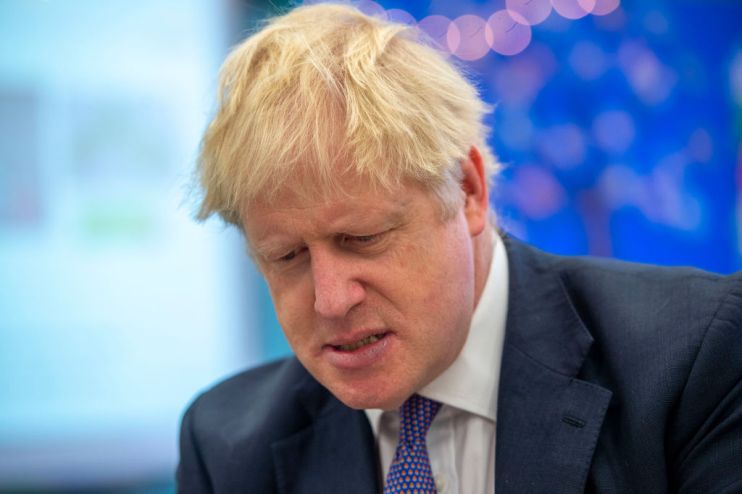
Boris Johnson is desperate for a UK general election
Boris Johnson is desperate for a UK general election (Getty Images)

Powerful US Republican senator Tom Cotton of Arkansas put it best. Letting the state-sponsored Chinese technology firm Huawei build even a portion of Britain’s 5G network — as the Prime Minister nonsensically decided to do last week — is quite a bit like letting the KGB construct the British phone systems in the 1980s. 

At the time, Margaret Thatcher’s government would have seen this for what it was — an act of madness. It is shocking, and highly counter-productive, that the newly-unbound Johnson government seems to have taken leave of its senses. 

Let’s take a breath and actually think about this decision logically, first on its specific merits, then looking at how the choice affects Britain’s post-Brexit geopolitical strategy. 

Start with the obvious (but seemingly forgotten) fact that Huawei is, like all major Chinese firms, not independent of the Chinese state. 

That the senior leadership of the company has close personal ties to Beijing’s security institutions cannot be in doubt. Huawei’s chief executive Ren Zhengfei founded the company after serving in the People’s Liberation Army. The company’s chairwoman from 1999 to 2018, Sung Yafang, reportedly worked for state security before joining Huawei. To put it mildly, this is not the usual biography of leading commercial players in the west. 

The fear is that China would be able to conduct wholesale surveillance in Britain (and be able to sabotage the country’s critical infrastructure) via Huawei kit in the future, by exploiting UK software vulnerabilities that it will become intimately aware of in helping construct the 5G network. 

Huawei has consistently denied that it has ever been asked by the Chinese government to introduce secret “back doors” into its technology, and has even offered to sign a “no spying” agreement with the UK. 

But of course they would say this. For there can be little doubt that — given the very nature of China’s state-dominated form of capitalism — Huawei would do as its masters in Beijing ordered, regardless of what they had previously agreed to. 

Get the news as it happens by following CityAM on Twitter. 

The comical arrogance of the UK’s spymasters that this is all easily manageable frankly doesn’t pass the laugh test. Millions of lines of code are going to have to be perpetually monitored. Are we really saying that there is no one in the whole of China who might be able to slip into this ocean of data material undetected? 

Read more

The Debate: Is the Renters’ Rights Act good for London landlords?

UK cityscape with To Let signs on residential buildings, highlighting the competitive nature of the rental market in 2023.

When confronted last year with precisely this dilemma, Australia — a country with even closer trading ties (as a percentage) to China than the UK — decided that the game was not worth the candle, banning Huawei from running its broadband network.

Likewise, the Prime Minister’s limp assurance to the Trump administration is risible. Lamely assuring President Trump that Johnson’s government will never again allow Britain to become reliant on Chinese technology is a classic case of trying to fence the horse in, after he has left the stable. 

If the government’s decision makes no sense on its own merits, it is well nigh ruinous at a geostrategic level. Ideologically, Prime Minister Johnson is the first UK premier since Thatcher to espouse a general Anglosphere school of thought, believing that the UK’s strategic future lies not with the non-growth, declining EU, but instead in cultivating closer ties with its English-speaking former foreign dominions, such as the US, Canada, Australia, New Zealand, and India. 

It is important to understand that in practical policy terms, there is one realm where the Anglosphere already fully exists — that of intelligence sharing. The “Five Eyes” (the US, UK, Canada, Australia, and New Zealand) have for many years shared open-source intelligence, trusting each other to an extraordinary degree, based on common historical, cultural, and linguistic ties. 

It is clear — and entirely understandable from the American point of view — that involving Huawei in the UK’s 5G network is a dagger pointed at the heart of continued Anglosphere intelligence sharing, as Huawei infiltration could be a back door jeopardising this essential cooperative. 

Ahead of the Huawei decision, the Americans flatly told British ministers that using Chinese technology in UK 5G networks would put transatlantic intelligence sharing at great risk. Following the government’s act of self-harm, senator Cotton called for an immediate review of intelligence sharing with London, which if it were limited in any way would have the gravest of consequences for the UK.  

Johnson’s Huawei decision amounts to a crucial early signal of how closely the UK is strategically committed to its heretofore promising Anglosphere future. Judging by the government’s nonsensical choice, Britain is in danger of bungling its decisive geostrategic turn at its inception.   

Sign up to CityAM’s Midday Update newsletter, delivered to your inbox every lunchtime

Main image credit: Getty

Read more

‘Don’t feel great’: Treasury minister irked by Darren Jones and Mandelson texts

Darren Jones speaking at a conference podium, addressing business professionals, dressed in a formal suit and tie.

Share this article

  • Facebook
  • X
  • LinkedIn
  • WhatsApp
  • Email

Similarly tagged content:

Sections

  • News
  • Opinion

Categories

  • Opinion
  • Politics
  • Tech

Related Topics

  • Boris Johnson
  • Huawei

Trending Articles

  • As it happened: FTSE 100 relief rally runs out of steam as BP and Shell weigh; Oil hits three-month low

  • London Tech Week sums up everything wrong with UK tech

  • KPMG’s Summer Friday half-day rollback signals deeper woes for Big Four giants

  • Inflation expectations at record high in interest rates signal

  • Rolls-Royce shares surge as SMR unit bags multi-billion pound Swedish nuclear contract

More from CityAM

  • The Debate: Is the Renters’ Rights Act good for London landlords?

    Opinion
    UK cityscape with To Let signs on residential buildings, highlighting the competitive nature of the rental market in 2023.
  • ZayZoon, the Calgary fintech born on a fishing boat, posts 1,487% growth as earned wage access goes mainstream

    ZayZoon co-founder Tate Hackert built the Calgary fintech around earned wage access
  • Botpress raises $25m as Quebec's Sylvain Perron pitches his startup as the 'infrastructure layer' for AI agents

    Botpress product UI: the Quebec startup pitches itself as the infrastructure layer for enterprise AI agents
  • FluidAI wins US FDA clearance for its surgical monitor as Waterloo's Youssef Helwa targets 100,000 operations

    FluidAI's Origin surgical monitor wins FDA clearance for use in US hospitals
  • Rachel Reeves reforms ring-fencing in boost to Natwest and Lloyds

    Banking
    NatWest bank branch exterior with signage, reflecting current branch network changes amidst financial industry updates
  • ‘Nobody’s getting a free pass’: Starmer warns Big Tech as social media ban looms

    Tech
    Prime Minister Keir Starmer addressing media at a press conference podium, discussing current governmental policies and in...
  • Bank of England’s Bailey defends bond sale programme

    Economics
    Governor Andrew Bailey has launched a defence of the Federal Reserve's independence.
  • ‘Political choice’: Retailers urge government to act on rising costs

    Retail
    Labour MPs are being warned a “perfect storm” of costs facing the retail sector could see seats lost to Reform UK.
  • Terms & Conditions
  • Privacy Policy
  • Cookie Policy
  • News
  • Markets & Economics
  • Politics
  • Opinion
  • Life&Style
  • Personal Finance

Follow us for breaking news and latest updates

  • Facebook
  • X
  • Instagram
  • LinkedIn
Copyright 2026 CityAM Limited