Skip to content
CityAM
Main navigation
  • News
    • News
      • Latest Business News
      • Economics
      • Politics
      • Tech
      • Banking
      • FTSE 100 Live
      • Retail
      • Insurance
      • Legal
      • Property
      • Transport
      • Markets
    • From our partners
      • AON
      • Bayes Business School
      • Canada BIDs
      • Central London Alliance CIC
      • Destination City
      • Halkin
      • Olympia
      • Inside Saudi
      • Tottenham Hotspur Stadium
      • Santander X
      • YEAR SIX Dividend
    • Featured

      The next person to shop your store may not be a person at all

      AI shopping agents are rewriting the rules of online retail across North America

      Submit a story

      Tell us your story.

      Submit
  • Opinion
  • Sport
    • Latest Sports News
      • Sport
      • Sport Business
    • From our partners
      • The Morning Briefing: SBS x CityAM
      • Aramco Team Series
      • LIV Golf
    • Featured

      Cohere's Aidan Gomez bets the house on 'sovereign AI' with Aleph Alpha merger valuing the group at $20bn

      Cohere CEO Aidan Gomez on stage discussing the Toronto AI lab's strategy

      Submit a story

      Tell us your story.

      Submit
  • Life&Style
    • Life&Style
      • Life&Style
      • Toast the City Awards
      • The Magazine
      • Travel
      • Culture
      • Motoring
      • Wellness
      • The RED BULLETiN
      • Do it with Shared Ownership
      • Media Speak Hub
    • Featured

      Moonvalley's Naeem Talukdar is selling Hollywood the one thing rival AI video tools cannot: legal cover

      Moonvalley's Marey AI video model produces Hollywood-grade footage trained on licensed data

      Submit a story

      Tell us your story.

      Submit
  • Investec
  • Events
  • Latest Paper
Tuesday 25 October 2022 6:30 am  |  Updated:  Monday 24 October 2022 4:55 pm

A blank cheque for two years of capped energy bills was a perverse kind of plan

By: Jonathan Maxwell

Add as a preferred source on Google
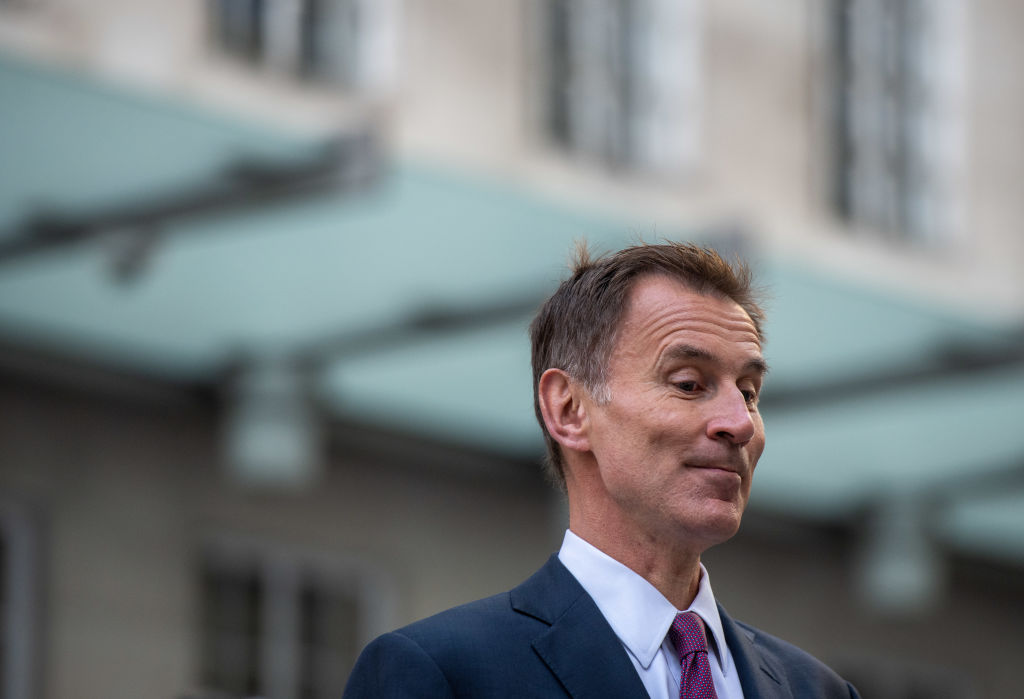
Jeremy Hunt Conducts TV interviews After Being Appointed As The UK's New Chancellor
Jeremy Hunt, the current Chancellor, has cut the energy price guarantee to six months (Photo by Chris J Ratcliffe/Getty Images)

Clearly, ambiguity in our politics is rife. But the latest Chancellor of the Exchequer, Jeremy Hunt, could not have been clearer when he told Parliament the government’s current support for energy bills would continue to April, at which point he will look to bring in “a new approach that will cost the taxpayer significantly less…and better incentivise energy efficiency.”

He is right: it was always perverse to ask the taxpayer to write a blank cheque for two years as part of the energy support package and ignore the huge potential gains in increasing our energy efficiency. 

It is vital to address some of the causes of the current energy crisis, not just treat the symptoms. For the next six months at least, the government is paying huge sums to cover most of the energy price rises for households, in what is already a cost-of-living crisis, fuelled by inflation, itself fuelled by energy price increases. Meanwhile, the National Grid and energy regulator have both warned of blackouts when energy demand increases as we try to keep warm over the winter.

Behind these scenes, the UK energy system is hugely inefficient, wasting billions and adding to energy security problems. It is truly shocking that most energy is lost even before it gets to the point of use through conversion, generation and transmission and distribution losses. More energy still is lost at the point of use, for instance if lighting hasn’t been updated to LED, or if heating, ventilation, and air conditioning systems are inadequate or are not properly tuned. 

But while energy efficiency tends to conjure images of woolly sweaters and thermostats, it’s not just households that are to blame. As it turns out, the public sector is wasting more energy than households could save. 

Over 60 per cent of energy in the UK is used in the non-domestic sectors and public sector buildings in the UK use a comparable amount of energy as private domestic households. In 2019, the parliamentary  Business, Energy and Industrial Strategy Committee said there could be as much as £100 bn in savings from energy efficiency – and that was at the cost of energy then, which is a fraction of what it is now.

Some 40 per cent of public sector energy is used by the NHS, yet two thirds of its lights are inefficient and only 33 per cent have been replaced for LEDs. Little in the way of on-site clean energy generation has ever been done. The Ministry of Defence controls 115,000 buildings and 1 per cent of the entire UK land mass. Transport for London, one the largest (if not the largest) single users of electricity in the UK, sources almost all of it directly from the national grid, and facing severe financial difficulties, it simply can’t afford to waste it. The theme goes on and on, through universities, schools, local authorities, and other government buildings. 

When we talk about insulation, we often think of massive changes to building which would take years. But there are also simple solutions, using established technologies like solar energy. Or, for example, LED light bulbs or more efficient heating equipment. 

The public sector should be at the front of the pack in this. Only then can it credibly mandate or achieve critical change.

Part of the review into reducing usage should include plans to make all public government buildings find significant energy savings before next winter. 

The government should at least match the EU’s target of 15 per cent reduction in gas and electricity use. This would be a first step to seize the “low hanging fruit” and ramp up from there. Public buildings should be audited for energy efficiency opportunities and commercially feasible solutions should be compulsory. Once mandated for the public sector, the same targets and requirements for implementation could be applied to the private sector.

If the government took leadership, it would be delivering on one of the largest opportunities for cost as well as carbon emission reductions. If the private sector followed suit and stopped wasting one of the most essential and expensive inputs into the economy, the UK could begin to unlock one of the most valuable sources of economic growth of our generation, not to mention cultivating a significant competitive advantage.

Read more

Jeremy Hunt is right to ask Can We Be Rich Again?

Former Chancellor Jeremy Hunt

Share this article

  • Facebook
  • X
  • LinkedIn
  • WhatsApp
  • Email

Similarly tagged content:

Sections

  • Opinion

Categories

  • Opinion

Trending Articles

  • KPMG’s Summer Friday half-day rollback signals deeper woes for Big Four giants

  • Inflation expectations at record high in interest rates signal

  • London Tech Week sums up everything wrong with UK tech

  • KPMG report on AI found riddled with AI hallucinations

  • UK economy falters as deeper damage to growth to come

More from CityAM

  • ZayZoon, the Calgary fintech born on a fishing boat, posts 1,487% growth as earned wage access goes mainstream

    ZayZoon co-founder Tate Hackert built the Calgary fintech around earned wage access
  • Energy price cap to jump 13 per cent this summer

    Energy
    A general view shows pylons and Ferrybridge C power station, owned by energy company SSE, which is set to stop generating and close in March 2016, near Knottingley, northern England, on May 24, 2015. The coal-fired powerstation went online in 1966. AFP PHOTO / OLI SCARFF (Photo credit should read OLI SCARFF/AFP/Getty Images)
  • Botpress raises $25m as Quebec's Sylvain Perron pitches his startup as the 'infrastructure layer' for AI agents

    Botpress product UI: the Quebec startup pitches itself as the infrastructure layer for enterprise AI agents
  • Brits set for sharp rise in energy bills in July 

    Energy
    Serica Energy today announced its first share buyback programme, totalling £15m.
  • FluidAI wins US FDA clearance for its surgical monitor as Waterloo's Youssef Helwa targets 100,000 operations

    FluidAI's Origin surgical monitor wins FDA clearance for use in US hospitals
  • ‘Political choice’: Retailers urge government to act on rising costs

    Retail
    Labour MPs are being warned a “perfect storm” of costs facing the retail sector could see seats lost to Reform UK.
  • Reeves unveils ‘Great British Summer Savings’ at cost to energy giants

    Economics
    Rachel Reeves delivering spring statement at podium with financial charts in background, addressing economic policies.
  • Jeremy Hunt: Pension triple lock is an ‘anchor drag’ on economic growth

    Politics
    Jeremy Hunt has promised to cut more taxes as “hard work is rewarded”.
  • Terms & Conditions
  • Privacy Policy
  • Cookie Policy
  • News
  • Markets & Economics
  • Politics
  • Opinion
  • Life&Style
  • Personal Finance

Follow us for breaking news and latest updates

  • Facebook
  • X
  • Instagram
  • LinkedIn
Copyright 2026 CityAM Limited