Robotaxis are coming – how will London respond?

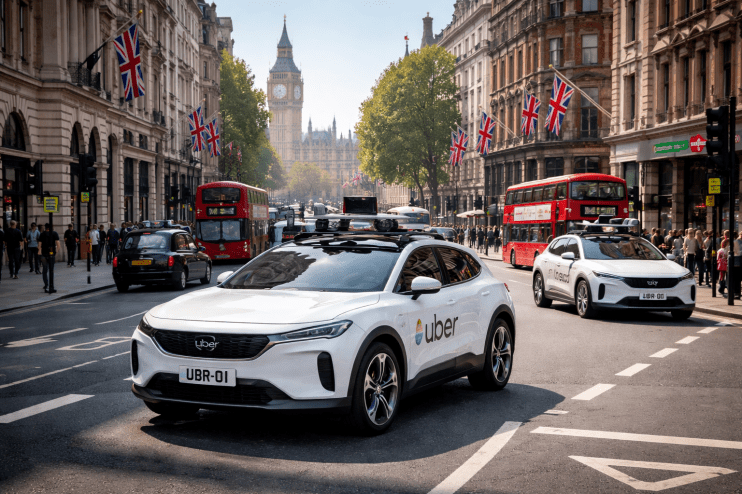
The planned launch of autonomous ride services, starting with Uber in 2026, marks a major shift for London’s streets, repositioning mobility as a software-governed infrastructure that will redistribute control over pricing, liability and data, says Paul Armstrong
A structural shift is forming on London’s streets, and too many businesses are still treating it as a transport upgrade rather than an economic rewire. Autonomous vehicles are not about novelty, comfort or futuristic branding. Control over pricing, liability, access and data is what is being redistributed. Once mobility becomes software-governed infrastructure, power consolidates quickly and unwinds slowly.
The trigger is no longer hypothetical. Uber has confirmed plans to launch autonomous ride services in London in the first half of 2026, with rollout volumes expected to remain extremely modest initially before expanding. Framed as incremental experimentation, the move does sound restrained and for good reason. Uber wants to stealthily become the default again.
London is not entering blind. Canary Wharf has already hosted autonomous vehicle trials, and Transport for London has spent years laying regulatory groundwork. What changes in 2026 is commercial intent. Trials are now turning into actual services which can then be sold into procurement long before public opinion and politics can catch up.
Control, not convenience is the goal
Some context, Transport for London currently reports over 100,000 licensed private hire drivers operating in the capital, based on current licensing information. The figure does not represent all active Uber drivers, but it does include them. Before licensing rules were loosened in 2022, the number of drivers working regularly on Uber in London sat closer to 45,000. Even using the looser figure, the number of robotaxis from Uber and pals will be plopping on streets will not replace a workforce overnight. Uber and pals need to do a lot more than just remove headcount.
Uber has been here before, and has plenty of knowledge on how to scale this fast. Ride-hailing platforms earn money when vehicles move, not when congestion happens. Early autonomous fleets optimise for coverage, learning and data capture. Efficiency comes over time, Londoners should expect more cars on the road before any productivity benefits start happening. Experience from elsewhere matters, but only when read correctly.
Success is not a given, nor going to be easy in London
San Francisco’s robotaxi rollout offers a preview of failure modes rather than a model to copy. Waymo vehicles have stalled traffic during power outages, as documented during a citywide blackout, and triggered a software recall over behaviour around school buses, reported in coverage of a robotaxi recall. American cities benefit from wider roads, stricter jaywalking enforcement and simpler junctions. London, it could be said, operates on improvisation with pedestrians crossing whenever they feel like it. Add cyclists and delivery bikes and no-one’s happy.
Fear not for us bipeds, we’ll still be needed when autonomous vehicles get stuck socially rather than technically. Remote intervention teams, on-call field responders and exception handlers form a new gig layer that absorbs risk without stability. Fun, no? Driving will fragment, not disappear. The folks getting rich here are the platforms, lawyers, insurers and cleaning services likely needed.
Insurance markets are already repositioning. Autonomous fleets generate dense telemetry, behavioural logs, and detailed fault attribution that insurers crave more than traditional claims histories. Premiums will move away from blunt averages toward route-level and fleet-level pricing. Businesses integrating robotaxi services into employee travel, logistics or customer access inherit that complexity whether they plan for it or not. Liability fragments across software vendors, fleet operators and city authorities. When incidents occur, reputational damage will land faster than legal clarity.
Will Londoners buy all this though? Do they have the money to? Novelty is one thing, efficiency is another in a city built for walking or traveling underground. Early fares are likely to be subsidised to drive adoption and collect behavioural data, but long-term Uber, or whoever aggregates demand and controls routing algorithms gets to decide. The key will be keeping enough alternatives to keep everyone jumping.
The competition element with autonomous driving and London is the key. Uber is using Wayve for London, but Waymo continues to expand beyond the US. Baidu is bringing Chinese-scale economics into the UK through its Apollo Go platform and Tesla, despite being significantly behind others, continues to signal robotaxi ambitions on UK shores but does not have permission to do so yet. Uber’s strength lies in demand aggregation rather than autonomy itself. Leadership will go to whoever aligns fleet density, regulatory compliance and public tolerance first.
Economic upsides do exist for this arena, with predictability over novelty. Businesses benefit when travel time becomes usable time, when logistics windows tighten, and when low-demand routes become viable. Retail, hospitality and healthcare access all gain incrementally. Rural and semi-rural areas may see disproportionate benefits because autonomy struggles less with dense human behaviour. Urban cores absorb experimentation costs first. Do autonomous services suddenly spring up? Will Doctors come to us? Those who start thinking about future services and using this new ecosystem now will be less likely to be disrupted, and quite possibly, be able to disrupt some incumbents.
Public tolerance for failure on London’s roads remains untested. Regulatory backlash is not theoretical. One badly handled incident could reset the entire timetable There are a lot of unknowns with an unforgiving geography and scale. Start looking forward to black-box systems deciding legal outcomes, automated incident reporting, thanks to model error and hallucination risks that are still unresolved for a Canada’s scale.
Value will come to rule-makers, not operators
As with a lot of maturing emerging technologies right now, robotaxis fleets are not about chasing theatre. Immediately the change will be novelty-led, but this category should be treated as a material shift in how people and goods move, not a shiny pilot to delegate and forget. Decisions will cut across procurement, risk, legal, HR, and comms whether anyone plans for that or not. Success will come from managing downside and uncertainty, not optimising for averages beyond the coming years.
London will not flip overnight. Change will really arrive through contracts, renewals and habits. Value accrues to those who shape the operating rules early, not those who marvel at the vehicles. In 2026, businesses will see vehicles stop being a transport story and become a pricing, liability and power story. Businesses that understand that distinction are going to capture the upside, and create new economies, while others quietly pay for it.