Skip to content
CityAM
Main navigation
  • News
    • News
      • Latest Business News
      • Economics
      • Politics
      • Tech
      • Banking
      • FTSE 100 Live
      • Retail
      • Insurance
      • Legal
      • Property
      • Transport
      • Markets
    • From our partners
      • AON
      • Bayes Business School
      • Canada BIDs
      • Central London Alliance CIC
      • Destination City
      • Halkin
      • Olympia
      • Inside Saudi
      • Tottenham Hotspur Stadium
      • Santander X
      • YEAR SIX Dividend
    • Featured

      The next person to shop your store may not be a person at all

      AI shopping agents are rewriting the rules of online retail across North America

      Submit a story

      Tell us your story.

      Submit
  • Opinion
  • Sport
    • Latest Sports News
      • Sport
      • Sport Business
    • From our partners
      • The Morning Briefing: SBS x CityAM
      • Aramco Team Series
      • LIV Golf
    • Featured

      Cohere's Aidan Gomez bets the house on 'sovereign AI' with Aleph Alpha merger valuing the group at $20bn

      Cohere CEO Aidan Gomez on stage discussing the Toronto AI lab's strategy

      Submit a story

      Tell us your story.

      Submit
  • Life&Style
    • Life&Style
      • Life&Style
      • Toast the City Awards
      • The Magazine
      • Travel
      • Culture
      • Motoring
      • Wellness
      • The RED BULLETiN
      • Do it with Shared Ownership
      • Media Speak Hub
    • Featured

      Moonvalley's Naeem Talukdar is selling Hollywood the one thing rival AI video tools cannot: legal cover

      Moonvalley's Marey AI video model produces Hollywood-grade footage trained on licensed data

      Submit a story

      Tell us your story.

      Submit
  • Investec
  • Events
  • Latest Paper
Saturday 17 January 2026 2:00 pm  |  Updated:  Thursday 22 January 2026 12:04 pm

The Jenga Effect: Why professional rugby’s collapse has already happened

By: Michael Fealey

Sport Systems Consultant

Add as a preferred source on Google
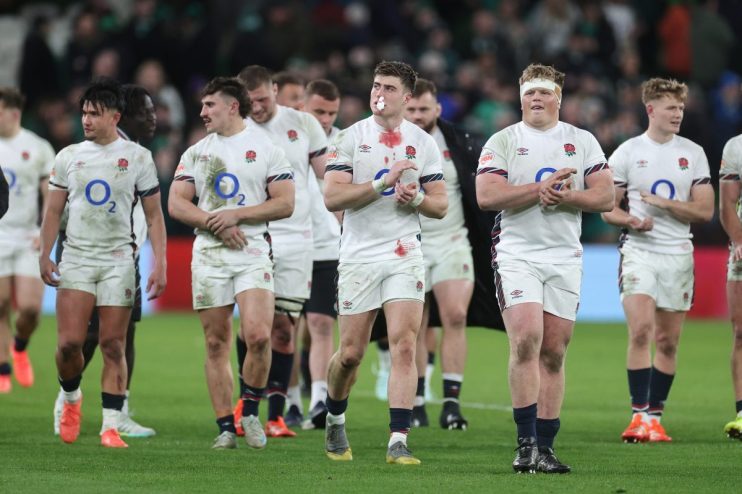
GettyImages 2197125259 showcases a significant moment in recent news, highlighting a relevant business or general event.
Professional rugby is not approaching collapse; it has already happened

Professional rugby is not approaching collapse; it is recognising one that already occurred and mistaking that recognition for failure.

What we are watching across leagues, unions and competitions is not chaos, bad luck or incompetence finally catching up, but the delayed visibility of a structural outcome that was locked in years ago. What feels sudden is not failure itself, but realisation.

The clearest way to understand this is not through balance sheets or governance jargon, but through a simple and precise game mechanic: Jenga.

Jenga is a two-player game, and that detail matters. One player removes a block and attempts to place it on top, while the other player’s turn has already ended. If the tower collapses during the removal or placement, the player who made that move loses. The other player is said to “win” only because the collapse did not occur on their turn.

Crucially, the collapse does not belong to the final hand. It belongs to the structure that made collapse unavoidable. The last move merely reveals what was already true.

Professional rugby on the slide?

Over the past three decades, professional rugby has systematically removed load-bearing support from its domestic foundations. Value has been extracted upward, costs fixed downward, revenue control centralised, subsidy normalised as “support”, and instability repeatedly reframed as reform. Each move appeared rational in isolation, and none looked catastrophic at the time. Just like Jenga, the wobble never appeared where the block was removed, so the game continued.

Skill can delay collapse, but it cannot prevent it. In Jenga, skilled players do not save the tower; they simply postpone the moment it falls. That is what we have mistaken for governance, reform and financial discipline in professional rugby. Emergency funding, league mergers, salary caps, strategic reviews and calendar resets were all sincere and well-intentioned, yet none were capable of restoring integrity once enough structural support had already been removed. The tower was unsound; it simply had not fallen yet.

What makes this moment feel different is not that the system has suddenly weakened, but that there are no longer any layers beneath the professional game capable of absorbing instability. The shock absorbers are gone. What remains is exposure.

Read more

Directors of collapsed Carillion banned by accounting watchdog

Carillion (Photo by Christopher Furlong/Getty Images)

Timing now becomes clear. International rugby’s final move was calendar consolidation and value centralisation, a move that has already been made. International competition is no longer touching the tower. Professional club rugby’s final move is franchising, consolidation and managed contraction, and it is still holding the block, attempting one last placement under conditions it did not design. When collapse becomes fully visible, it will occur during that placement. This does not mean professional leagues caused the collapse; it means they were the last ones required to act.

The future

In Jenga, the player whose turn ended before the collapse is conventionally described as the winner, not because they controlled the outcome, but because the structural limits were revealed on the next move. Survival is misread as success. Finishing a turn without collapse is not victory; it is simply being the layer whose action did not coincide with visible failure.

That is international rugby’s current position. It is not winning. It is the layer whose most recent move did not trigger collapse, even though everything beneath it has already lost support.

This framing exposes a question that keeps resurfacing in rugby business commentary: which rugby product should investors back — sevens, the Prem, franchised leagues or international expansion? The honest answer is none of them, not because they lack talent, audiences or ambition, but because they all sit on the same architecture. They differ in format, geography and presentation, not in structural logic. Choosing between them is like debating which side of an unsound tower is safest to stand on.

Professional rugby did not fail because it lacked passion or market interest. It failed because its economic architecture allowed value to exit faster than it could accumulate. Participation fed the system without proportional return. Domestic leagues absorbed risk without controlling revenue. International competition accumulated value while shedding structural responsibility. Each reform addressed symptoms; none altered the architecture.

That is not a moral judgement. It is an arithmetic one — and arithmetic always wins.

Professional rugby is no longer playing to win. It is playing to avoid being the one whose turn coincides with the moment collapse becomes undeniable. The collapse has already happened. The system is simply recognising it now.

Rugby is merely early. Other sports built on the same architecture will recognise themselves soon enough.

Read more

CityAM Football Power List shows that systems, not individuals, control sport

Breaking news conference with business leaders addressing current economic trends and market strategies

Share this article

  • Facebook
  • X
  • LinkedIn
  • WhatsApp
  • Email

Similarly tagged content:

Sections

  • Sport
  • News

Categories

  • Sport Business
  • Business
  • Sport

People & Organisations

  • International rugby
  • Jenga
  • Prem Rugby
  • Professional rugby
  • Rugby
  • Rugby Union

Related Topics

  • Rugby Union
  • Sport Opinion

Trending Articles

  • KPMG’s Summer Friday half-day rollback signals deeper woes for Big Four giants

  • Inflation expectations at record high in interest rates signal

  • London Tech Week sums up everything wrong with UK tech

  • KPMG report on AI found riddled with AI hallucinations

  • UK economy falters as deeper damage to growth to come

More from CityAM

  • ZayZoon, the Calgary fintech born on a fishing boat, posts 1,487% growth as earned wage access goes mainstream

    ZayZoon co-founder Tate Hackert built the Calgary fintech around earned wage access
  • CityAM Football Power List shows that systems, not individuals, control sport

    Sport Business
    Breaking news conference with business leaders addressing current economic trends and market strategies
  • Has Fifa quietly made mandatory release clauses the future of football transfers?

    Sport Business
    Getty Images logo on a digital screen, representing media and stock photography in a business and news context.
  • Squash players turn to social media to cash in on LA Olympic Games opportunities

    Sport Business
    GettyImages 650503196 shows a professional business meeting in a modern conference room, highlighting diverse executives c...
  • Prem Rugby chiefs admit its ‘challenging’ to compete with Top 14

    Sport Business
    Unfortunately, I dont have the specific context or content of the article to generate an appropriate alt text for the imag...
  • Why investors will be keeping a close eye on rugby’s Nations Championship

    Sport Business
    GettyImages 2247278074 features a professional meeting with diverse business executives discussing corporate strategy in a...
  • Golf ‘faces questions over financial viability’ following LIV setback

    Sport Business
    GettyImages 2276054966 featuring a dynamic business meeting with diverse professionals in a modern conference room setting
  • LIV Golf’s decline leaves sport with more questions than answers

    Sport Business
    GettyImages 2271514397: Business professionals in a meeting room discussing strategies with charts and graphs on the table.
  • Terms & Conditions
  • Privacy Policy
  • Cookie Policy
  • News
  • Markets & Economics
  • Politics
  • Opinion
  • Life&Style
  • Personal Finance

Follow us for breaking news and latest updates

  • Facebook
  • X
  • Instagram
  • LinkedIn
Copyright 2026 CityAM Limited