Skip to content
CityAM
Main navigation
  • News
    • News
      • Latest Business News
      • Economics
      • Politics
      • Tech
      • Banking
      • FTSE 100 Live
      • Retail
      • Insurance
      • Legal
      • Property
      • Transport
      • Markets
    • From our partners
      • AON
      • Bayes Business School
      • Canada BIDs
      • Central London Alliance CIC
      • Destination City
      • Halkin
      • Olympia
      • Inside Saudi
      • Tottenham Hotspur Stadium
      • Santander X
      • YEAR SIX Dividend
    • Featured

      The next person to shop your store may not be a person at all

      AI shopping agents are rewriting the rules of online retail across North America

      Submit a story

      Tell us your story.

      Submit
  • Opinion
  • Sport
    • Latest Sports News
      • Sport
      • Sport Business
    • From our partners
      • The Morning Briefing: SBS x CityAM
      • Aramco Team Series
      • LIV Golf
    • Featured

      Cohere's Aidan Gomez bets the house on 'sovereign AI' with Aleph Alpha merger valuing the group at $20bn

      Cohere CEO Aidan Gomez on stage discussing the Toronto AI lab's strategy

      Submit a story

      Tell us your story.

      Submit
  • Life&Style
    • Life&Style
      • Life&Style
      • Toast the City Awards
      • The Magazine
      • Travel
      • Culture
      • Motoring
      • Wellness
      • The RED BULLETiN
      • Do it with Shared Ownership
      • Media Speak Hub
    • Featured

      Moonvalley's Naeem Talukdar is selling Hollywood the one thing rival AI video tools cannot: legal cover

      Moonvalley's Marey AI video model produces Hollywood-grade footage trained on licensed data

      Submit a story

      Tell us your story.

      Submit
  • Investec
  • Events
  • Latest Paper
Wednesday 04 February 2026 5:02 am  |  Updated:  Tuesday 03 February 2026 11:06 am

Capping ground rents is no way to help leaseholders

By: Natalie Chambers

Add as a preferred source on Google
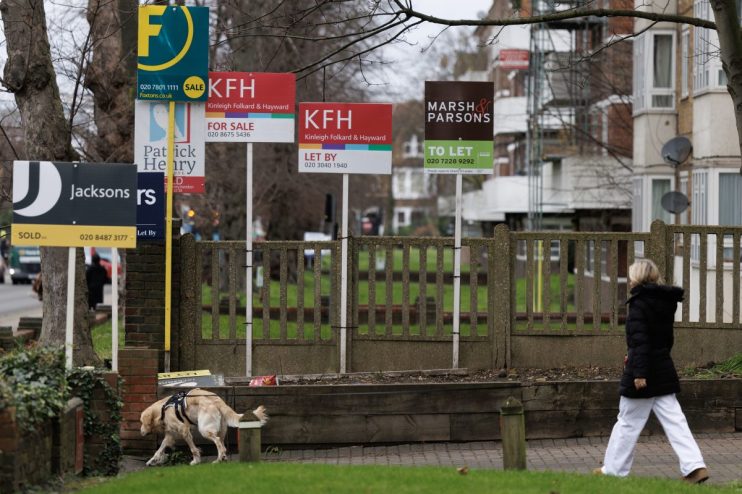
(Photo by Dan Kitwood/Getty Images)

The government’s plans to reform leasehold will deter investment in property and leave flat owners to pay the bill for the building safety agenda, says Natalie Chambers

Governments in market economies are generally cautious about interfering in existing contracts, for good reason. Once that principle is weakened, confidence is difficult to restore. The draft Commonhold and Leasehold Reform Bill, and its proposed cap on ground rents, does exactly that, with serious implications that extend far beyond leasehold policy.

Ministers have described ground rents as “money for nothing”. It is an effective slogan, but it does not reflect how ground rents actually function. They are a form of rent, agreed contractually and factored into the price paid for a property at the point of purchase.

Institutional investors, predominantly linked to pension provision, are estimated to have invested £15bn in residential ground rents. These investments were made on the basis of lawful, binding contracts. Intervening retrospectively in agreements of this kind carries wider consequences. Markets can adapt to future regulation, but retrospective policymaking is rare in liberal democracies precisely because it corrodes investor trust.

The previous government’s own impact assessment previously warned that overriding established contracts could trigger compensation costs exceeding £27bn. At a time when the Treasury is already absorbing substantial liabilities – including from the Infected Blood scandal and the Chagos Islands settlement – creating further exposure on this scale is difficult to justify.

Furthermore, in many parts of England and Wales, non-UK-based landlords and buy-to-let investors make up the majority of leaseholders – exceeding 80 per cent in some areas. In practice, this risks transferring value away from long-term domestic pension investment towards wealthy overseas property investors, an outcome that sits uneasily with the stated aim of protecting homeowners.

It is no secret that there is a growing divergence within government on this issue. While the Ministry for Housing is pressing ahead, the Treasury has raised serious concerns about investor confidence and retrospective interference with legitimate contracts.

Read more

King’s Speech shows incremental change is all Starmer knows

King delivers powerful speech at 2026 summit, addressing global challenges and future strategies, captured in formal setting.

Hard to justify

What makes this intervention hardest to justify is how little it delivers for leaseholders while ignoring their biggest cost pressures. Service charges have risen sharply in recent years and are now the primary source of financial strain for many households. Capping ground rents does nothing to address this. By contrast, targeted reforms, such as regulating managing agents, improving transparency and raising professional standards, would deliver tangible benefits.

The consequences extend well beyond balance sheets. Capping ground rents risks pushing a significant number of professional freeholders into insolvency, with serious implications for the government’s building safety agenda. Freeholders play a central role in the remediation programme, which spans up to 12,000 buildings at a projected cost of £22.4bn, and can only meet their funding, insurance and legal obligations while they remain solvent. Those obligations are underpinned by income streams that the government’s draft Bill now proposes to strip away retrospectively, which will stall remediation and leave residents in unsafe buildings to shoulder responsibilities they neither sought nor are equipped to manage.

Scotland illustrates this risk. Since leasehold was effectively abolished in 2000, more than 50 per cent of apartments are now in a state of disrepair, driven by the fact repairs must be funded collectively by flat owners and often require unanimous consent

Scotland illustrates this risk. Since leasehold was effectively abolished in 2000, more than 50 per cent of apartments are now in a state of disrepair, driven by the fact repairs must be funded collectively by flat owners and often require unanimous consent. In buildings with high levels of buy-to-let ownership, where many owners do not live on site, agreement is harder still – leading to delay and, in many cases, legal action between neighbours simply to carry out basic maintenance.

This is not a question of whether leasehold should be reformed. It should. But retrospectively rewriting contracts for marginal gains is wrong, particularly when the real pressures facing leaseholders remain untouched. Governments earn trust by being predictable. Markets invest where the rules are clear and stable. By choosing blunt intervention over targeted reform, this draft Bill will damage both.

Natalie Chambers is Director of the Residential Freehold Association

Read more

Labour ‘failing’ renters: Brits work for 133 days to pay landlords

City skyline with apartment buildings and For Rent signs, highlighting urban housing market trends and rental opportunities.

Share this article

  • Facebook
  • X
  • LinkedIn
  • WhatsApp
  • Email

Similarly tagged content:

Sections

  • Opinion

Categories

  • Opinion

People & Organisations

  • commonhold and leasehold reform bill
  • Housing
  • Leasehold

Trending Articles

  • KPMG’s Summer Friday half-day rollback signals deeper woes for Big Four giants

  • Inflation expectations at record high in interest rates signal

  • London Tech Week sums up everything wrong with UK tech

  • KPMG report on AI found riddled with AI hallucinations

  • UK economy falters as deeper damage to growth to come

More from CityAM

  • King’s Speech shows incremental change is all Starmer knows

    Opinion
    King delivers powerful speech at 2026 summit, addressing global challenges and future strategies, captured in formal setting.
  • ZayZoon, the Calgary fintech born on a fishing boat, posts 1,487% growth as earned wage access goes mainstream

    ZayZoon co-founder Tate Hackert built the Calgary fintech around earned wage access
  • Labour’s plans for rent control by stealth will cost £4.2bn a year

    Opinion
    Angela Rayner addresses the media, discussing current political developments and her role in shaping policy decisions.
  • Botpress raises $25m as Quebec's Sylvain Perron pitches his startup as the 'infrastructure layer' for AI agents

    Botpress product UI: the Quebec startup pitches itself as the infrastructure layer for enterprise AI agents
  • FluidAI wins US FDA clearance for its surgical monitor as Waterloo's Youssef Helwa targets 100,000 operations

    FluidAI's Origin surgical monitor wins FDA clearance for use in US hospitals
  • The Debate: Is the Renters’ Rights Act good for London landlords?

    Opinion
    UK cityscape with To Let signs on residential buildings, highlighting the competitive nature of the rental market in 2023.
  • London Local Elections 2026: Who will win in Ealing?

    London
    Voters casting ballots at a polling station in London during a local election, with people waiting in line.
  • Poundstretcher seeks rent cuts in survival bid

    Legal
    Getty Images logo displayed on a smartphone screen, representing stock photography and media content services.
  • Terms & Conditions
  • Privacy Policy
  • Cookie Policy
  • News
  • Markets & Economics
  • Politics
  • Opinion
  • Life&Style
  • Personal Finance

Follow us for breaking news and latest updates

  • Facebook
  • X
  • Instagram
  • LinkedIn
Copyright 2026 CityAM Limited